
Monday, February 02, 2009

Backstage at Bernachon


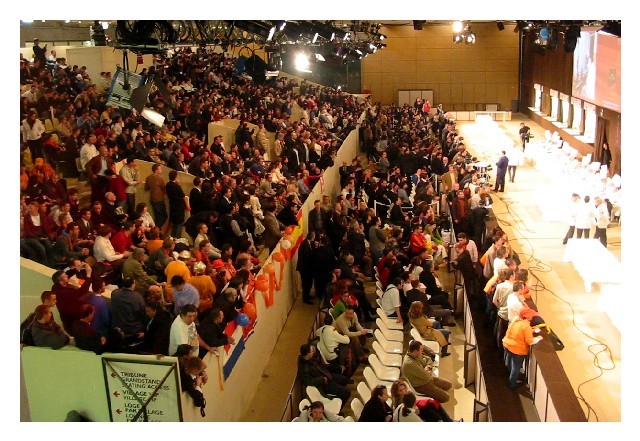
In the midst of the frackas of the biennial SIRHA salon hosting the World Pastry Cup and the Bocuse d'Or competition, I managed to slip away one morning to visit the kitchens at Bernachon in the 6eme. I rustled up a group and we met for a little while that morning, really a dream-like oasis nestled in between the two events.


Bernachon is one of the only European chocolatiers that selects and imports raw cocoa beans direct from producers in various countries and roasts each type of bean separately, creating their 62 house chocolate types by mixing the roasted crushed beans in specific ratios.


orangettes in the making

We toured the artisan chocolate maker's facility with a maitre chocolatier named Pascal, who explained to us step by step how the chocolate is produced from cocoa bean to Palet d'Or, the house specialty.


Milk or dark... What is your poison?

Pascal explained each step along the process in rapid-fire progression beginning at the sacks of beans. I did my best to take in the aromas, the information, the concepts introduced one by one as we moved through the workshop to produce this beautiful product, and progressively we sank deeper and deeper into the world of the chocolate maker. The young stagieres were rolling ganache. A rack full of enormous pans of fresh Bernachon chocolate were stacked in a back room, cooling from that morning's production. We happened upon one treasure after the next, each rich with a story.


A peek into a courtyard full of bicycles, and through to the molding facility where they were preparing special chocolates for Valentine's Day.


Something that really struck me was the fact that the beans are roasted first, then stored in bins according to provenance, each bin containing chocolate that smells completely different from one another. One smelled more green than the next, the other more toasty, some had smoky aromas. I never really thought much in the past about how differing provenance of the bean can make the difference in the complexity and flavors of a chocolate. Silly me. All this time I had been thinking about sitting down and pulling on that ribbon from the chocolates box. This visit to the source got me thinking outside of just my own selfish reception of the chocolates, more than their simple decadence or their comfort factor. Before this visit I didn't really have much more of an index in my mind aside from a very short vocabulary of brands and labels but now that is changing.


At the same time, this whole idea of the terroir didn't seem outlandish either, since this kind of transmission of the qualities of land and place is naturally coming through so many things in our food world. We talk about the acorn fed black hams from Spain, we talk about the grapes grown along the river in the Northern Cotes du Rhone, we talk about the cows and their pasture pushing from volcanic soil that makes a Saint Nectaire. Every product, a history, an expertise, a story, a place. Why not chocolate?


On the one hand, there is the terroir, which clearly makes a huge difference when I see Pascal scoop up a handful of one particular provenance and has us compare the aroma with that of another. Then there is the knowledge that the Bernachon family has developed in their mixing of flavors and treatment during torrefaction of beans from 8 separate countries, crushing, heating, mixing, and creation of the different blends meant for the various uses - the ganaches, the fillings, the coatings, the decorative elements and textures each meant to have its own quality, for 62 different types of chocolate altogether.


While I was there, I counted 10 employees, and my informal survey revealed that apart from a couple of lucky stagieres from foreign countries who get 5 weeks, each of the workers had been at Bernachon for many years, some nearly their whole lives. Those who were on the track to maitre chocolatier had been to school and passed their examinations, and had done internships at Bernachon before making the rounds at the top chocolate makers in France, then coming back to stay. Pascal said that the job satisfaction comes from the fact that they touch and know the product completely - from A to Z. The ability to really have an impact not only on the finish of the chocolates but on the very basics of flavor makes it very much worthwhile.


Getting ready for Saint Valentine's Day

Labels: , ,


Share/Bookmark

Tuesday, November 18, 2008

Postcard Lyon


Labels: , ,


Share/Bookmark

Sunday, February 25, 2007

How Chocolate Came to Save Fran


We met outside the Collège Hotel in Vieux Lyon, somewhere between her place and mine. Immediately I could see that this chick needed some chocolate in her. Pale, wan, and with a sad look on her face, Francine presented herself, standing up a bit straighter than usual and buttoned up tight in an effort to put up a good front. At least she had her camera. That was when I think I saw tears swell in her eyes. She said "PMS" and I said "Bernachon". With that, we were off.


Did you ever have a friend that charges you with positive feelings just from being near her? A friend who is encouraging, helpful, generous, inspiring, beautiful, nurturing and creative all at the same time? My freind Francine is one of those. The first time we went out to lunch we found that we had more to talk about than we could fit in that day. Meeting Fran was like I had finally met a fellow member of the circus and right from the get go we were synchronizing double backs and gracefully mastering the leap from one to the other’s trapezes with the greatest of ease. I sometimes wonder if her inner eye has more strength and focus than she even knows. Her creative endeavors always bloom forth with a lot of energy and purpose.


Francine moved to a new apartment last month, a place with a garden. While moves are stressful and expensive in general, she was casting a positive light on the experience by putting a lot of thought into how her garden will grow, and how to arrange her studio space, etc. Once they got there and unpacked, Fran, being an island girl and accustomed to warmth and light, had to adjust within the winter confines imposed upon her by a new angle from the sun. It was the darkest part of the year. Her bones caught a chill, and it was at that moment yesterday that I caught her.


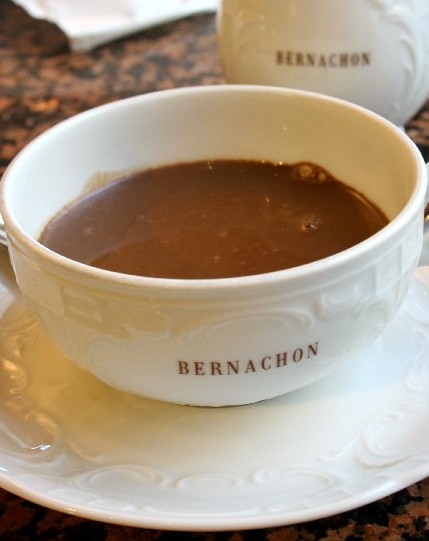
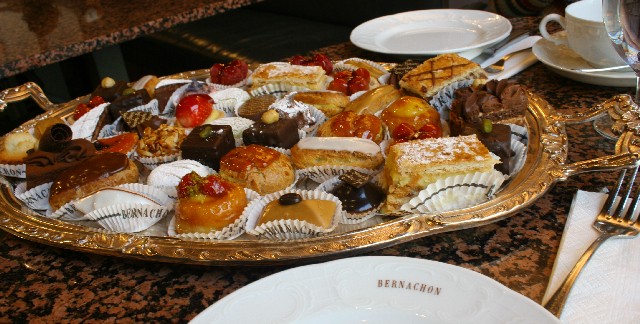
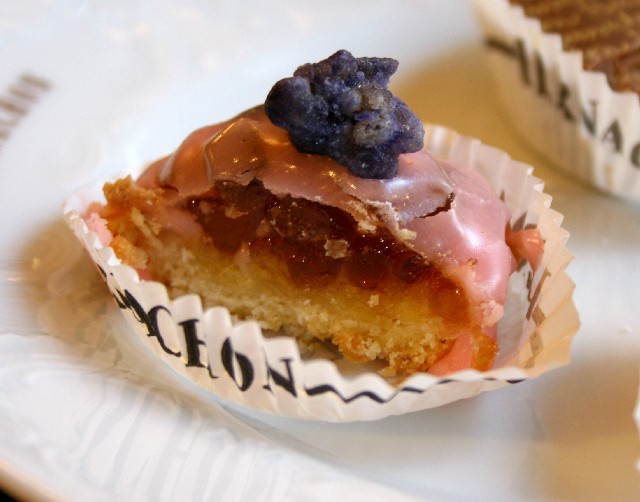
“What’s Bernachon?” She asked. Oh goodie, it was going to be just the thing. When they poured the chocolate we were both in rapture. Since she instinctively chose all of the chocolate flavored treats from the platter (the poor dear was really in need), I chose some of the other little mignardises and discovered they are very skilled at more than chocolate at Bernachon Passion. Oh la la. Pastry time! We have decided that we’ll hit the tea salons of Lyon one by one as we reach the milestones and deliverables of our respective life projects, or when we need a boost. That should give us plenty of opportunity, either way.

Labels: , ,


Share/Bookmark

Wednesday, October 04, 2006

About French Pastries

The other day, while waiting in line for the bread, I perused the pretty tartes my boulanger is offering at the moment. Our baker seems to have mastered the art of instilling teatime intimacy and invitation to companionship into his round fruit pies. Just looking at one brings out the idea of camaraderie in my mind. He is able sum up simple pleasures with an easy sweep. He has devoted his life to this and he does us a great service.

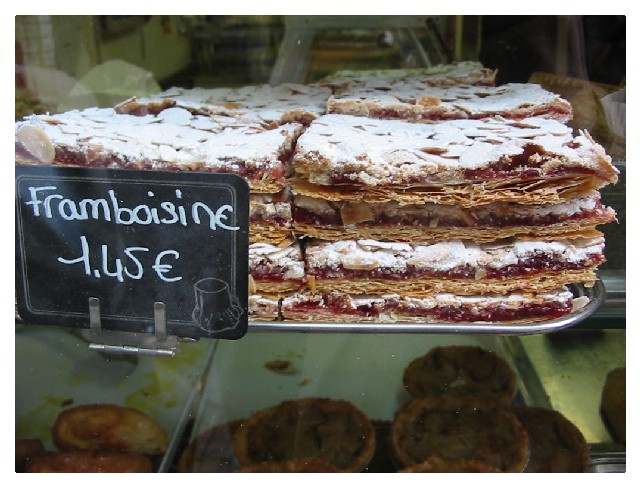
Today in France there are many degrees of pastry ranging from prêt a manger to haute patisserie. Once we step out into the world and away from our kitchen table there are lots of choices. At a boulangerie, depending on how the baker has positioned his craft, his or her equipment, and professional mentors or schooling along the way, the offerings vary.

The Boulanger-Pâtissier

A variety of chains train their franchised bakers to turn out a consistent line products created on a montage model of the ideal traditional boulangerie - conceived by the dream marketing team at company headquarters. When you go to Banette for example you can expect a certain consistency in the basic pastries lined up next to the bread at this chain, and for the most part, find the same ones over and over. Don’t turn up your nose at these treats, they can be very good. But they can differ from what is offered elsewhere.

The Artisan Boulanger-Pâtissier

Sometimes a baker has a wood fired oven that gives a certain rustic quality to his or her breads, so the pastries are the simple heat applied variety, transforming the fruit of the workman’s labor just so. These sweets are great for spicing up a table for a family that doesn’t have time to make a tarte, flan, or clafoutis themselves, and pastries from these bakeries are very popular. We often catch up on the neighborhood news while waiting in line for these pastries.

Tartes and pastries at the St, Antoine Market in Lyon.
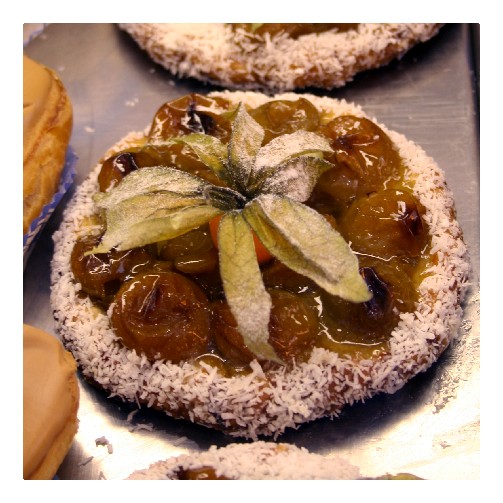
An artisan baker finds his or her rhythm in response to their need for creative expression and the neighborhood demands. Some may have a certain knack for marzipan or fondant, and many of course offer savory puff pastry and quiche to round out their stock. The range of patisseries available varies according to geographical area in France, and the season. If an artisan boulanger/patissiere is situated in a heavily trafficked tourist area, he or she may choose to position local specialties as well.

A regional specialty from an artisan baker in Brittany

A house specialty from the same baker in St. Malo.

Typical pastries at an artisan boulangerie-patisserie in St. Malo, Brittany

Typical pastries at an artisan boulangerie-patisserie in Toulon, Provence.

A house specialty, Toulon, Provence.

The Chocolatier–Pâtissier


If you want to get fancy, you can go to the chocolatier – pâtissiers, trained pastry and chocolate master chefs, the ones who don’t occupy themselves with the daily leavening of the bread and would scoff at the inconsistency of a wood fired oven for their creations. At this level, chocolate and pastry are intertwined. These are pastry houses whose operations might be destinations in themselves – pastry and chocolate are their product, and their expertise is what brings in the masses.

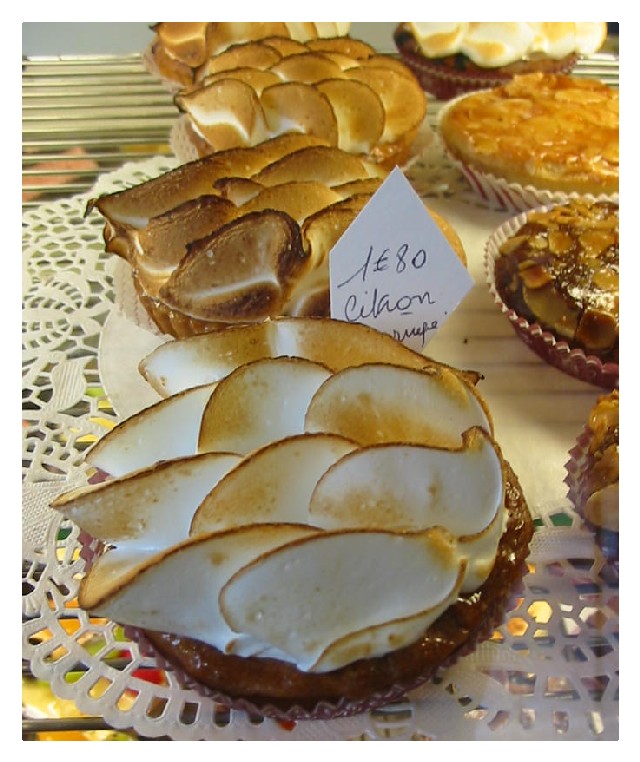
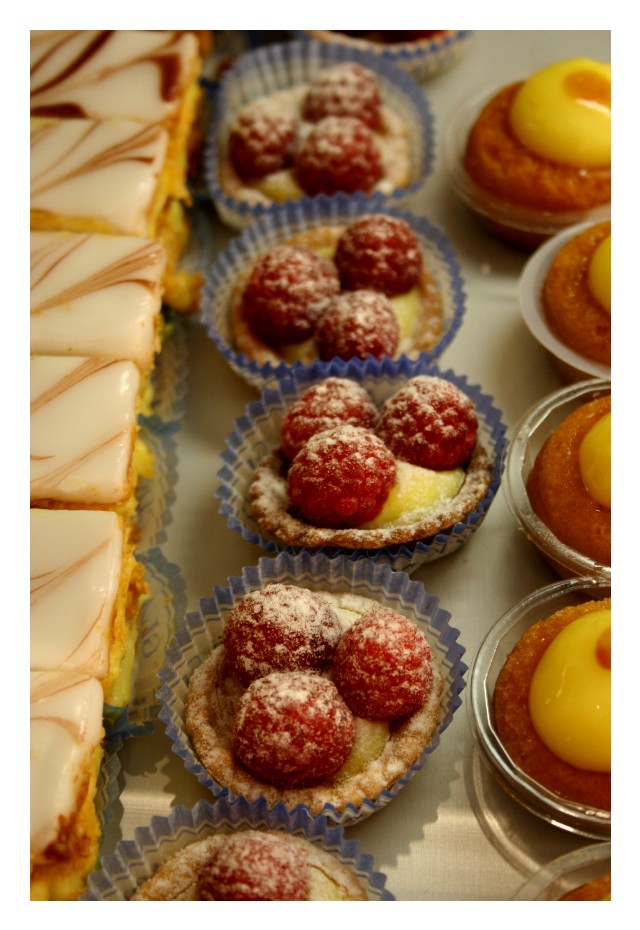
Pastries in the front window at Bernachon, Lyon

The work of the chocolatier – pâtissier includes a dizzying array of pastries constructed with an eye for perfection in addition to shelves of chocolates to choose from. Reserved for special occasions like birthdays, holidays, and parties where a special dessert is in order, they’re haute gamme pastries. You might find playful symbolism, sculptural creation, or studies of texture and material in their offerings. They’ll render homage to the classics in addition to their original creations, but always better somehow, or with their own special twist, ingredient, or technique. Often the chocolatier – pâtissier has a little teahouse on the side, where mini-versions of house creations can be enjoyed as a decadent snack with a friend. Although there are a few big names that have become tourist destinations, there are a lot of smaller independently run chocolatier – pâtissiers that continue to offer not only great pastry and chocolates, but beautiful and interesting surroundings to enjoy them in.

The World Pastry Cup


Once every two years here in Lyon France, the World Pastry Cup takes place. It is a world-class competition where an international panel of judges decides who will be the reining champion of international chocolate and patisserie. French pastry and chocolate are clearly firmly planted in the concept of perfection in this competition; to what degree it is French or that it transcends international boundaries is hotly debated every time from the makeup of the panels of judges and their influences, to standards in each area of competition.


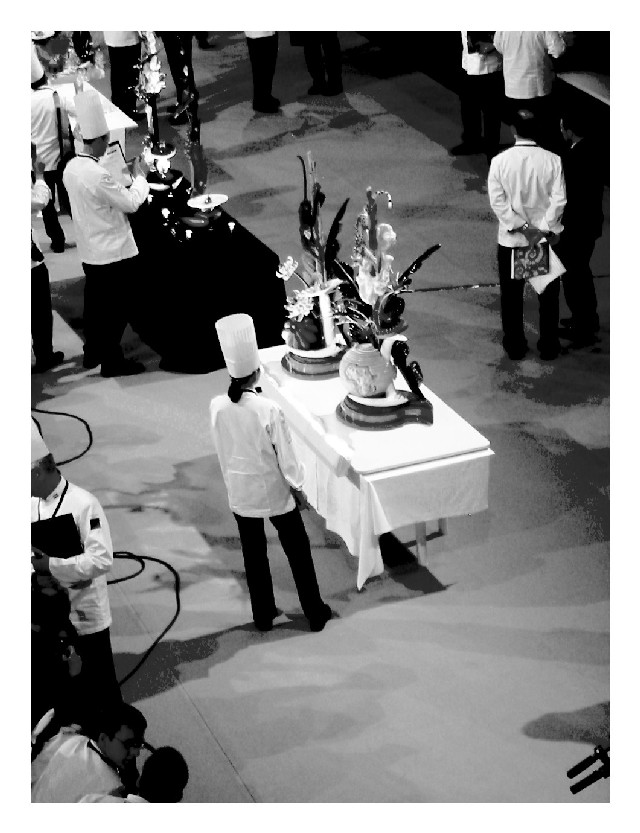
National teams train for months or even years for a chance at the ultimate challenge to compete and create masterpieces never before contemplated but at the same time resting firmly in the age old techniques in sugar sculpture, dessert plates, and chocolate. The stress leading up to and culminating in this event is very high. I attended the 2005 event with the man who was to be the president of the British team and a member of the judging panel. Unfortunately, due to one team member backing out apparently due to jittery nerves at the last minute, the team was not able to participate.

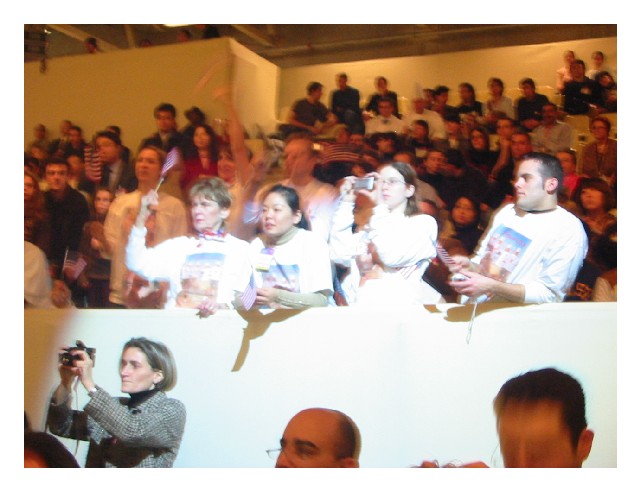
The masterpieces turned out by these perfectionists are passionate testaments to pastry and chocolate as the highest level of art, and there is so much more at play in this competition than how things look and taste. Even the redolent smell of chocolate, which usually has soothing effect, was not going to calm the wire tight nervous energy permeating that competition. It was glamorous and glorious. People paid for seats to witness the pastry masters at work in their identical kitchens. Pastry groupies were in the stands with their faces painted, waving flags, cheering on their teams. Are you a pastry groupie?

In the end, winners were pronounced, the press had interviews, and the star pâtissiers meditated on their work and that of the others with intensity.

I went back home after a long day and compiled my notes feeling a bit overwhelmed. However when I received the invitation for the 2007 event this week, I felt that spark of excitment.

So now, in my little kitchen looking out
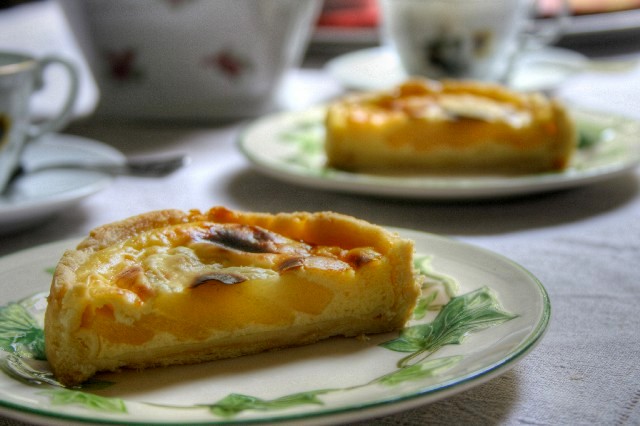
on the cloudy afternoon, I make a pot of tea to share with a friend and smell the delicious home made tartelettes inspired by my rustic boulanger of the people.


Tarte au poire

Ingredients:
1 batch of pâte brisé
1-2 pears
2 egg yolks
50 grams or 3T. sugar
100 grams or about 1/2 cup of fromage frais en faiselle


*about the pears – they type of pear you want to choose is the sweetest one available. Right now is pear season here in France, and the pears I choose are the Comice pears. They make for excellent eating plain but are simply delicious in these tartes.

*about the fromage frais en faiselle - The easiest replacement is large curd cottage cheese, preferably a brand that contains lots of whey. If your available cottage cheese has been relieved by machine extrusion of most of its whey, add a tablespoon or two of milk to the cheese before measuring it. If you are in Italy, use ricotta. If you are feeling particularly ambitious and want to really get authentic, get some rennet and make your own fromage frais.

- Prepare one batch of basic pâte brisé.

- When your dough is ready to roll out, peel the pears, cut them in half, remove the core, and with the flat side down, slice the pears into 1/8 inch or 1/2 cm slices, maintaining the pear shape and not mixing up the pieces.


- Heat the oven to 400F or 210C.

- Blend the fromage frais or cottage cheese, sugar, and egg yolks until a completely smooth liquid mixture. If you are using cottage cheese, and it seems more like a paste than a liquid, add more milk.


- Cut your pâte brisé into four pieces and quickly roll them into ball shapes. Roll out the pastry dough until the circles are about 2 inches or 4 cms larger than the tarte rings. Place the empty tarte rings on an ungreased or parchment lined cookie sheet. Either will do but the latter is easier to clean, since sometimes you get a drizzle or two from the pears bubbling up, depending on how juicy they are. Lay the pastry dough into them the rings, easing it to the sides of the mould and up to the top. Remove any excess dough that extends beyond the top of the rings – you can use it to patch along the edges if you need to.

- Spoon 1-2 teaspoons of the custard mix into the bottom of the unbaked tarte shells. Take 1/4 of the sliced pear per ring and splay the pieces like fallen dominoes into the crust. Pour the rest of the custard around the pears nearly to the top, and place the little pies in the oven to bake.

- Bake for 20 minutes at 200C or 400F. Let cool and remove from the moulds. Voila.


Note: If you have quince jelly on hand, this is an excellent opportunity to add the splendor of Autumn to the flavor of this tarte. Add a teaspoon or two to the custard mix. Remember, you are not obligated to eat enormous portions of the pastries you lovingly prepare for others, although the love that you do express in preparing them will always return in other ways.

Labels: , ,


Share/Bookmark

Thursday, September 21, 2006

Le Grand Marché des Saveurs Rhone Alpes


A blustery September Thursday in Lyon – and over 200 local artisan producers of foodstuff ranging from hand made sausages to genepi have amassed on the place Bellecour at the center of Lyon.


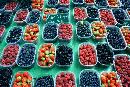
I wore my lucky necklace and rode my bike down the city streets lined with boutiques and galleries for a rendez-vous with the gourmands! Cheese, apples, pears, truffles, poultry, olive oil, fresh baked bread, walnuts, wines, freshly pressed fruit juices, honey, lavender, sausages, snails, pastry, marinated mushrooms, chestnuts, chevre and fromage de vache, eau de vie, dried herbs, and food themed crafts all presented by the people who made them. Everyone had a jolly old time handing out tastes, talking about their products, and selling their items here and there. I had some great conversations with artisan producers from the Rhone, Savoie, Isère and the Drome and have made plans to see some of these vendors again, at their farms and workshops.


These men from Bobosse have invited me for a visit to their operation! I can't wait!

If I can make it up the hill on my bike again, wine awaits me.


There were several cheese makers selling fromage fort, which I understand is made differently everywhere. Maybe I'll have to give it another try.


I will visit this honey maker this fall, or in the Spring. The woman and her son were very beautiful bee people.


This foie gras producer has invited me come to his farm during fattening season to see what the hulaballoo is all about.


I learned from this snail farmer that he is called a Héliculteur. The two people at the table were foreign students who tasted first and then asked, "Mmmm. What is it?" Here's to the adventurous palate!


The chefs and their students were out too, with a fun challenge that gave everyone a chance to participate – there was a list of local products in which the chefs were to produce a tasting dish from.


The game for the public was to taste and fill out a form with their guess as to what the four ingredients that the chefs used were. The correct guesses go into a drawing for a prize. People took this tasting quite seriously.


Needless to say the Bernachon tartlettes went fast...


What did I buy? Of course I could not resist a small bottle of Genepi, some pure cherry juice (hard to find at a good price in this town), and a little pot of duck rilettes to serve at apéro.

Labels: , , ,


Share/Bookmark