

Thursday, June 21, 2007

Cancoillotte

Dubious beginnings that end in glorious harmony

This cheese has a vague and mysterious background. Historians argue about how long this cheese has been in existence, with some claiming to have found references to it dating back to records of the Gallo Roman conquest of what is now the Franche Comte region some 4,000 years ago. Whoa. Some pretty old cheese.

Old local legends are told like fairy tales over the table about how this cheese began. Some food historians defiantly trace Cancoillotte to a mistake made in cheese fabrication sometime in the 16th century. Whatever its story, Cancoillotte is something to try, especially if you are making a day trip from Lyon into the Haute Savoie, the Jura, or the Doubs to hike or ski.

Cancoillotte is made with buttermilk left to coagulate on its own at ambient temperature. The separated solids are removed and pressed to obtain a nasty smelling hard bunch of curds from the turned milk. They are pressed down tight and preserved in cakes called metton, and not even close to edible at this stage in the production of Cancoillotte. They are ripened even further until they are ready to use.

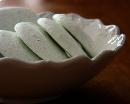
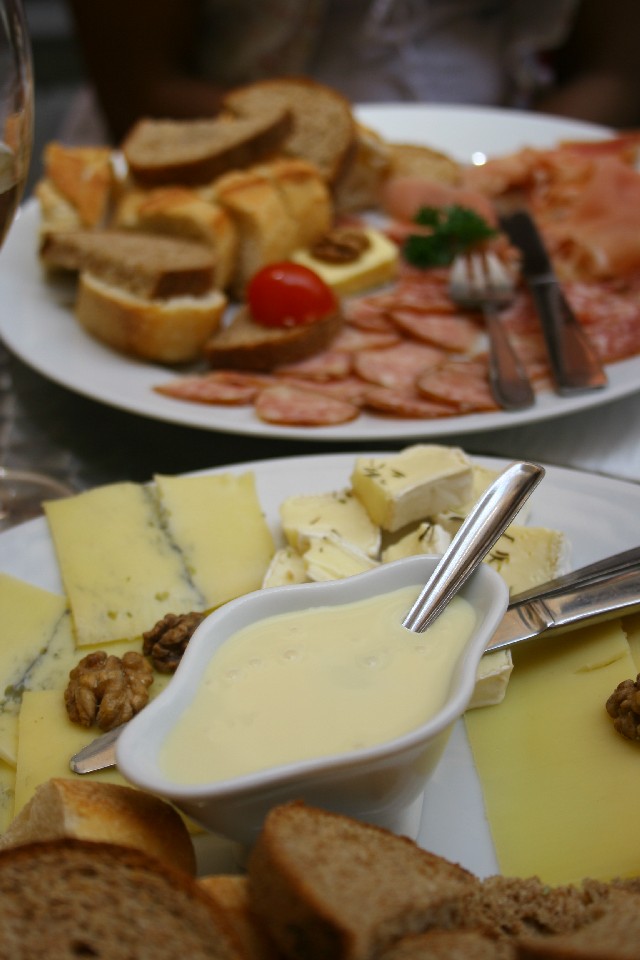
When it is time to mix the Cancoillotte, the curds are steadily melted with water or bouillon and butter to obtain a fondue-like homogeneous product, which is then fortified by a local white wine and any number of additions, herbs, garlic, shallots, kirsch, nuts, ham or just plain served forth, hot, warm, or cold. It maintains its homogeneous consistency when cooled, although it becomes slightly gelatinous and makes a great spread on toast. The flavors of the fermentation are more pronounced when it is eaten warm.

Cancoillotte mixing falls within the domain of the local fromager, who might have his or her own house mix, making it a specialty, so depending on where you go, the qualities and flavors of this cheese will vary.

An industrial production of this cheese was introduced in the early 20th century by using sterilization and canning methods. It was first used as soldier rations during the first world war, and you can find industrial versions of it outside the region today. Although canned production was stopped in 2002, you can find the factory versions of it in grocery stores in plastic pots alongside the cheese-like products. The real Cancoillotte remains artisanal and stays within the local region, and has nothing to do with the chemically preserved, starched thickened, homogenizing agent laden gluey product we find at the grocery store.

I can definitively say that this cheese is worth a cheese pilgrammage.

Don't be afraid by the metton cakes so full frontally mentioned above. Cancoillotte, once the preparation is complete, has a light and creamy flavor, and can seem quite mild and ethereal. The flavor is dreamy and creamy and it seems like it must be very fattening. But because of its buttermilk origins, this cheese is lower in fat than many other cheeses. It is great eaten plain tartined on bread, and some cooks use it in preparations like stuffings or as the base of a sauce over meats, with regional sausage, or eat it with potatoes.

When taking a day trip from Lyon into the Alps or Jura mountain ranges, keep you eye out for Cancoillotte, also known as : cancoillote, canquoillote, canquoillotte, or camoillotte.

Labels: , ,


Share/Bookmark

Monday, June 11, 2007

Burgundy, Part I

One idea ....

Burgundy. The Bourgogone. I used to think of heavy overly wine-laden rich floured sauces that put people to sleep. I used to think of this region as a good place to have a large bulbous glass of either wan and sugary stuff, or heavy earthy wine closed up secret and tight like a monk would encase the bones of a saint. The good ones teased me with a promise of heavenly bliss years down the line. I always had a feeling of a bit of remorse and dread that I could not ever afford to buy it once its flavors had opened up and its character had reached full majestic maturity (this was before we had the cave of course, now at least we can hope...). I believed that Burgundy was a place to have a gargantuan ladle of meaty stew, to drink young robust wine before its time and to lie down and take a nice long nap, but I was wrong.


If you do make Lyon home base for a gastronomic discovery tour, a day trip to the Burgundy is completely do-able and actually a wonderful idea. There are things to find there that depart completely from anything you'll find in in this city. One hour's drive north can take you to the heart of it. Burgundy of course would never claim to be a part of Lyon, although you might find some restaurants in the more touristy areas that feature their interpretations of Lyonnais specialties. There are other things to look for in the Bourgogne.

When I think of the English word Burgundian, history professors' lectures still linger. Of course my imagination ran wild as tales were recounted. Images marched rote through my mind in mnemonic detail on timelines. Now they are like flashbacks: Medieval armor clad knights jousting. Battles with Huns, Roman conquests, and landscapes ravaged by war and betrayal. Joan of Arc was kidnapped by the Burgundians and sold to the English to be burned at the stake. Did you know that? Thick short towers constructed in the dark ages, viciously defended by Cisterian monks and the intrigue behind little spy holes in six foot thick stone walls. Moats and draw bridges. Big breasted wet nurses lined up along their beds of hay while the mothers lined up with their own swelling bosoms along banquet tables creaking with gluttonous feasts hosted by the hordes of megalomen ready to swear their oath and take power, or die. And well of course, the cheese. But that came later. Lord, Please forgive me for my indulgences in Burgundian cheeses. Well, At least I won't get osteoporosis.

The land of Bourgogne has in fact been divided, conquored, traded, given up, fought for, granted as gifts by kid Charlemagne, sectioned off, sold, raped, tunneled through by force of the sword, and been host to long periods of mayhem and slaughter. It is a land that has been defended by its men, women, and children to the very tooth. It still is.

Aside from its land having been a geographically strategic buffer between warring factions and capitals in times of shifting boundaries and conquests, the Bourgogne in essence is the epicenter of the creation of French identity. In Burgundy the land has always been of infinite importance. The terroir. You can see this pride in Burgundian eyes today.

In the 21st century, when you go and breathe the air there and take a look around, the shadows and time lines and not so mysterious gratuitous violence in the history of this region is swept away on an early summer breeze. The historical matrix is filled out with a whole new spectrum of lightness, color, lyme and mineral rich steppes. Telling you what makes Burgundy different from the rest and how I think it does interact with Lyon may inspire you to give some real Burgundian cooking a try once you get back. It might make you think a little bit more about the wine, especially the whites, which can be surprising and beautiful.

You have to ask why so much precious stereotype has been dismissively penned over and over about the gastronomy of Burgundy region and why they can't seem to get much further than you know, those dishes. Is it that the people who wrote about didn't actually go there to write about it, or did they only speak from the voice of distant memory? Were they working on a huge work that was tiring them and in a hurry to get on down past through and to the next Michelin starred restaurant where they might be coddled and felt more appreciated and less - defended against? I haven't figured it out yet. But it won't stop me from giving Burgundy a try this summer.

In terms of research material, In French, there are a few interesting tomes that record old original cooking from the region in the ancient collections reading room at the municipal library here. I will get some inspiration from them, but the real discovery this summer will come from actual kitchens there. Hopefully I will have a chance to absorb the stories that normally hover like halos around people cooking in them.

My approach will begin with the wine and as I discover dishes that use that kind of wine, I'll ask the women who prepare them in their kitchens to show me how its done in their homes. This is the only way, really.

Next article, The White Burgundy Wines (don't worry, the food and recipes will come!)

Labels: , ,


Share/Bookmark
