Thursday, September 07, 2006

What's in a Civet? Part III


Today is the day. Civet de canard pour deux day. So far I have spent about 10 minutes preparing the marinade on the first day, braised the meat on the second day which took about 20 minutes actually in the kitchen but three hours in the oven, and then today, which is also another 40 minutes. If you have guests coming, prep everything before they arrive, and then you can spend more time with them as you finish.

--------------------------------------------------------------
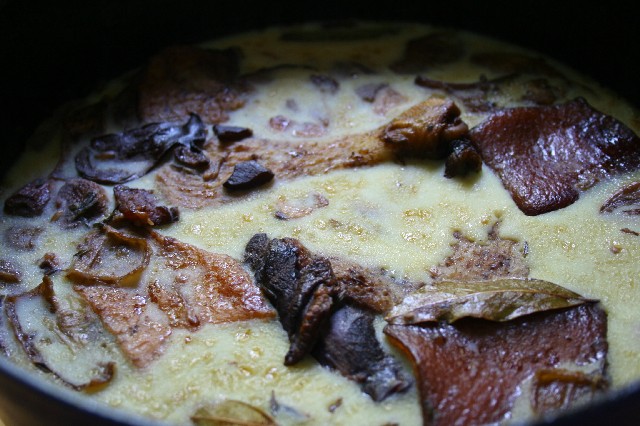
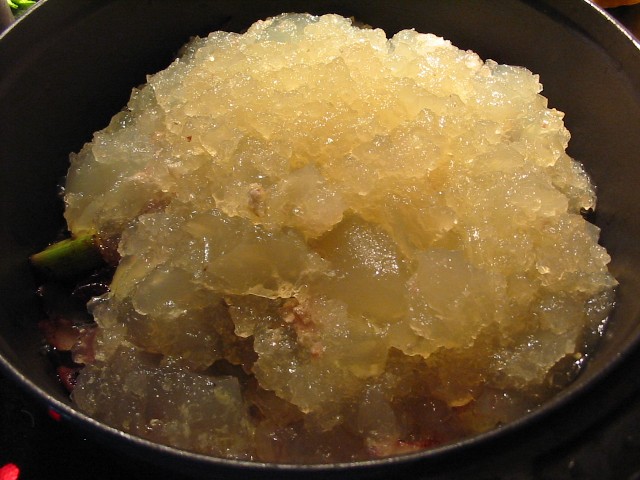
- Remove the casserole from the refrigerator. Note that the fat has risen to the top and congealed there. Take a small spoon and remove the congealed fat. Defatting your civet de canard will make it more digestible and the sauce more silky at the end. Don't skip this step.

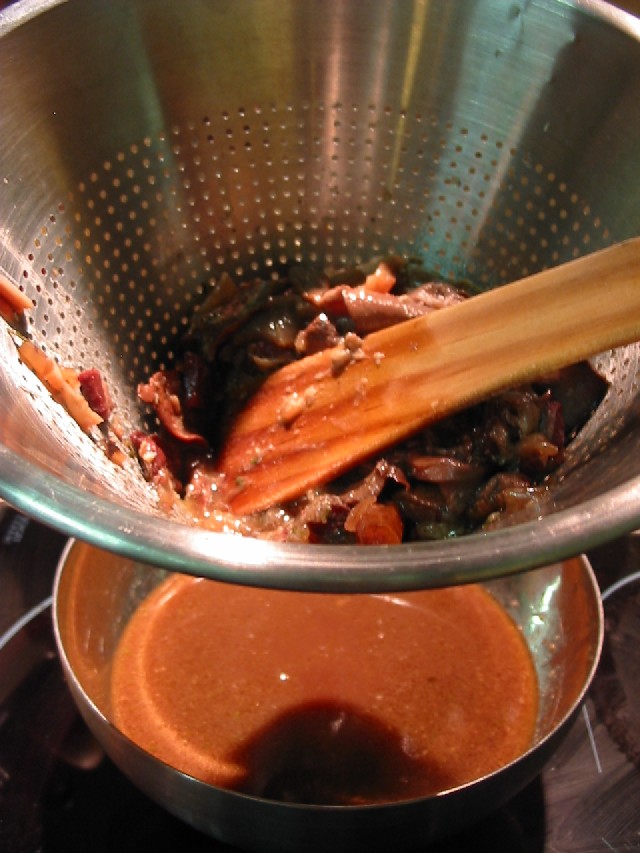
- Slowly heat the stew until all of the gelatinized parts have liquified, remove the duck and reserve. Using a chinois, strain the sauce into a bowl, and push down on the roasted vegetable to extract all of the juice. Transfer the sauce to a small saucepan, you should have about 2 1/2 cups. The vegetables in the chinois which have roasted with the duck should at this point take a bow and leave the stage. They will no longer play a role in this dish. (you decide what becomes of them...)


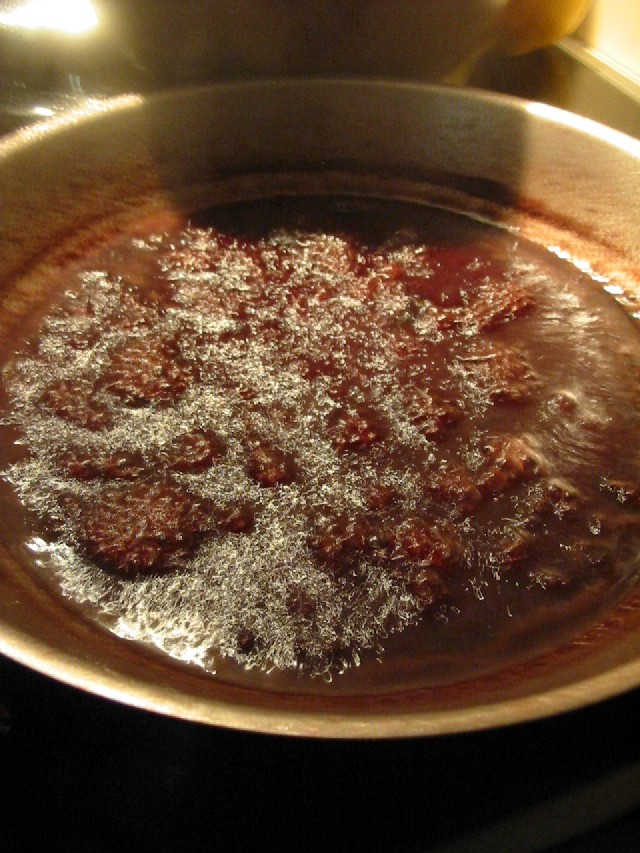
Return the casserole containing the sauce to the hot burner, and then pull it halfway off so that the heat only hits one side of the pan. This will allow any impurities circulate and rise to one area of the sauce as it boils. Skim the top regularly for 5 minutes. Your sauce should reduce in this time to about 2 cups.

- While your sauce is reducing, as you periodically skim the sauce, clean the rest of your cepes, cut them into rather large chunks and cut the quetsche plums in half. You can work up to this point in advance of your guests arriving.

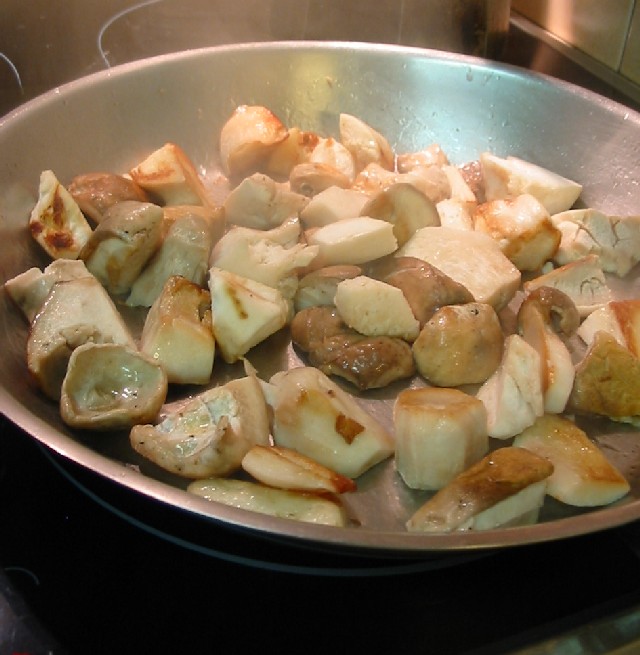
- 20 minutes before serving time, heat up a little bit of duck fat or butter in a skillet over medium high heat and add the cepe mushrooms, tossing and pushing them around turning the edges brown until they soften and release their juice. This will take about 3 minutes.


- Press the plums, flesh side down, into the skillet in between the mushrooms. Cover the skillet, turn the heat to low, and let them cook without disturbing for about 5 minutes. (have a martini!)


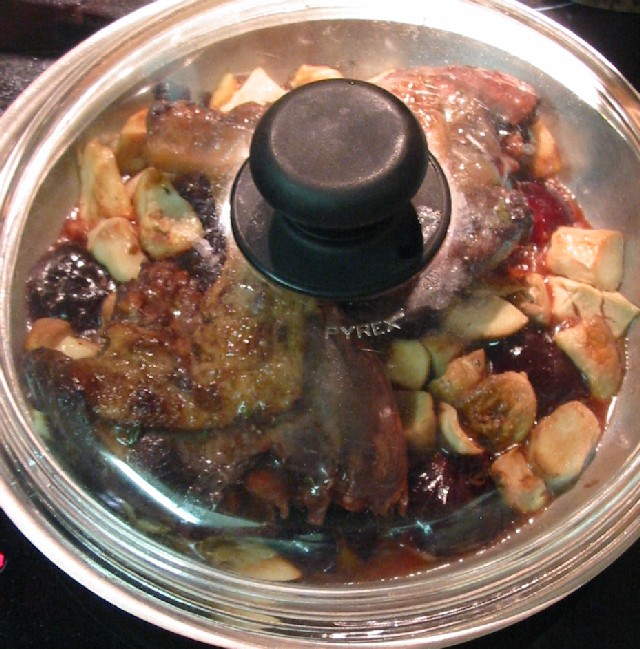
after 5 minutes of steaming

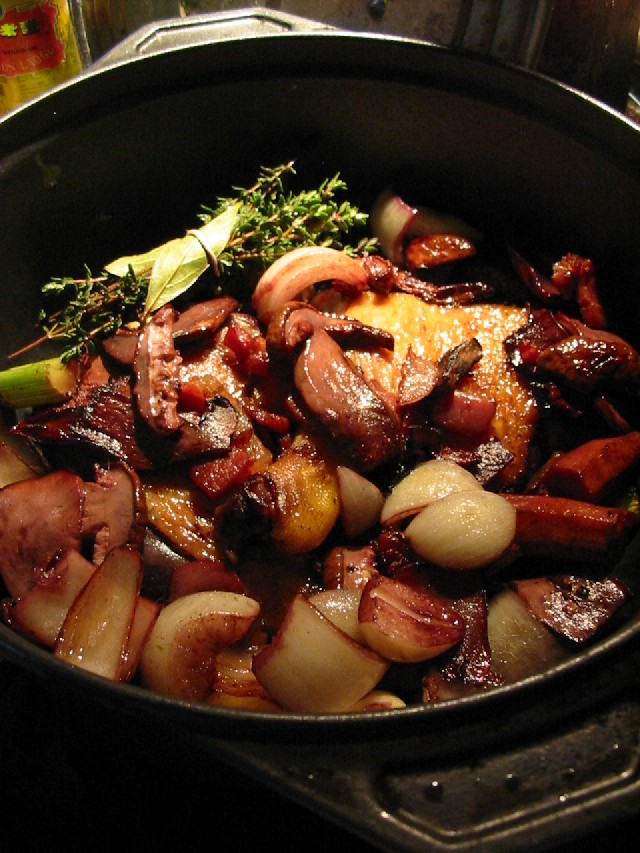
- Place the duck legs onto the mushrooms and plums, and let them steam in the plum juice for 15 minutes over low heat. (in 15 minutes, you will serve this dish.)

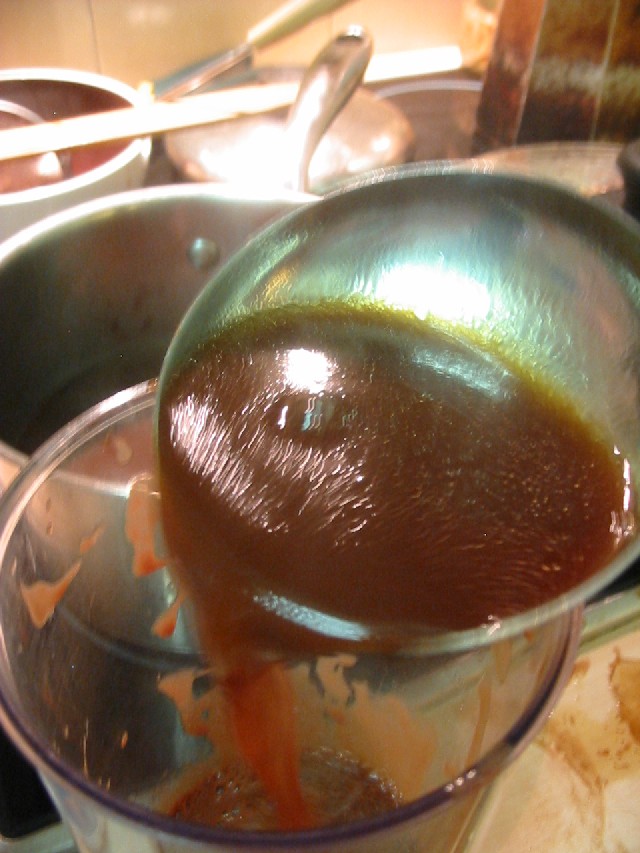
- Heat up the sauce again to a simmer, and give it one last skim. With a hand blender, puree the duck liver with 1 tablespoon of Armagnac. Add a ladle of hot sauce to the liver, blend again, and repeat.


Transfer the duck liver/armagnac blend to the sauce. You want to heat it up without boiling it, because if it boils, the liver will coagulate and the sauce will seperate. Think of it as a sauce hollanaise. Very gentle heat and lots of stirring, take it off just as it begins to steam and thicken. Adjust seasoning and add salt only if necessary, remember, you braised the duck legs with cured ham, you most likely won't need any salt. Add lemon juice to brighten the flavor.

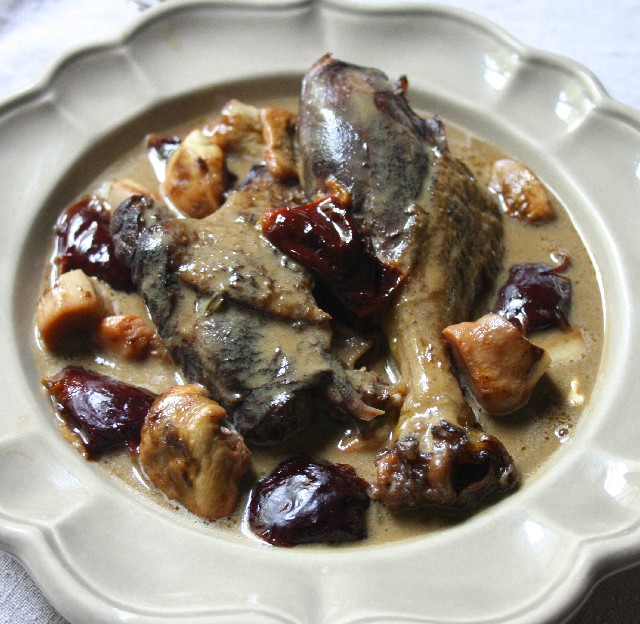
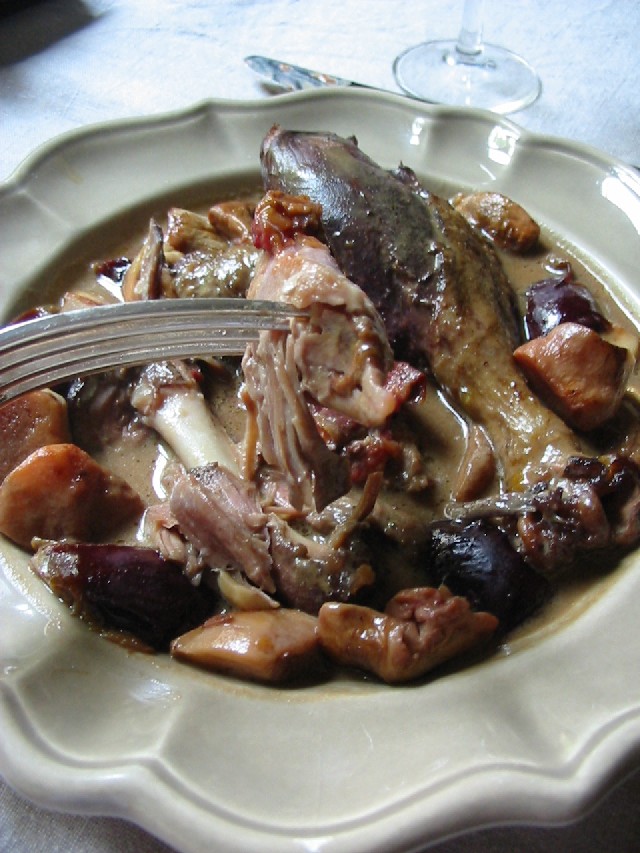
- Arrange mushrooms, plums, and duck legs on heated plates, nappe generously with the sauce, and serve immediately.


This dish is worth the wait for sure. People won't know what hit them.

Labels: , , ,


Share/Bookmark

Wednesday, September 06, 2006

What's in a Civet? -Part II

Taking up where I left off yesterday, the civet de cuisses de canard for two is in the making.

The civet is a French dish that many cooks simply overlook
because they see all the recipes and treatises on how it just isn't a Civet unless you enrich the sauce with the blood of the animal in the dish. Such purism is truly unfortunate, because it can be a really succulent and rich way of treating whatever game or poultry is available to you, and this dish should not be cast aside just because our customs and market practices have pretty much ruled out the idea of being able to purchase the fresh game blood to enrich the sauce. Any recipe calling the cook drain the blood of freshly slaughtered game into a recipient to set aside for later use harkens to another time, I'm afraid. That is just not going to happen unless you are a hunter. But even though I live in the city, I did not let that stop me, nor should it stop you.

I appreciate the quality and richness on the palate that such an enrichment brings, recalling something from dishes like boudin noir or figatelli - by all means we should try our best to achieve something like it when we prepare this dish. But I will stick to my guns and say that the animal's blood is not the actual ingredient that makes this dish what it is. Onions are. Otherwise it would not be named a Civet! It is certainly fine to use pureed poultry livers at the end. It will be delicious. We will enjoy it.

So - where were we?

Note about salt: I don't add any salt to this dish until it is ready to serve for two reasons. The first reason is that I will be braising the duck legs with salt cured ham, which will render a salty flavor to the dish, and the second is that roughly 2 quarts of stock and wine are reduced down to about 1 1/2 cups for the final sauce before enrichment. Therefore, it's really best to wait, and don't give in to the reflex to add salt at any step until the end.

The duck has marinated with the mushrooms, onions and garlic, carrots, celery, etc. in red wine overnight. It is now time to prepare for the braising.

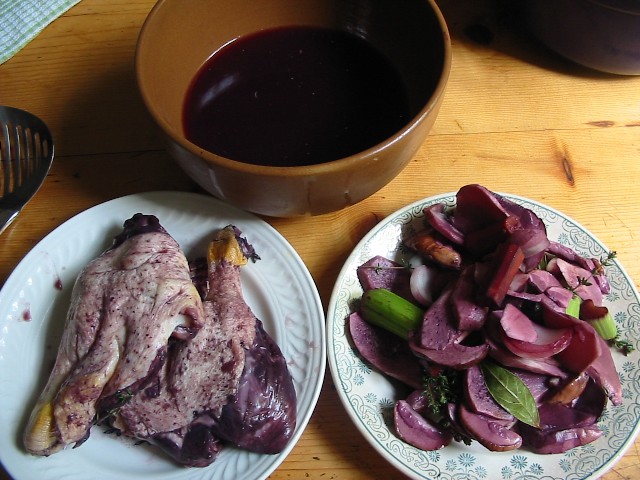
Remove the duck and the vegetables and herbs from the marinade, putting the duck on one plate and the vegetables in the other. Save everything, because it will all go into the pot.


Heat up the duck fat in a skillet over medium high heat, and put the duck pieces in, skin side down. Things will sizzle and pop.


Reduce the heat to about medium and leave them to brown for at least 5 minutes. Don't flip them, don't hover, don't bother them for at least those 5 minutes. The skin side will brown to a nice deep golden brown and the pan will release them cleanly when they're ready to flip. Flip them to the other side, and leave them again. When the meat has properly browned, the sizzling sound will not be as loud and noisy, it will quiet down. Transfer the duck legs to a heavy casserole, a heavy enamel covered cast iron pot. If you don't have one, use your heaviest covered braising dish.


Don't turn off the heat under the skillet. Chop the cured country ham or jambon de pays into little pieces and brown them in the same skillet. Transfer them to the casserole.


Tie the herbs which were in the marinade into a bouquet and add to the cooking pot. Put half of the marinade vegetables into the skillet in one layer and brown them in the hot fat. Transfer them to the casserole, and brown the remaining half as you did the first one.

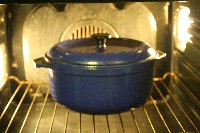
- Open the oven and prepare the rack inside to receive your casserole- the rack must be low enough to take it. Heat the oven to 160C. or 325F. While the oven is heating, pour off whatever hot fat remains in your skillet, and return it to the burner. Pour the wine into the skillet. While it bubbles, with a wooden spoon or spatula, scrape up anything that's stuck to the bottom, and then reduce the wine to about 1 cup.


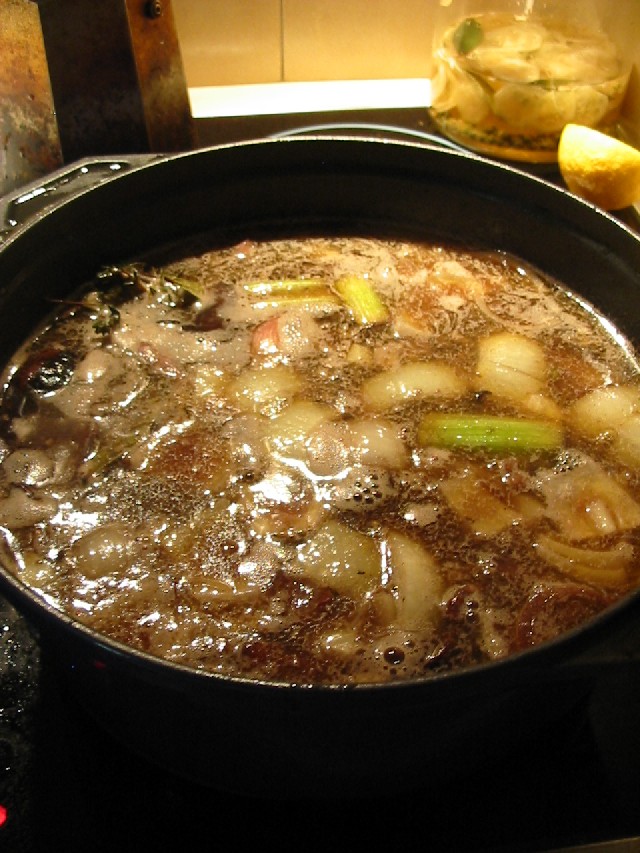
Add the reduced wine to the cooking pot with the duck, ham, veggies, etc. Cut the remaining onions, into 8 pieces and add them to the cooking pot. Add the couenne. Peel the remaining shallots and garlic and add them whole to the pot. Add about three cups of rich poultry broth to the pot, and bring to a slow boil.

My weekly poultry stock is normally made with chicken wings, duck wings, and guinea hen necks, plus whatever carcasses I have around. It turns to jelly when it's cold but melts at room temperature. If you need help preparing a basic stock, let me know. I'll help you.

Skim for 5 minutes, cover, and place the casserole in the oven. Let it cook for 2 and a half hours without disturbing it.


Normally what the good cook will do at this point is clean the kitchen and take care of other kitchen tasks. Once the dishwasher's loaded, the knives clean, dried and put on their rack, and you've got your hands deep a bowl of boiled duck wings leftover from your weekly broth, removing the rich dark meat for rilettes or dumplings, a certain perfume will overtake you and your special sense will be stirred with the rare song of pure gourmandise. You haven't even put one bite of this civet in your mouth but the sensation caused by the luscious perfume will take you to that higher plane. You will move to the buffet in the hall with a sense of satisfied purpose, straightening dishes and replacing some that you used. The neighbors may slow their step by your door as they pass your apartment on the way upstairs, and dwell for a moment. Outside your window on the street, several more people than usual will pause at the window of the Bang Olufson boutique, pretending to be contemplating the newest wireless speaker system.

When the timer says so, remove the casserole from the oven and check to see if the duck legs have relaxed. The meat will seperate from the bone when coaxed, but not falling off. If it is not ready yet, return it to the oven for another 1/2 hour. When it does come out and the meat checks done, set it on the stove to cool to room temperature. When it's cool enough, transfer it to the refrigerator.

Tomorrow: We get to eat it!

Labels: , , ,


Share/Bookmark

Tuesday, September 05, 2006

What's in a Civet? - Part I


This morning the traffic was not too bad and I enjoyed a bike ride down the Quai to get some fixings. I had in mind a Civet using the beautiful cepes and plums available, but I would not be sure which kind until I reached my volailler. I detached my basket, and worked my way down, purchasing nothing, just to get a good look at everything on the market this morning.
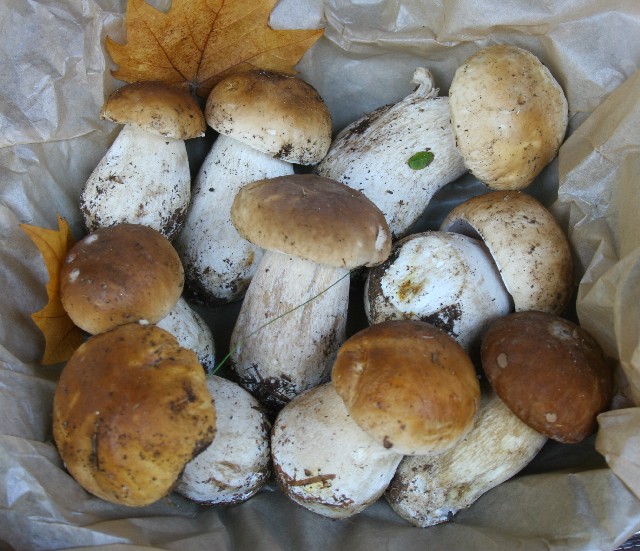
Absoluement feerique!

My first stop with the intention to buy was at my Volailler. Aside from the Poulet de Bresse man who gets a visit from me from time to time, she is generally the only place I go to purchase my poultry. This lady makes a ton of money from me. She sells quail, pigeon, 3 kinds of chickens, 2 types of cannetons, regular duck, guinea hen, fresh magret de canard, fresh duck and goose fat by the pot, her own duck gizzard confit (well her mother prepares it), fresh gizzards, livers, and hearts, chicken wings, duck wings, necks of all the birds, various poultry and game carved and placed on brochettes for grilling, stuffed and tied rotis and galettes, rabbits - whole and parts, and in season, small wild game of every kind you can imagine.

She's a strong woman. When we buy a rabbit, she asks me if I want it carved. If she carves it (I sometimes do it myself, when I'm in the mood, dpending on what I'm doing with it), she asks me if I want the head, and when I say 'yes', she whacks it with her cleaver before including it with the rest. In a word, she understands. Every week, I purchase two kilos of whatever wings and necks she's got to make my stock, which costs me very little. Even if I spend 3 euros in a week from her, she still smiles and treats me warmly. Almost every savory dish coming out of my kitchen contains the stock in some form, and she appreciates it. From regular broth to consommé, to thick glazed reductions, the stock enriches and fills out my cuisine. I have recently discovered that the duck wings yield excellent meat for rilettes after having played their part in the broth.

Today I asked for chicken breasts on the bone for something else, which she cut from a chicken for me while I looked at her other offerings. I decided after all that a little civet de cuisses de canard for two would be just the thing to set off the flavor of the beautiful cepes, and the plums are in full season. I had copied two seperate shopping lists this morning, and made my decision for which one to follow depending on what looked best. I also purchased thyme, parsley, some tarragon just because it's been awhile, 2 stalks of celery, 3 carrots, a few more cepes because they are so gorgeous, a lemon, and 3 potatoes from the man I think sold me the good ones a couple of weeks ago.
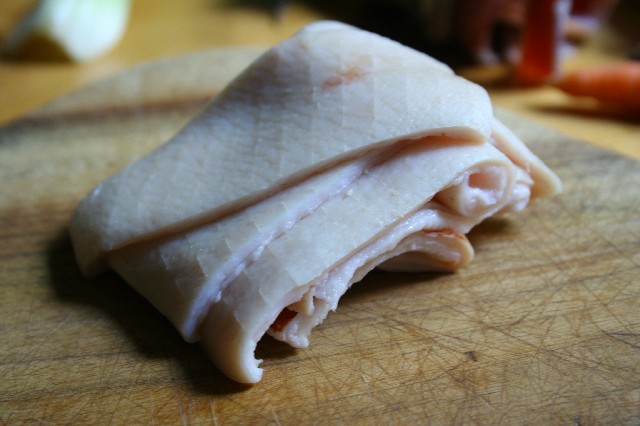
Couenne, or pork rind for the civet.

On the way home I stopped by the butcher and got a bit of pig skin which in French is called couenne, and a thick slice of jambon cru. I can tell him I want a piece that weighs a hundred grams and he cuts it without even a blink. He then pops it on the scale. 101 grams. Will that do, madame? Perfect. Voila. Keys in hand, I took a little detour down to the cave and pulled a bottle of some co-op vin de pays on the way in.

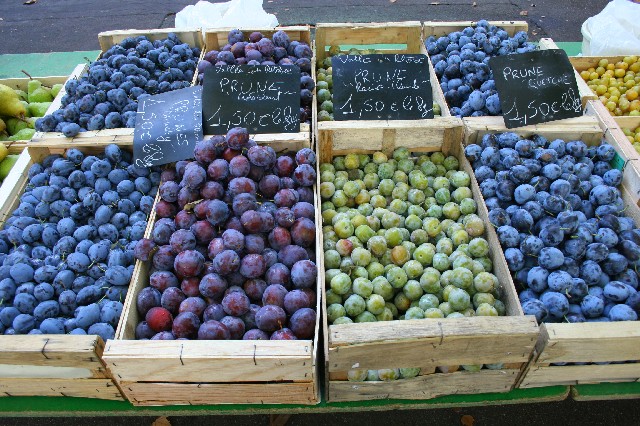
What's in a Civet? Well, basically, it's a braise, with lots of bulbs from the onion family. The name comes from the old word for onion - cive. Often we see that the wild hare, or the lièvre has been given the place of honor in this braise, although one can certainly argue for any gibier or flavorful volaille. Recipes involving sauces enriched and developed to gourmet perfection from Paris bistrots abound. This time I will prepare a recipe that is firmly set in the countryside. Actually the onions are what gives a civet its name, so it goes to follow that a "civet de lièvre" is a wild hare & onion stew, a civet de cuisse de canard for two, being stewed duck legs & onions. I suppose you could make a civet of just about anything, given what you've got, as long as you have onions and wine, and someting that will hold up to the flavors. At the finish of this dish, I am going to take advantage of something special we have at the market right now and include several firm quetsche plums, which are cheap and plentiful at the moment.

Where did this recipe come from? Hmmm. Having basically memorized every recipe in the 1983 edition to Paula Wolfert's The Cooking of Southwest France long before I ever knew I would ever have the chance to ever correspond with her, you can pretty much say that I come from the Wolfert School when it comes to cooking in that style. I followed her style based on that SW cooking book for a long time, and now it comes by instinct, having learned her methods and attention to detail. There are some books you go to for recipes, and some you read from cover to cover and ponder. Madame Wolfert's rich evokative writing and well worked recipes have given me lots to ponder over the years.

With the second edition of this book being issued last year, after I'd lived in France and been cooking French of all different styles for a good while, and having led the Spotlight Conversation with her on that topic over at eGullet, I paid extra close attention to the recipes that she added to her book this time. There is one recipe in the new edition (it's on page 261), for a Beef Daube, a beautiful generous recipe, which Paula attributes to chef Laurent Manrique, working in San Fransisco. He adapted his grandmother's favorite duck leg recipe into a beef daube. I looked at the ingredients carefully and saw the elements of a civet all through it, and thought that this is most likely what his Grandmother's recipe originated as, so I tried it that way. Delicious. That's where it began. I've reduced the garlic, added shallots, and used fresh plums instead of prunes to hone it to duck. Home and back again. I think it is a winner. I hope you do.

Civet de Canard for Two

Ingredients:

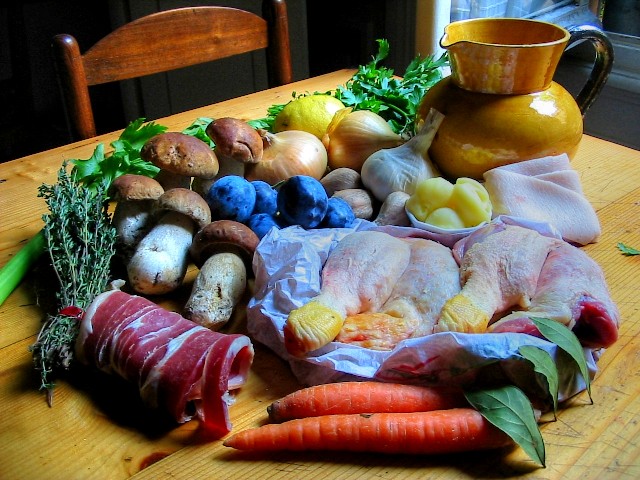
Just about everything is pictured here.
3 Onions
2 Shallots
1/2 head of Garlic
125 grams or about a 1/4 pound of Cèpes
2 whole duck legs, cut at the joint
Carrots cut into 2cm lengths
Celery cut into 2cm lengths
Red vin du pays, a sturdy full bodied wine
Herbs: a few sprigs of thyme, 3 French bay leaves, and parsley
-- and tomorrow, the addition of:
Salt and pepper
4 Tablespoons of Duck fat
About 3 oz. or 100 grams Couenne, or pork skin
Mixed duck, chicken, and guinea hen poultry stock
125 grams or 1/4 pound more cepes
100 grams or 3 oz. Country ham or Jambon de Pays
a half dozen Quetsche plums (plus one for eating!)
100 grams duck liver, or chicken liver if you can't get any
Armagnac to enrich the sauce as a final step

Day one: set the duck to marinate, this takes about 10 minutes.
Line the bowl with sliced cèpes, to allow the flavor of the mushrooms to better permeate during the marination process.
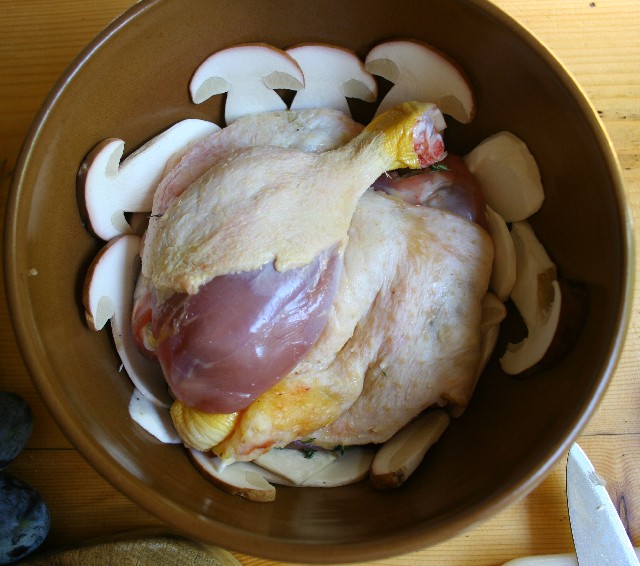
Place the duck on top of the cepes.
Add chopped onion, 5 cloves of garlic, 2 carrots cut into chunks, a stalk of celery cut the same way, a few sprigs of thyme and 3 bay leaves.
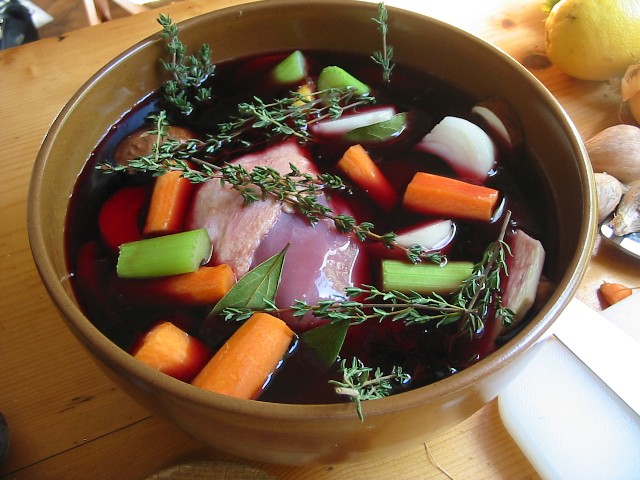
Pour the entire bottle of wine over it.
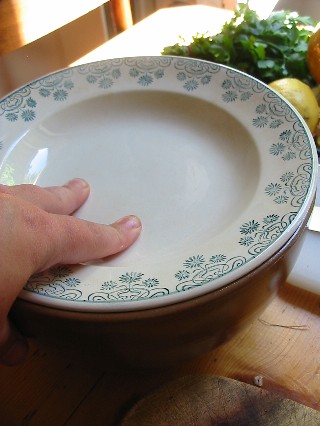
This will marinate, refrigerated, until tomorrow. I will turn the contents with a spoon to refresh the mix tonight before I go to bed.

See you tomorrow!

Labels: , , ,


Share/Bookmark