Monday, June 16, 2008

The PUDLO has Arrived!


The PUDLO guide has finally arrived! After months and months of translating my way through all of the regions of France, restaurant by restaurant, town after city, region after region, working with Phyllis on her part, then passing it on to dear Angela for production, the France guide is out.

This is the second PUDLO guide I have worked on, and I have to say that culinary translation is one of the most satisfying and educational experiences that a food loving writer can do. Not only did I enjoy the work, but I feel like a better person coming out of the experience.

Please do pick up your copy, and enjoy reading the list of Gilles Pudlowski's recommended restaurants throughout every corner of France. With approximately 1200 pages and 20,000 French ideas for dishes to choose from, the possibilities will never run out. This book is FULL of ideas.

Labels:


Share/Bookmark

Sunday, June 15, 2008

Watching Little Things Grow


Just back from the horse farm, we're thinking about so many things. Aude and Seb have finally found a place in the Auvergne where they'll be moving at the end of this summer, and Isabelle is doing well after her ankle operation. One of the horses was orphaned at birth a couple of weeks ago and takes 8 bibis (bottles) a day! Loic and I come home happy and refreshed after a weekend with the babies. Hopes and dreams of a little fixer-upper in the Alps, these ideas are taking up much of our energy.


Oh the daydreams that a little stone house and garden in the mountains can bring. Even if it does need a new roof. Ideas of a potager and what we'll plant row by row are laid out in my mind until I realize that first we must find some solution to the neighboring herd of cows that spend their afternoons lounging under the fruit trees where our future garden will be. Is there some kind of law that's going to keep us from fencing it off? Imagining we do get it cloistered off. Maybe just some nice landscaping will do. Meandering slate paths and cedar wood furniture under a natural vine and climbing rose covered natural wood awning unfurl in my mind, step by step. A smokehouse! This is the best time, when we can follow where our ideas go, think them through, and then rub out little details like charcoal from newsprint, to work them out some more. It's very nice to play with these ideas, dream about what they might become.


Summer's coming up and we've been eating tons of courgettes. A lamb shank simmered slowly with thick cut wedges brings out the best of early summer. We've also been tossing diced courgettes with cod, and rolling it with eggplant and oven roasting it with olive oil until it forms plump delicious steamy pillows. I'll be sharing some cooking this week, so tune in!

Labels:


Share/Bookmark

Wednesday, June 04, 2008

Ideas for Asparagus


It is still going strong, and friends are asking for ideas. Oh, the things you can do with asparagus! That's not to say that you shouldn't make a simple velouté or remove any woody parts and poach it delicately, then pluck the stalks up with your fingers one by one and nibble it plain. Any number of serving sauces and souped up mayonnaises which you have whisked up yourself with the various oils you love make wonderful accompaniments. It might be interesting to note that in France, white asparagus is the most common, so green asparagus is somewhat of a delicacy here. Due to the higher price it brings, green asparagus is beginning to get more space in the fields here. It sells like hotcakes, leaving the old fashioned noble plump white stalks to be gathered up by the likes of myself for consummation in bulk.

Shall we take a stroll around the country for a survey? Let's go! The dishes and pairings listed here are by geographic appearance only, and they may or may not be traditional to the regions. It depends on the chefs and where they've been, just so you know.

In restaurants in Alsace, we can see that like everywhere in France, fish and asparagus are paired quite readily. Atlantic sea bass or John Dory are common. Asparagus and morels are also presented together in a cup of puff pastry. They are scattering asparagus and veal sweetbreads over salad here.

Ride a wave the way down southwest to the Aquitaine, we see that fish is draped over an asparagus wheat 'risotto', and it is loved. Delicately spoon an asapragus velouté to your lips in emblem to your host country before popping local bite sized fried asparagus and mozerella as an appetizer. Pray to the god of the tides, and when the day is done, just dig in to tender wild mushrooms with morels tossed with local asparagus. Royally enjoy roasted scallops with smoked pumpkin and green asparagus to get your juices flowing. Follow with a formidable cod or Atlantic sea bass with asparagus and young broad beans (fevettes are getting bigger by the day, so act fast!), or that line fished whiting and asparagus in a local dish called the koskera. They're matching veal sweetbreads with green asparagus too, for the hard core purists.

Up into France profond in the Auvergne, Asparagus is making its appearance again with John Dory. In Bugundy, they're serving forth a cold asparagus cream, a novel venison fricassee served with asparagus, a match with pikeperch, and a pan toss with langoustines.

Brittany is prolific with creative uses of asparagus, although I'm not sure what to think about an asparagus and Aquitaine caviar 'milkshake' (hmmm. Those people who dance in circles have some crazy drinks up there!). Veal sweetbreads pain perdu with green asparagus, locally gathered scallops and green asparagus with beet juice alongside a mixed aromatic herb salad surpise and delight. Country cured bacon served with green asparagus sounds good, doesn't it? Catfish and asparagus with seaweed seasoned coulis, the classic combination of steamed Atlantic sea bass and asparagus, langoustine and asparagus risotto, more sea bass with sautéed fava beans, and cockle clams and asparagus served over polenta. One other adventurous creation is roasted langoustines with asparagus and coffee seasoned sauce.

In the region called the Centre, we have a crab, potato, and asparagus Chartreuse. The roasted turbot with a vegetable caviar (minced vegetables with a chef's choice of liaison) served with asparagus as its own attraction with chorizo seasoned butter. Seared foie gras with asparagus and hazelnut oil, a neat pikeperch and salmon terrine with asparagus, another use of crab with asparagus tips in salad. Panfried skate served with sweet potato purée and green asparagus is nourishing.

In the Champagne region, a slice of turbot with an asparagus risotto makes an appearance. Zoning in on the Franche Comte, a beef muzzle salad with balsamic and asparagus makes a nice marriage of in season and traditional. A creamy morel and green asparagus soup makes waves, or lake whitefish poached with chili peppers served with asparagus. Crayfish salad with asparagus, or a regional Luberon asparagus served with milk chantilly and diced smoked herring.

Just a few selections from the Ile-de-France and Paris, home of friend bloggers David Lebovitz and Clotilde Dusoulier. Imagine warm asparagus with soft boiled eggs and toast strips for dipping after a whirlwind day in the city. John Dory again walks hand in hand with asparagus. Atlantic sea bass served with green asparagus and an olive oil sauce with condiments, or you might find a smart city side of marinated cucumbers and asparagus to be served with a pepper crusted grilled rib eye, Parisian style. An asparagus and salmon flan might hit the spot in a Paris café. You might get frozen asparagus cream with a tomato granité as a palate cleanser. Sit down for puff pastry with asparagus, Bourbon vanilla marinated salmon served with asparagus purée, a white asparagus and morel mushroom fricassee, or large green asparagus with Parmesan, seasoned with truffles and a slow cooked black olive polenta accompaniment. Oh la la. Everything is possible here. How about a golden Bresse liver cake with Pouilly-Fuissé seasoned crayfish and Perthius asparagus tips, new onions, and Menton lemon paste? Of course the Parisians get their the best prime oysters and serve them with white Landais asparagus, the best of the best.

In the Languedoc-Roussilon, we see cod risotto with green asparagus. I don't have much more information from the region. In the Limousin, sea bass is served with raw and cooked asparagus, and I am ashamed to say I have nothing more to say about that region's use of it. Maybe local friends can chime in.

In the Lorraine, Bea's old home, the key words are fresh and tasty. We see a pretty little red mullet fillet broiled on one side and steamed over mushroom broth and asparagus. Turbot with green asparagus and grapefruit is served forth. A comforting creamy asparagus tip risotto, lake trout with asparagus and cured ham, the langoustine in a summer truffle crust with shellfish cappuccino and grated green asparagus, a snail and asparagus croustade, sautéed John Dory with a lemon confiture and asparagus, young pigeon terrine with duck foie gras accompanied by a little asparagus salad, and a simple pan tossed slice of veal sweetbread with asparagus tips.

Lets head to the Midi-Pyrenees, shall we? Kate Lives there! Dream of sweet weekends with green asparagus and frog legs presented in an emulsion of smoked bacon and olive oil, to start. It sounds divine, non? In the Haut Garonne, we're bowled over with the lobster tail with asparagus flanked with braised veal shank presented in its cooking jus. Hot plain asparagus comes out clean with an accompanying garlic sauce, an asparagus duo (green and white) floats in creamy soup alongside oyster brochettes. One can be pleasantly appeased with asparagus in vinaigrette with poached eggs in Gascony, and genuinely pleased with a fresh scallop and asparagus salad. Langoustines are paired with asparagus as well as pan tossed with veal sweetbreads. In the Tarn, a creamy asparagus soup with a poached egg is garnished with again, diced smoked herring! Speaking of smoked, lox makes an appearance with radishes and asparagus in an opening note in one restuarant. Not to forget a delicious pocket of curry seasoned crab and asparagus tucked into puff pastry in the town of Montauban. God, I love it down there.

N is for Nord-Pas-de-Calais. What's cooking on the asparagus front there? Again, line fished sea bass is paired with our lovable stalk, more than once in this region. A veal scallop is served with a novel salsify and asparagus combination, and crab and haddock are topped with creamed asparagus in a verrine.

In the Normandy region, proper and straight shooting. Our friends from Calvados like sea urchin in its shell with eggs and green asparagus, a tender rein into tradition. Sweet stalks of asparagus rolled in sole. A fingerfood fest ensues with roasted whole lobster with a side of asparagus, and correction in spades with a civilized asparagus feuilleté with a morel mushroom cream sauce. The pikeperch poached in red wine and served on a bed of asparagus sounds like an interesting way to present it, and a champagne flute with spider crab, leeks and asparagus all topped with a salad burnet emulsion is an entertaining course. Served with turbot and in terrine, asparagus makes its mark in Normandy. Delectable idea: lobster meat served in a jar, layered with slow cooked pork cheek and asparagus tips. Normandy likes verrines.

In the Pays-de-la-Loire, let's begin with a beef tenderloin with wild mushroom duxelles (minced and creamed) served with green asparagus. Tossed with langoustines or served with lobster medallions and a truffle oil vinaigrette, we're in heaven. A duckling fillet is served with green asparagus and Pancetta and the lot is drizzled with a pear seasoned reduction, hello fruit! Two points to the ladies! It sounds simple and delicious served aside roasted salmon with slow cooked onions and peppers, or with oven crisped crab and beets. The milk fed veal medallions with asparagus again strikes a note.

In Poitou-Charentes, asparagus makes a colorful presentation with the classic turbot, and it is simmered with shallots in wine to accompany drum fish. A smoked salmon and asparagus terrine makes an appearance as well.

In Provence and the Cotes d'Azur... Asparagus comes graced with shavings of chorizo, Mediterranean sea bass is again paired with asparagus and morel mushrooms, or purple asparagus comes to the table with a truffle infused glaze and a side of foie gras. Mediterranean sea bass again is a classic match served with leeks in truffled sauce, or we find a spicy pork tenderloin medallion served with crunchy asparagus fricassee featuring larch sprouts. Bask in the generous sun and be served a simple egg with asparagus cream, green asparagus cut into fans and served simply, or cooked slow and served a slice of foie gras and drizzled with aged balsamic jus. Enjoy it pan tossed with fresh morels and served with shavings of parmesan and a warm vinaigrette, in an asparagus Mikado with gratined speck, or served with a truffle mousseline. A simple poultry terrine with asparagus, mushroom macaroni stuffed with John Dory, asparagus and morels, or green asparagus tips in salad, served with a white truffle oil infused mascarpone quenelle. A stuffed pigeon roasted with green asparagus and fresh chanterelles sounds divine. Consider a tomato, basil, and garlic aspic with asparagus. A fried egg with shellfish and asparagus might hit the spot, or pair it with pan seared tuna. Try it with potatoes in an asparagus tarte parmentière. The more east you go, the more you see asparagus in risotto.

Back to the Rhone Alpes. Red mullet comes with asparagus and ham chips, or you might choose a slice of pan seared foie gras served over an asparagus pain perdu. Veal cutlets with their accompanying oyster mushrooms and asparagus might please you. Asperges sauce mousseline, or a creamy asparagus soup with morels and scallops nods to the regions. In Lyon, we regale in a delicious breed of Monkfish, traditionally and locally fished and served with chanterelles and asparagus, roasted jumbo shrimp glazed with shellfish jus and served along with an asparagus tip tartelette, turbot, thick sliced and oven-browned, served with a steamed asparagus terrine drizzled with fresh verbena infused jus. You might enjoy green asparagus cake with beet and fig sauce, or a lobster on salad with a white asparagus carpaccio. Line fished sole napped with Vin d'Apremont sauce and served with asparagus might just be the perfect ending to this trip around the country of France, as you round about this place I call home.

To summarize: In all, there are a lot of pairings, with seafood clearly taking priority all over France. The veloutes and creams caught my eye as they always do, as well as that nice garnish of diced smoked herring, sometimes called a smoked herring caviar that surfaced in two different regions. Tender veal and asparagus go hand in hand, with a special nod to sweetbreads. For sauces, you might think outside of the mouselline cream hollandaise box with fresh snappy flavors such as lemon confit, verbena, or grapefruit, especially if you are going for the seafood pairing. Simple sautes are popular in all regions, with the season's mushrooms (oyster or mousserons and morels, or black trumpets falling on an early cusp). Down south especially, chorizo or shaved Parmesan might make an embematic appearance with the oils of the regions over asparagus.
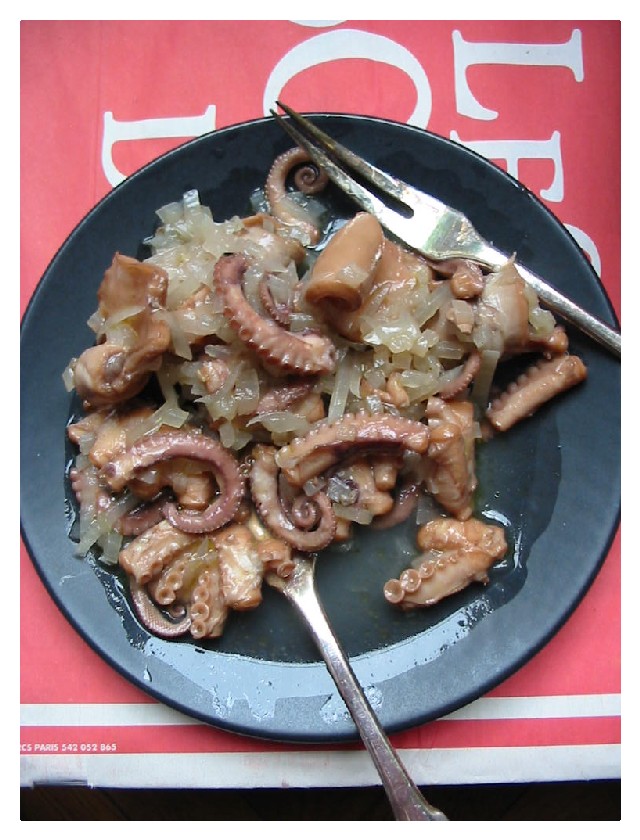
Voila, dear friends, I hope you enjoy it and can glean some ideas for asparagus from this survey.

Labels: ,


Share/Bookmark

Tuesday, June 03, 2008

Shallots, St. Antoine Market, Lyon

Labels: , ,


Share/Bookmark

Monday, June 02, 2008

How My Father Would Handle This


A blessing in disguise, really.
Our neighbor's kitchen is above our bedroom, and some time during the winter, a slow leak developed a water supply hose to their dishwasher. Underneath this built-in appliance, water slowly dripped over time, seeping through and over the wood beams between their kitchen floor and into our bedroom, taking color along the way, and blooming out into a frightening yellow stain across our ceiling, which also began to crack.

After some initial upset involving calling the neighbors, long discussions, emphatic denials of any problem at all then turning into a maybe, then finally an agreement for a plumber to check it out and eventually fix the very slow leak upstairs, we were on our way to a solution. It took some time, but finally the wheels rolled into motion to bring us to last week, when workers came to do the repairs at our house.

We lucked out with the man our contractor sent to oversee the work, an old pro. On the verge of retirement, this fatherly figure has 48 years of experience. He has worked on lots of big jobs, sometimes gutting the interiors of old apartments, removing walls and replacing windows. When people don't specifically request to save the hardware during the remodels, he salvages the bits and pieces that would otherwise be thrown away. Hooks, handles, sometimes stained glass, even fireplaces get removed from structures sometimes hundreds of years old to accommodate new plans, new tastes. You would be surprised at what gets discarded. He brought me a bucket of doorknobs on his second day on the job, after we'd discussed some architectural details in this little Belle Epoch apartment. It was very nice of him. And it got me thinking.

Sometimes, especially when you're communicating in a foreign language, you get into a discussion where a word comes up repeatedly and if the discussion isn't too complicated, the back of your mind can work on the words, the language. For example, this word, poignée. Funny little word. It means handle or knob, but I first began to use it steadily at the market, because the word also means "handful". Good for spinach and mixed greens, dried Soissons and mushrooms, cherries heaped into mountains on the first weekend in June, Mirabelles, just about anything that you can pick up and scoop with your hands into your market basket. We often don't need any more than a handful, do we? I learned it years ago from the sellers at the market, and thought about it carefully again last week. In fact, every time I open a door, I also think on the many levels of this word.

The Chinese have a thing for these kinds of similes. They infer meaning by word choices, knowing that there may be 8 or more different words represented by a certain syllable, depending on the inflection. Part of the beauty and richness of Chinese linguistic communication comes from a choice of words, with a knowledge and special attention paid to the underlying meaning in the overall scheme of things. It makes Chinese literature extremely rich with symbol and hidden meaning. It also makes it easy to ease an idea into a discussion, slowly, maybe an idea you'd never hit straight on for reasons of politesse.

I made a decision during this past year to commit to a pretty big project, and to do it right. In many ways, commitment to this project opened a new door for me. At first, it seemed quite a natural thing to do, and I began to tackle it with joyous abandon and scattered energy. Then, when it came down to the nitty gritty, I realized that I was going to have to suffer to get this thing under control. It was much bigger than me. As it bucked and kicked around, I began to think of its scope and get frightened. That's when I remembered my father. In his spare time, he worked on creative projects that were simply extraordinary. Anyone who knew John Sellers can attest to this. For example, the boat. He didn't just have a knack with wood. It was something spiritual. And it was all his.

His creative projects came to represent his spiritual livelihood, and after he died, this spirit became his legacy. The beauty of it all was that he was never under the gun. Not under contract, never any reason to rush through any project or cut corners. Throughout his life, he was able to maintain a level of concentration on distant goals that resulted in, quite frankly, his achieving an artisan's mastery over wood and the wind that fed his soul and that of everyone around him. A man of few words, he would break down a project into little pieces, and tackle them silently, one by one. Thinking of the beautiful projects my father undertook throughout his life and his handful by handful approach to them gave me great comfort as I slowly get a handle on my own.

Labels:


Share/Bookmark

Thursday, May 22, 2008

What to do With Your Strawberries


As we wade into the strawberry sea, I've taken a quick spy around the country to see what they are doing with them here in France. Here's a list.

You could begin with a strawberry gazpacho
or a strawberry tartare,
an Amaretto seasoned strawberry blanc-manger,
strawberry and lime mousse served with yogurt and strawberry jelly,
a strawberry vacherin,
pistachio seasoned strawberries,
strawberry beignets with fresh passion fruit vinaigrette,
strawberry soup seasoned with tarragon and olive oil and served with litchi sorbet,
chocolate tartlettes with pistachio ice cream and strawberry sauce,
Gariguette strawberry rice pudding served with gelatin glazed rhubarb and raspberry sorbet,
strawberry pain perdu,
a Mara des Bois strawberry crème brûlée served with ice cream,
a goblet of whipped strawberry champagne and rose cream,
"Grand Cru" chocolate with strawberry and raspberry accompaniments,
strawberry mille-feuille with vanilla infused cream sauce,
Carros strawberry gratin with Menton lemons,
a frozen vanilla rhubarb dessert with their divine idea of crushed candied almonds,
a simple strawberry and chocolate mille-feuille,
strawberries in Muscat wine flavored gelatin served with a Breton shortbread,
simplify with strawberry shortbread,
frozen Béthune strawberry parfait with marshmallow syrup,
caramelized mille-feuille with light strawberry mousse,
strawberry charlotte,
lovage and strawbery flavored ice cream,
a strawberry gratin with honey and lavendar ice cream,
tartare of tomato and strawberries served with iced milk seasoned mint tea,
basil seasoned strawberries served with lime sorbet,
a strawberry soup with verbena ice cream,
strawberry seasoned lentil flour pastry served with strawberry lemon thyme sauce,
Sologne strawberry feuillantine,
strawberry gratin with wine and lime jelly,
strawberry champagne soup,
frozen strawberry tulips served in a coconut cloud with banana caramel,
strawberry and pistachio macaron,
strawberry succès,
wild strawberries with vanilla infused olive oil,
white chocolate croustillant with strawberries,
foie gras with Carpentras strawberry macarons,
strawberry rhubarb sablé,
pain perdu with strawberries and fromage blanc ice cream,
puff pastry with strawberries and mascarpone cheese,
frozen honey flavored nougat with a strawberry coulis,
strawberries served with a rhubarb and anise seasoned compote,
pan tossed strawberries and rhubarb,
tube of meringue and wild strawberry tartare,
variations on the theme of strawberry (cappuccino, marinated in balsamic vinegar and sorbet),
wild strawberry and lemon gratin,
strawberry and basil soufflé,
strawberry cheese cake,
hazelnut and strawberry russe,
strawberry and lemon cream macarons,
strawberry profiteroles with pistachio ice cream,
mint glazed strawberry soup,
strawberry soufflé,
strawberry tiramisu,
strawberry in puffed pastry drizzled with a fruit colis,
a strawberry mille-feuille,
a dried strawberry crème brûlée,
crisp potatoes and smoked trout with chive and strawberry seasoned cheese,
mint and basil infused strawberry soup served with a chocolate truffle and mango ice cream,
strawberries in their jus served with a white chocolate ice cream,
melon and strawberry jello with grilled pistachios,
an exquisite rum and pineapple-vanilla milk shake with medlar berries and strawberries in honey,
pigeon breast with strawberry marmelade,
a wild strawberry mille-feuille with lemongrass seasoned strawberry sauce and soft white cheese sorbet,
strawberry tempura,
a wild strawberry thin tart cooked to order,
strawberry meringue with lavender infused sauce,
cherry and strawberry soup with ginger seasoned wine served with a fresh white cheese ice cream,
Romanoff strawberries served with vanilla ice cream,
rhubarb and strawberry crumble with a hint of refreshing lime flavor,
dark chocolate palets with basil seasoned strawberries and raspberries,
Anisette flambeed strawberries,
olive seasoned strawberry compote served with olive ice cream,
a strawberry pistachio macaron with lemongrass infused straberries and served with a scoop of pistachio ice cream,
Strawberry Melba,
flambéed meringue and strawberries,
a strawberry dacquois,
a strawberry delicacy served in a crunchy "cage" with herbal infusions,
strawberry gratin with Génépi and a vanilla sabayon,
strawberries in a sweet Jurancon wine broth,
a strawberry, tomato and passionfruit tartare with raspberry sorbet,
pan tossed strawberries served with cool mint, bergemot, and Mara des Bois sorbet,
cube of pear enrobed in mango and strawberries, strawberry and red wine soup,
a Plougastel strawberry and spiced wine gratin,
strawberry harlequin,
a cascade of strawberries with rose ice cream,
strawberry and coconut spring rolls with chocolate sauce,
Mara des Bois strawberry tart with a wedge of verbena panna cotta,
strawberry gratin with orange flower sabayon,
raspberry and rhubarb feuilleté with nougatine ice cream,
a strawberry sabayon with Vourvay wine,
strawberry soup with lemon jelly and coconut cream,
a strawberry and rhubarb tiramisu served with chestnut honey ice cream,
strawberries pan tossed in salted butter and served with a buckwheat crumble with vanilla ice cream,
the crunchy honey leaf, a light thyme cream, and a strawberry soup with vanilla bean ice cream,
Gariguette strawberries with Provençal yellow peaches,
macaron cookie shells with fresh white cheese mousseline and strawberries,
strawberry and orange chaud-froid flambéed with Grand Marnier,
strawberry mille-feuille with basil sauce,
liquorice flavored strawberries,
Pino Noir seasoned strawberry soup served with cinnamon ice cream,
a simple wreath of minced strawberries,
thin sliced strawberries served with mixed berry jelly,
strawberry flavored frozen meringue cream, strawberry milkshake,
thyme infused strawberries in wine,
strawberry and rhubarb marmelade with light fresh cheese cream,
strawberries in orange flower infused cane sugar syrup,
an apple and strawberry crumble,
Carpentras strawberry confiture with pistachio ice cream,
vanilla and strawberry marmalade crème brûlée,
panna cotta with strawberry sauce served with a lemon brioche,
Plougastel strawberries drizzled with black olive honey and served with a basil infused lime granité,
Strawberry vacherin with thyme lemon ice cream,
wild strawberry gratin with passionfruit,
strawberry and raspberry cappuccino with rice pudding,
or strawberry jam.

Now you can't say you don't have any ideas for what to do with your strawberries.

Labels: ,


Share/Bookmark

Saturday, May 10, 2008

The Chalet


You may remember one evening when we sat by candlelight and listened to the story of our cousins' family tradition making Genepi Maison. The story was more than one about a family recipe, but a father and his long walks in the mountain with his sons. This week we went to visit their family chalet in the Alps. It is a house that began as one family's weekend home, and has progressed now that the children are grown, married, and have children that themselves have grown, into a place shared by all of the cousins for family meetings, weekends and holidays.


Spirit of the mountains and family are intermingled in this little house that holds a surprisingly huge number of people when all the beds are rolled out. I loved the spirit of respect for others too. Little plaques and framed reminders about how to keep things pleasant for everyone, not to leave your belongings trailing about, where things are kept and how to maintain everything from the aerating equipment in the upstairs shower to the ski rack in the mud room were everywhere. Rightly so. Because of the careful planning and guidelines set by Philippe's father, everyone in the family gets an equal welcome in the chalet. These are useful rules that set a good example for the children and prepare for many happy years. I will run my country home this way one day.


In the winter of course the slopes provide endless entertainment, and in the summer you can go up into the mountains and walk or climb. Adventurous cousins have embraced a special relationship with the hills. What they call a little walk is a hard core hike for someone like me. Their commitment to mountain sport reminds me a little bit of the sailing culture I grew up around.

When we were out walking, green things were just beginning to sprout from the ground after the melt. The snow had picked up lots of rocks and put them down in new piles and formations. The trails we enjoyed were mostly clear. Waterfalls and gorged streams rushed melted snow to the valleys. Hamlets and towns are nestled in between the mountains, one after another, reached by twisting roads at vertiginous heights. Spring smells gorgeous. I was singing "The Hills are Alive" all week long!


The little pies are a local specialty sold in the town.

Labels:


Share/Bookmark

Monday, May 05, 2008

Postcard: Provence

Labels: ,


Share/Bookmark

Saturday, May 03, 2008

Artichauts à la Barigoule


The first weekend of May is kind of like a whole holiday season in France. Even though only the first day of the month is the official holiday (France’s Labor Day), a whole lot of people turn it into a vacation. To faire le pont means to make a bridge between a holiday and the weekend closest to it, to get a nice 4 or 5 day stretch of R&R using only a day or two of precious yearly vacation time.

Shutters are slammed, houses sealed, cars loaded with equipment and children, and the autoroutes suddenly get clogged with cars. Predicted road conditions for the weekend all over the country are reported on the news and radio, alerts and traffic jam warnings are announced. We hit the road to visit family in Provence!


Our first morning, we went to the market with Brigitte on Cours Lafayette in Toulon. We saw lots of lovely thinks like artichokes, feves and other legumes, green beans, peas, and herbs ready to eat and coming from the neighboring towns. The great thing about spring in Provence is all those things we’ve been craving over the winter have burst forth like an explosion down here.


Brigitte suggested Artichauts à la Barigoule, how can we resist? We got some artichokes grown on a farm in the town that has our favorite summer beach. Artichauts à la Barigoule is classic all through the restaurants of the Cote d’Azur. From Nice to Marseille, you’ll surely see it on café tables at this time of year. Simmered artichokes in the style of Provence. You can serve them simply without meat, enjoy them with a classic addition of bacon, or even better, stuff them for a delicious first course or supper.

Artichauts à la Barigoule - The Recipe


6-8 small artichokes
5 tablespoons olive oil
1 medium onion
2-3 carrots
¾ cup dry white wine or vermouth, according to preference (Brigitte likes to use Noilly Pratt)
4 cloves of garlic (fresh if possible, but winter garlic will also do)
Salt, pepper


Pare the artichokes, tugging off any hard scaly leaves at the base, and clipping off the scaly points with thorns from the ends of the leaves with a pair of kitchen scissors. For the top end, use a knife to generously slice off the top, as far as halfway down, depending on the freshness and maturity of your artichokes. Do not be shy about cutting your artichokes. The edible part is inside, at the bottom.

Mince the onions, dice the carrots and cut up your garlic. If you are using old garlic, mince it up small. If you are using fresh garlic, you can chop it up roughly into chunks, since it’s much milder in flavor. At this time of year, the big chunks of garlic look nice and taste wonderful.


In a heavy bottomed skillet that has a cover, heat two tablespoons of olive oil and add the diced onion and carrots, spreading them across the bottom of the pot. Place the artichokes over the bed of onions and carrots with the leaves facing up, season with salt and pepper, drizzle two more tablespoons of olive oil on top, cover the dish, and cook over medium heat for 10 to 15 minutes, shaking the pot from time to time. The artichokes, onion and the carrot will release some juice at first, so keep the cover on, because they will steam in these juices. After about 15 minutes like this, the onion and carrot will begin to caramelize underneath, turning brown. You’ll smell it, the smell of the steaming artichokes will mingle with the warm nutty perfume of caramelizing onion.

Today, the Provencal sun streamed like hot liquid through the kitchen window, making me think of summer and the beaches, warm pebbles between our toes. My imagination got away with me and I mistook the sizzling noise coming from my artichauts à la barigoule for the buzz of summer chicadas. The cool spring chorus of singing birds in the garden was upstaged by the sizzling caramelizing onions, and I knew the time had come to throw a little wine on it.

Add white wine all at once, and let it bubble without covering for another 5 minutes, allowing the liquid to reduce by half. Some people might add some minced bacon at this point, but that is optional. Sprinkle the garlic on top, drizzle with another 1/3 cup of water, lower the heat and simmer, covered, for another 15-20 minutes.


The recipe is ready to serve, but you can stuff them to make a main course...

The artichokes can be served like this. Chilled or warm, simple Arichauts à la Barigoule. We take the whole artichoke, and eat the soft edible parts, the silky inner leaves, the heart. If you want to chill them, let them return to room temperature and move them to the refrigerator in their pot.

Today, since we were going to have them for lunch and only had some beans to serve with them, Brigitte and I agreed that it would be nice to stuff them. What you stuff your artichauts à la barigoule with is really up to you. Traditionally it is done with a little bit of fresh pork belly, sautéed to cook through, seasoned with maybe some garlic and nutmeg, a little parsley and onion, with a panade of bread crusts soaked in cooking liquids worked into the lot.

We had some plain sausage today, so I used it in the stuffing. That, with some sage from the garden, a crumbled handful of the herbes that Yves picked up from one of his walks in the garrigue, and I stopped there, feeling like it needed nothing more.


To stuff them, carefully remove the cottony inner part above the heart, reserving the tender inner leaves

While they are still warm and they are nestled into their dish, pinch out the very center bunch of leaves and carefully scrape out the cottony layer above the heart, leaving a nice little pouch for stuffing in the middle of each one. You can reserve the little bunch of soft leaves from above the cotton, and include them in the stuffing or use them to garnish a salad. Note, very small young fresh garden artichokes might not have developed the cottony part, all the better, but most of the ones you see at the market will have it.


Stuff the artichokes with your meat mixture, and cover the dish with foil. Heat through in a moderate oven, removing the foil and putting them under the broiler to brown the tops just before serving. Stuffing the artichokes adds a whole new dimension to this recipe!

Labels:


Share/Bookmark

Sunday, April 27, 2008

Surprisingly Sophisticated...


I had a strong suspicion that this would still be simply elegant as an adult dessert

This month, the Daring Bakers were challenged
with a recipe called Chocolate Covered Cheesecake Pops, using lollipop sticks. The principle is that the cheesecake be presented like a lollipop, to eat with child-like nostalgia from the end of the stick. Combined with the great cheesecake I remember from home, the whole concept packs a double whammy of memories and kiddie fun. I loved the idea.

Unfortunately I wasn't able to find any lollipop sticks anywhere in the city of Lyon, but I still wanted to try this recipe and join the challenge. I had a strong suspicion that without the actual sticks, this recipe would still be simply elegant as an adult dessert, to be drizzled with chocolate caramel syrup and eaten with a dessert fork. Well, the verdict is in, my friends. This recipe is excellent. The cheesecake has a rich soft sophisticated New York personality, wrapped in a dark chocolate covering that is like the perfect little black dress.

Even without the chocolate finish, this recipe is a great one for cheesecake. I've noted it carefully in my notebook. I used my regular white cheese coming from the farm that I pick up at the market on Sunday mornings. It worked perfectly. It's a keeper, and I imagine I will be preparing these chocolate covered cheesecake bites again and again through the years. I'd love to get my hands on some lollipop sticks one of these days and have a blast with the sprinkles and ribbons. Maybe after we have some kids to join in the fun! For the moment, we're cherishing the quiet dinners (this time with Anne and Greg), with the window open looking out over the square, and appreciating the sophistication that these chocolate covered New York style cheesecake bites deliver.

Thank you Daring Bakers! And to Elle & Deborah who hosted this challenge (you can get the recipe by visiting Deborah's blog).

Labels: ,


Share/Bookmark

Wednesday, April 23, 2008

Lyon 2ème: Marché Fermier at Place Carnot


On Wednesday evenings starting at four o'clock
and going until 7:30 PM, there's a market that sets up at Place Carnot, in front of the Perrache train station, quite special in two ways. Being a night market where people can go after work gives it a special draw, and stands run strictly by producers makes the level of quality of the Marché Fermier at Place Carnot one of the best in town.


The mean freshness quotient of the products offered at the Wednesday night market is far above any of the others, which makes it very hard to keep from buying more than you can carry. It's one of those markets where you can trust everything there and you want to buy a little of everything.


Local things are found cheaply that are only offered at much higher prices elsewhere. Even though the quality here is excellent and the prices low, it's like a little secret, discreetly setting up and taking down at the end of the day in the middle of the week, without fanfare or crowds.


There are only a few stands, but the quality at each one makes this market definitely worth penciling in on your agenda. In fact, meeting friends and turning your errand into a pleasant apéro is a great idea, since the northern end of Place Carnot is surrounded by outdoor cafés with lots of seating, people to watch, and evening sun.


At the Marché Fermier, we very rarely ever hear anyone calling out to sell their wares. In fact it might be called a silent market. Every single stand is run by farmers, who don't have a habit of raising their voices. Their selling point is the terroir, and with this as your product, there is no song and dance necessary. We are content to listen to the evening birds singing in the trees above the square. If you speak French, you'll also be rewarded with a special kind of friendly chit chat from the farmers, who are proud of their product, know everything about it, and are happy to answer a hundred questions shot off at them city style in rat tat tat fashion. Ahem.


In addition to ultra fresh produce, I come here for poultry, with not only an AOC Bresse Chicken producer on site, but also a steady supply of small flock farm raised birds - one taste of the soup from an old hen from one of the little stands that sells baked goods and preserves and you'll dream about the next time you can make it to this market. Some interesting charcuterie can be found here as well. Very much steeped in local tradition, there is a man who does a very nice couenne, a sausage made from ground pork skin, that you can spread along the bottom of a baking dish below any kind of bean or lentil before putting it in the oven, rendering wonderful flavor to a leguminous slow braise.


Bresse also hands us her delicious galette, a kind of thin sweet creamy cheese tart, a specialty to the region, and from south of the city we're offered a good selection of Coteaux des Lyonnais. Lamb from the Bugey, cheese from Mont d'Or, and a steady supply of herbs and vegetables from all directions make this market a treasure trove.


Marché Fermier
Location: North end of Place Carnot, Metro A or Navette 91, stop Perrache or Victor Hugo
Days: Wednesday evenings until 19h30
No. of Vendors: 20

Labels: , , ,


Share/Bookmark

Monday, April 21, 2008

Diving for Pearls


An apple tarte came from my kitchen the other night not only without using a recipe
, but also without any measuring whatsoever. This includes the crust. Have you ever heard of such a thing? Too lazy to even break out the kitchen notebook, I threw some flour in the bowl, cut an approximate lump of butter, worked it, added an egg yolk, a dollop of creme fraiche, and there it was. Turning the chilled rolled dough into my lovely new old pie tin which I rescued from a wet crumbling cardboard box at the fleamarket, which I cleaned and polished and adore and maintain no matter how little it cost me, I then just put in the fruit and sugar, and voila - an apple pie was in the oven, filling the house with something bigger than the sum of its parts.

I wonder if a resonating kind of magic had anything to do with it. I have this pair of earrings, a necklace, a pie tin, these things I know were cherished and adored once by women with luck who lived full lives through hard times. With costume jewelry that they meticulously maintained, a multitude kitchen table tartes and pies that they prepared for their families, they worked through to achieve something beautiful. You pick up these objects and you know. Meaning. Then maybe they died quite old, they told their stories. Their estates liquidated, their kitchen implements and their jewelry boxes emptied into cardboard boxes, and certain objects come into my hands. When I clip on the pearly earrings, I feel protected, looked after. When I cook with the tin, it just turns out. Everything. I don't even have to measure my ingredients. Good things happen. A haze of opportunity surrounds them. I willingly make use of this magic, open myself to it. Shamelessly.

It makes me think that this might be some scene in a fantasy story, the magic pie tin in which the woman finds out that no matter what she haphazardly slaps together into the tin, it transforms into a lovely tart that enchants anyone sitting at her table.

One by one, pearls like these are found and strung together, a lucky necklace spanning a lifetime. Sometimes they aren't easy to spot but once you've found them, you'll never lose them, you know. It is this string of pearls I want to hold on to when I'm looking back, to help me remember and be remembered by.

Labels:


Share/Bookmark

Wednesday, April 16, 2008

Lyon 4ème, Marché de la Croix Rousse


Years ago, when I did my initial exploring of the neighborhoods, I found myself particularly in love with the lore of La Croix Rousse. The area was not urbanized until rather late in Lyon's history, during the first half of the 1800s. Originating as private church property, after the Revolution, green rolling orchards, vineyards and walled monestary vegetable gardens were transformed into a concentrated public urban center for the newly industrialized burgeoning silk production in Lyon. Over a period of 50 years the construction of homes and workshops for 28,000 master craftsmen, workers, and their families was completed. The silk working industry, which had been segmented and dispersed throughout the city for centuries, centralized to form a community.

This enclave of master surface pattern artists, thread workers, technicians specializing in loom maintenance, the weavers themselves, came to live and work together in a rather contained community. With new technology invented by a Lyonnais named Jacquard, Lyon produced silk was the official supplier to Napoleon's public palace works and to the courts. This dense community of interdependent like-minded craftsmen and their eventual organization to look out for each other, fight for their rights, ability to unionize under difficult conditions and live a co-op centered lifestyle, not only gave birth to one of the most progressive social movements in Europe at the time, but would also institutionalize a unique style of cuisine - one that made an important statement - and leave a lasting mark on Lyon's gastronomic identity.

In a genre of dishes unique to Lyon, ones that had their own histories with the people but came to be staples in the workers canteens, the cuisine embodied an allegiance to the working class by remaining simple, rustic and firmly based in the local economy. This style of charcuterie production and cooking would eventually co-exist and intermingle with La Cuisine Bourgeois, which had its own parallel establishment in Lyon. The dense new urban working class community and their tastes made it easy for the establishment to embrace a conduit, a special environment where the upper crust could enjoy, even if precariously, the earthly delights of the best of both worlds. This marriage would eventually be served forth pat and parcel by Les Mères Lyonnaises; their offering added a layer of dimension to the gastronomic landscape quite unique to this city. One that would open doors, if only in principle, for a flowering of ideas that was destined, through events here in Lyon, to change the face of French cuisine forever.

View on the way up the hill to the Marché de la Croix Rousse.

The first time I went up to La Croix Rousse on the bus number 18, as we climbed the hill to reach the plateau that is the center of activity there, I glanced over to the left, and was astounded. I saw the most beautiful, mysterious, sublime cityscape unfold south of Croix Rousse Hill. Its panoramic splendor unfolded with each turn of the bus along the line of the towering cliff side road above the Saone. I glanced around the bus, grandmothers minding their business, people facing forward, waiting for their stop. I wondered - does anyone else see what I see?! Having made the climb now on foot and by bus many times, I can tell you that it is especially gorgeous in the morning when humidity makes the silhouettes of the black cathedrals pop out and it's all a gauzy curtain of sublime historical mystique. It is really impossible to take it in in one glance, you have walk down to the little park at the end of the boulevard after going to the market at La Croix Rousse. If you can find the time, find yourself a park bench, and try and wrap your mind around it.


The Marché de la Croix Rousse is the largest market in Lyon on its heavy traffic days. Although the market does set up every day except Monday, Tuesdays and Saturdays are really the best day to visit this market. It is positively enormous, with 122 official food vendors and many more setting up in the periphery. The market has a distinct flavor, one that represents Lyon's proud working class heritage with a vivacious zest for life.


The vendors cry louder at la Croix Rousse. The merchandise moves faster, quickly moving pre-weighed pans of fruits and vegetables, enough to serve large families. Butchers, charcutiers, bakers, producers, dry goods sellers, international products, and re-sellers galore. They line up for nearly half a mile along the avenue, spanning a good three quarters of the Croix Rousse plateau. I have witnessed some pretty striking things at this market. One vendor brings one whole pig on weekends and carves it, offering the cuts for sale as the come off the animal. On Tuesdays, the opposite side of the street sells manufactured items: mostly imported clothing, sundries, sewing supplies, some crafts, etc.


The clientèle of this market is diverse as its offerings. You're likely as not to see the Pinder circus trucks circulate through the area, adding to the spectacle with their canned music coming from a loudspeaker and trailers of sculptured circus animals, stylized to catch the attention of the children. Thursdays, an area near the Metro end of the market is devoted solely to organic vendors. The town crier is present on Saturdays, reading spicy proclamations from the people, something you don't want to miss, especially if you speak French.


A friend of ours who lives nearby tells me he likes to hit the market on Saturday mornings, and then sidle up to one of the seafood places over along near the east end to enjoy a dozen oysters when they are in season, with a pot of local wine. Indeed by the time you've worked your way through this market, it can be nearly lunchtime.

Marché de la Croix Rousse
Location: Boulevard de la Croix Rousse, 69004
Days: Every day except Monday (manufactured items on Tuesdays)
No. of Vendors: 122

(a note: I will be updating this post with more photos of this market in the next few days so please stop back again! - L)

Labels: , , ,


Share/Bookmark