Sunday, July 22, 2007
Wednesday, July 18, 2007
Very Good for Stuffing
When the onions are nice and big, they are a wonderful vessel for stuffing. Paula Wolfert has a great recipe for stuffed onions that she got from Michel Bras, in her Cooking of Southwest France book. The number one tip for following this recipe is to make sure you choose very large red onions. When they're big like this, you have no other choice. They have to make their way into your menu, non?
Sunday, July 15, 2007
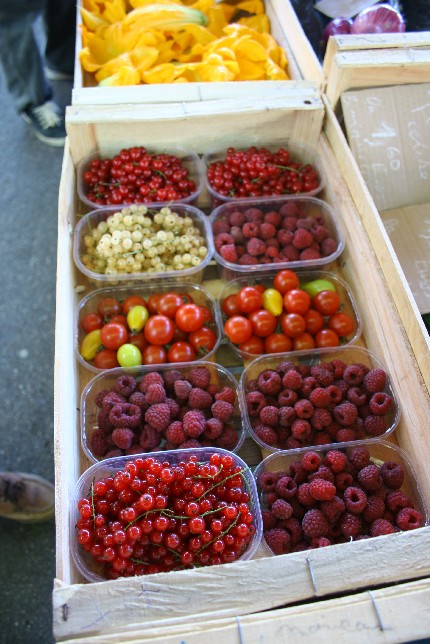
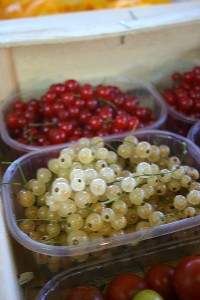
Summer's Berries
Labels: Fruits and Berries, Summer
Friday, July 13, 2007
Serpolet - Wild Thyme
A blue butterfly came and sat on my shoulder while I was hiking and I thought of the fleeting beautiful gift that life brings to this species. Imagine suddenly being able to see the world from a whole different perspective. Once a worm, dwelling in dark places and hibernating underground, and then suddenly a gorgeous fluttering burst of life occurs. What a contrast! The same creature is at once able to fly from flower to flower, sip precious nectar, feel the wind in its wings and bask in the sun. Did you know that the blue butterfly's sole sustenance is serpolet, or wild thyme?
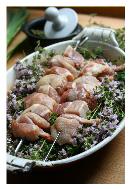
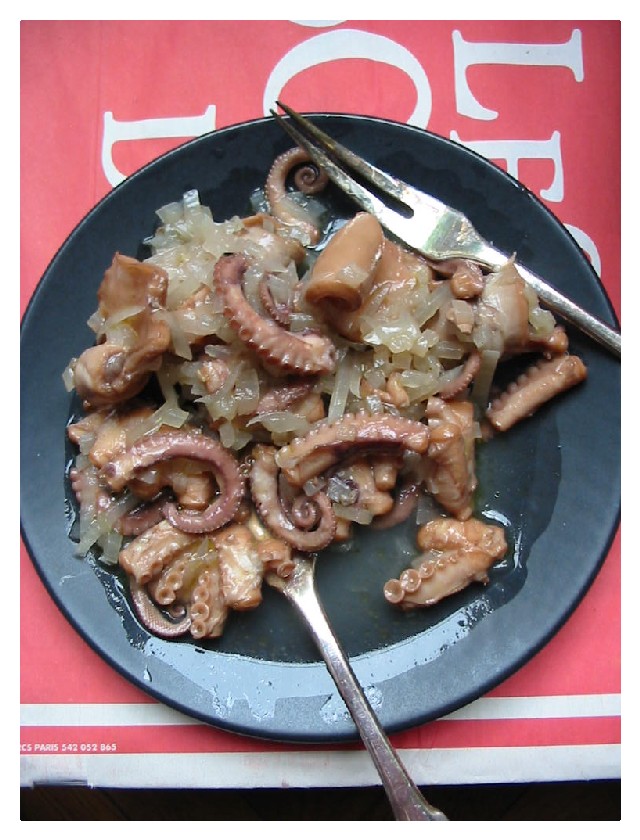
Serpolet, or wild thyme, is an herb that is generally available from one vendor at the Saint Antoine market in the summer. I use it for many preparations. It pairs well with the chanterelle mushrooms that are coming out now, with lamb, in rabbit terrines, with quail brochettes, even with seafood like stuffed squid or mussels. It grows abundantly naturally, in dry rocky soil, so we see it a lot in the mountains and also along the coast. I had guests for lunch and put some of my leftover flowers on the table for everyone to enjoy at the table. They went straight back to the kitchen when I cleared the table, to live a second life in food.
I have ground the blossoms and leaves to a paste and massaged four souris d'agneau (lamb shanks) with it. They will marinate in the herb for a day before receiving a glazing of green chartreuse. After another two days being turned now and then in their herbal liquor marinade, I will pierce them with garlic cloves and season them with salt and pepper, the last step before I either braise or spit roast them for dinner with friends. But of course you will see the end result! Yes, I also have several recipes for vegetable dishes using Serpolet in my kitchen notebook. I promise to share them.
Tuesday, July 10, 2007
Cool, Smoky Gazpacho
I understand it is hot and sticky back home, while we are walking around in trench coats and sweaters here in France. But for Clare and Mom, both languishing in the current heat wave back stateside, I want to share a recipe that might cool you off with some yin and at the same time give you a little spank of yang to keep you moving.
A nice house Gazpacho can be put together in the morning before you start the day. It takes all but 10 minutes to do and it really hits the spot once the sun is high. It can be served as a first course or as a meal with fresh bread, followed by the cheese plate.
I guarantee that this soup is the one that will win over a staunch cold soup cynic. It was entered years ago into my kitchen notebook after I tried the one in the good old standby, the Silver Palate Cookbook. If you have the cookbook you'll see that I have deviated completely from it over the years. It no longer even resembles the original recipe. But I like to attribute my ideas. Quand meme!
This recipe will serve 4 to 6, depending on what course you serve it in.
6 of the most flavorful ripe tomatoes you can find
1 yellow onion or a bunch of mild flavored onions, the kind you get in spring and early summer
1 red bell pepper
1 yellow bell pepper
1 large cucumber
2 shallots
1 celery branch, cut into chunks
1 dried chipotle chili (a dried, smoked, jalapeño from Mexico). Note, if you don't have this kind of pepper, get some, silly! I will not be held responsible if you don't get yourself a chipotle pepper!
1 or 2 teaspoons coarse sea salt (cold food needs salt)
1 1/2 cups mixed poultry stock (had to get meat in there somewhere! Ha!)
-or- 1 1/2 cups of your favorite prepared vegetable bouillon
1/2 cup hot water for the chili pepper
2 limes
up to 1/2 cup good fruity olive oil (optional, depends on your regime)
1 bunch of chopped fresh dill weed or cilantro
4 to 6 tsp. wine or basalmic vinegar (your favorite vinegar) for serving
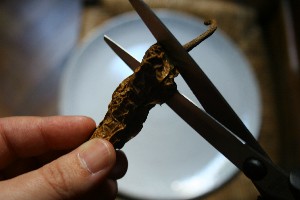
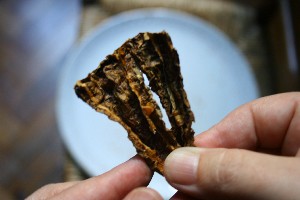
- With scissors, cut the top from your dried chili pepper and slice it down the side, opening it to reveal the seeds and strings. Remove the seeds and pulpy strings from the inner part of the dried pepper (some may call this heretical behavior, so this step is of course optional, but note that you can keep the heat to a nice afterglow by doing this).
- Heat the 1/2 cup water to boiling and remove from heat source. Immerse the chipotle into it. Set it aside to soak.
- Take the stick blender to the vegetables. Concentrate on the onions, celery and shallots first, then the tomatoes, then the peppers and cucumbers as you blend the vegetables, not aiming for a totally homogenous puree, but leaving little chunks and crunchy bits here and there.
- In another container like a large measuring cup, put the poultry or vegetable stock, the entire chili pepper and its smoky flavored soaking water, and the salt.
- Puree the liquids with the pepper until the chili pepper is completely pureed and is like little specks in the liquid. Break down that yang. Add it to your cold vegetable puree. Add the juice of two limes, the olive oil, if you're using it, the chopped fresh dill weed or cilantro, and stir.
- Transfer to large jars or just cover the bowl or pan and refrigerate a few hours or overnight.
- Stir before serving and drizzle a teaspoon of the vinegar of your choice on top of the cold soup in each bowl. Don't forget the vinegar when you serve it.
Monday, June 25, 2007
Cold Cucumber Velouté for Concentration
When I am in need of clarity of mind, there are things I can do. The first thing is to do something physical in the morning, climbing steps or riding my bike to shed all the chatter and tune in to work station in my mind. Exercise has always been a good way of working through the excess energy that might interfere with my concentration. It makes me feel good too.
Something also that makes a big difference in my ability to concentrate is what goes in my mouth. Forget the evening cocktail when I am working on a project - save the party for when it's done! Coffee intake must go down. Forget the Diet Coke, it just sends me into a hyperactive tailspin. Forget busying myself in the kitchen with fatty heavy things that are going to weigh me down physically. I am nourished, with light things that won't interfere with my brain's activity. It's nice to be a little bit hungry when you're working to a distant goal and you know that only with diligence and discipline will you arrive.
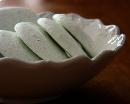
This soup is perfect for times like this, and also a very nice summer palate cleanser.
Cold Cucumber Velouté
2 large cucumbers
1.5 cups cold mixed poultry stock which has been made with a sage bouquet, all fat removed
1 stalk of celery, minced fine
1 spring onion
a small handful of fresh fennel
chervil to taste
a few sorrel leaves
2T. white vinegar of your choice
salt to taste (cold things need more salt)
white pepper
olive oil (optional)
Peel the cucumbers, mince the onion, fennel, sorrel and chervil, leaving some aside for the garnish. Mix everything but the finely minced onions and dill to a smooth puree in the blender or with the stick blender in a bowl and then stir in the minced onions. Chill thoroughly before serving. If you want to, you can a add a drizzle of good olive oil or garnish with razor thin slices of cucumber when serving. A shortcut to getting a nice cold soup immediately is to use frozen stock. But if it rests for awhile it tastes better. This is one of those better on the second day soups.
Sunday, June 24, 2007
Vin de Noix, thème Caramel et Chocolat 2007
We had a nice big stock of good grade B maple syrup (gift from afar) to flavor the vin de noix last year, but this year we didn't have any. I began to think about alternatives. We went to pick up the vodka and saw that maple syrup of dodgy origins in an imitation Aunt Jemima bottle was nearly 6 euros for a little bottle. Seeing this detail, and doing a quick calculation about what that would cost us, my decision was made instantly to make a caramel syrup instead for this years batch. Loic was there in the store still clutching to the bottle of maple syrup, he loves that it is my secret ingredient in vin de noix, and I said - "Just forget the maple syrup! Forget the whole idea this time!"
So this year the proportions were as follows:
I put up six 1.5 liter jars, and put in each jar:
10 quartered green nuts per jar (up from 8 since they're good karma and all)
9 roasted cocoa beans
1/2 of a vanilla bean
2 cloves
a piece of dried orange peel
1/2 cup or 125 ml caramel syrup as prepared here
50cl vodka
After all of the above are in the jars top them off with this years choice of a local dry Macon instead of a full bodied white Burgundy.
In some of the jars, I crushed the cocoa beans, and in some of the jars I left them whole. I'll let you know which turns out better. The jars are in the safe and in three months I'll be posting about it again when the wine is ready to strain and bottle.
Labels: Summer, Summer 07, Vin Maison and Liqueurs
Tuesday, June 19, 2007
Griottes - Early in the Season Yet
There are many classic combinations to choose from should you decide to try a sucré-salé dish at home.
Labels: Postcards, Spring 07, Summer
Monday, May 01, 2006
Figatellu / Figatelli
The name of this Corsican sausage comes from the Italian fegato, meaning liver. Liver is the central element, and it is lightly smoked. This past weekend, we enjoyed the dried sausages with aperitif before Sunday dinner. We had a couple of fickle eaters who wrinkled their nose at the idea of figatelli since pork blood plays a role in giving it a dark color and rich taste. Of course we were delighted, because it meant more for us!
The Corsicans are really good at acheiving that fine balance between the flavor of the meat and smoke. The dried sausage was not intensely smoke flavored. Loic began to peel the casing off the sausage like paper because the drying process had made it quite hard. Chewing it was difficult. Someone at the table said he enjoyed to heat up fresh figatelli sausage and serve it on toast.
During our drive back home, Loic took a wrong turn and we found ourselves winding up a mountain road we'd never been on before. The road continued on and on but we were not concerned, we had all day to get home. The view was beautiful, and we barely saw a soul. I had one of those feelings, and told Loic that when we reached the top of the mountain, there would be a cheap restaurant with great food. He laughed out loud and told me that we would most likely not even find a town. Sure enough, just after reaching the top of the mountain, we reached a town. There was a bustling roadside cafe/bar/tabac that I knew was going to be good when I caught sight of the wood pile and outdoor fireplace. Strangely enough, we glided into a parking spot that seemed as if it was made for us, and arrived just in time to get the last table on the terrace. The clientele was a mix of locals that circulated among the tables and talked to one another, and people like us passing through. We enjoyed our lunch in the sun.
Since it was on the menu and fresh in our minds, Loic ordered the fresh Figatellu for the first time. What he was served looked a bit like boudin noir, but was strongly flavored with garlic and wine, completely different from little dried sausages we had the day before. One more thing to add to the list of things to try at least a few times to come to a real understanding of this sausage and its possibilities.
To make Figatelli at home:
Take one part each of fresh ham, pork liver, and pork fat and chop them finely. Season with 2 teaspoons of salt, 2 teaspoons of ground black pepper, and 2 ground cloves (about 1/4 teaspoon) per pound. Let sit overnight in a cool dry place. In the morning, crush 2 cloves of garlic per pound of meat, and put the garlic into a strainer - pour about 2/3 cup per pound quality red or rose wine over the garlic into the meat so that the wine takes the flavor of the garlic. Adding wine will reduce the shelf life of the sausage, but adds an interesting depth of flavor. If you plan to dry the sausage, don't add the wine. Stuff your sausage casings with the mixture and smoke the sausages. Place it in a cool dry dark place to rest. It can be eaten fresh, grilled or braised and serve with polenta or potatoes, or dried, to be eaten as an aperetif snack.
Labels: Cured Meat and Sausages, Spring 06, Summer