

Friday, March 16, 2007

Split Personalities


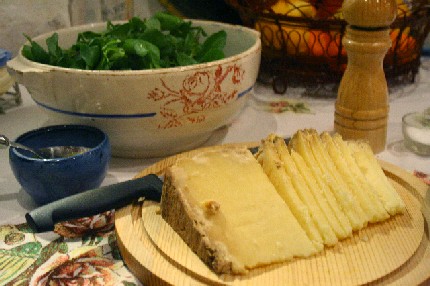
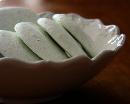
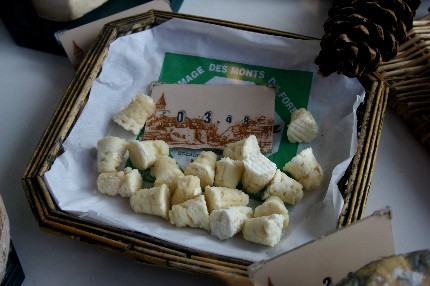
Apero cheeses - my favorite kind.

He smiled and his eyes went around the gallery. I'd spent a semester of late night sessions at the ComArt facility manufacturing an installation of 180 identical black boxes, set in an architecturally inspired row around the white cube gallery, an indirect hommage to Donald Judd. I'd hand-pulled the ink across the screen to serigraph every individual copy of the invitation to the opening myself on hand made paper and had written a 23 page treatise to explain the work, but he didn't want to read it or hear it. He looked and simply said - "You have arrived".

We sipped wine, me in my burgundy colored velvet dress, Rodger in his signature jeans and turtleneck. I didn't believe him. Looking back on that time, I sometimes think it was probably the biggest mistake of my life to hold out with the naive idea that life deliver more content before a person can take themselves seriously, and sometimes I think that there was some precocious wisdom at work there.

There is a certain syntax at work as a person pieces their way, one by one, billet by billet, voyage by voyage, into the creation of a body of work that can be called life work. A vocation is found, sometimes early, sometimes late, and it is in that siren's calling that we find our passion. As the pieces fit together for me, vignettes summarize the activities that nurture and sustain me spiritually. At a point in a person's life, any person's life, they can suddenly name it. The choice presents itself and sometimes it is easy to ease it in among the rest.

The kitchen is the most basic studio for creation - I can find the perfect cyclical patterns arising on a life-sized scale, no monumental accomplishments or revolution at play here, and no single edition miniatures labored over by teams of artisans, but stories that slide naturally into our lives and our minds, like playing cards in bicycle spokes, ideas that repeat, make rythems, fill us, recharge us. I can put some mindful effort into practice here, day after day, every side of me.

We are repeating what has been done for thousands of years, everyone to their own degree and within their context. The aesthetic and ritual of nourishment. It is ageless and can be classed in so many subcategories and styles, but when it is all amassed together, it encompasses every single individual human memory.

We all associate food rituals intimately with the experiences that form us, eras that shape our personalities, our memories, memories of our mothers kitchens, and stories of their mother's kitchens. We accumulate it all into our senses. Sometimes we gather it like cotton wool to be spun into threads that will be used to suspend or support other activites or ideas, and sometimes we can take it simply like a wide open spring Saturday that leaves us happy and tired by the heat of the fire. When we can abandon ourselves to the light and the air and then turn our attention to our collective work suspended over the hearth, without ever having the need to suspend our hopes beyond what is right before us - I know we have arrived.

The month of March here in Lyon has been particularly balmy. Loic and I remember the chill of the dark months and we appreciate the sun on our skin and the sun's first products still now pushing from the earth, yet we also appreciate the warmth of the hearth like no other time. Spring begins with putting up and putting out. It is a time when light fills our mornings and evenings again, opening new doors for creation. The new vegetables, in France called légumes primeurs, are on their way. We remember and talk about last spring's salads and the delicate flavors that await us as the bitter greens make their last show at the market, and we rub our hands together in anticipation of what we know is coming.

Fran goes out to dig in her garden, and my little irises begin to pop out of the soil in my window box. What color will they be? I've forgotten what she said, the lady who sold me parsley roots and iris bulbs to push into the window box last autumn. They'll be blooming soon. I'll see then.

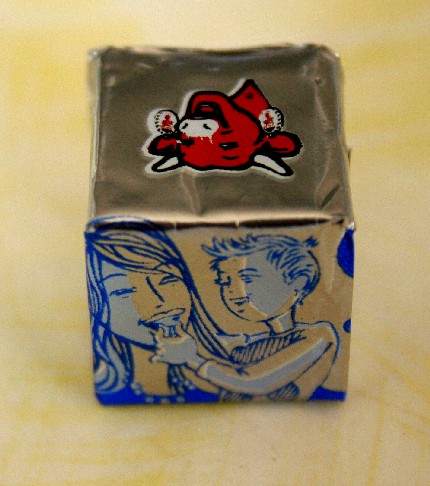
We had a taste of something completely different today. It got me really thinking because of it. For that, I thank La Vache qui Rit. My dining companions all seemed get something amusing out of the experience of unpeeling these little babies. These have been around since the 70s and have made a comeback on the French market. Looking at the illustration on the wrapper, what do you think is at play here?


Apericubes hold a strange appeal for many of the French people I know.
I don't understand it.


Today we had lunch at Aude's and she presented us with some Pop Art at apero. My heart still lies with the minimalists, I must say, although we did enjoy a great afternoon.

Labels: ,


Share/Bookmark

Sunday, March 11, 2007

The Meaning is the Message


I got a letter yesterday. Sometimes you get a card or a letter through the post and it hits you more than any amount of electronically transmitted information or something that comes through cables or tubes can, even if the message starts with the weather and ends with "well, I have to go". Why is that? Communication by way of manual work, articulated directly into individual script, passed from hand to hand, and delivered physically to your post box always means something more. It is more than the message. It seems like a luxury to have a letter written out like these kinds of letters just naturally are. Why is getting a letter from a friend such a wonderful thing?


I think about my weekly phone calls to my mother and I know I could be doing better. There was a time when long distance calls from wintery New York to Nashville were prohibitively expensive, and instead of being an obstacle to communication, it was the golden age of the letter. On my mother's side of the family they preferred to write. My uncle, who was a fiction writer by vocation and trade and lived in Humboldt, used to warm up daily with letters that he would pound out on a typewriter from edge to edge and top to bottom on a cream colored sheet of cotton rag paper to his sister, my mother, before he got started on his manuscripts. He was a person who was capable of the most evocative and believable exaggerations we ever read. It was rare that a day would go by without my mother receiving a letter crowded full of Jesse or a pen written missive centered in perfect English, like prose, on small personalized stationery from her mother 'Cille.


Making soup is definitely like writing a letter. You begin with the rudimentary necessities for it and like filling a piece of stationery with some local news and bit of your own personality, you let the flavors flow from the season into a hand written note. In the best letter writing style, you always try and tie it up somehow. Your signature spice mix always comes into play, as well as homage to themes that float along in the haze around you as you bustle though your day. Your blank sheet of paper is the mixed stock you've prepared at the beginning of the week, sometimes with game in season but mostly with the very basic of parts, a couple of roots that feel right to you, and whatever herbs seem to be plentiful and right. The story that flows from your sharpened pencil or favorite pen is the personality that the soup takes on with what vegetables and meats, sometimes cheeses or even wines that are available to you at the time. The more thoroughly you live, the better your soup will taste.


Loïc has been traveling this week and I have been out eating in the restaurants. The best kind of restaurant is the one where you can get a feel of the handwriting of the cook. On very rare occasions I'll encounter calligraphy or a beautifully worked captivating story, poetry maybe. These are almost never a surprise because people who have found their vocation in this kind of expression rarely go unrecognized. But it is really enough and a great pleasure to get the hand scripted message of a cook in an unexpected place, a message being transmitted, in a dish when I am out on in the neighborhood on a weeknight. Sometimes I want a postcard from a foreign land. Wherever I go, I ask for an honest letter from the cook about what’s the news that day. My only requirement is that it be written by hand. I think getting that letter reminded me and made me happy to have had the chance to explore this week.

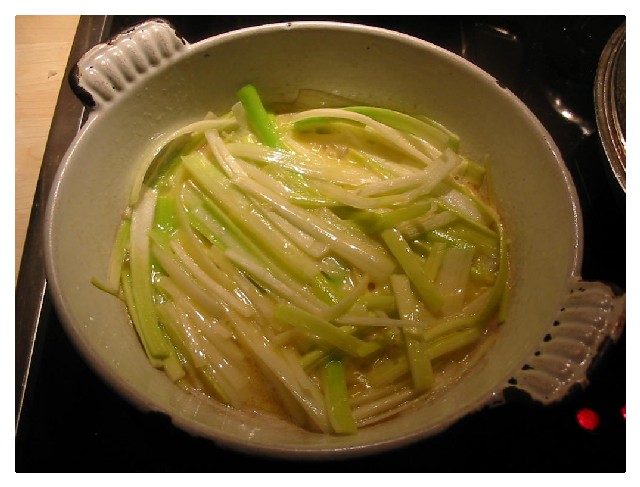
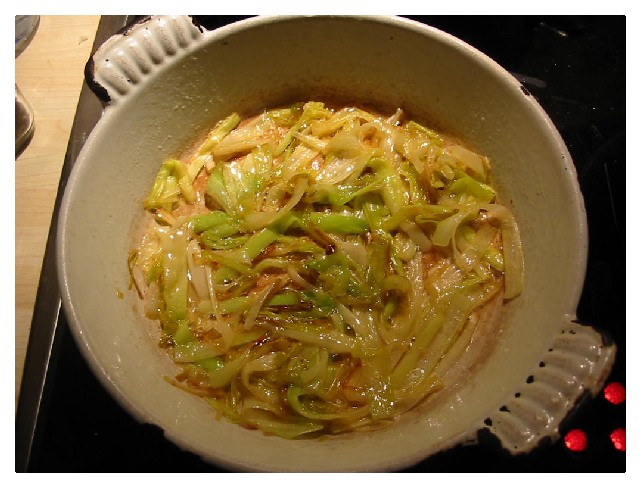
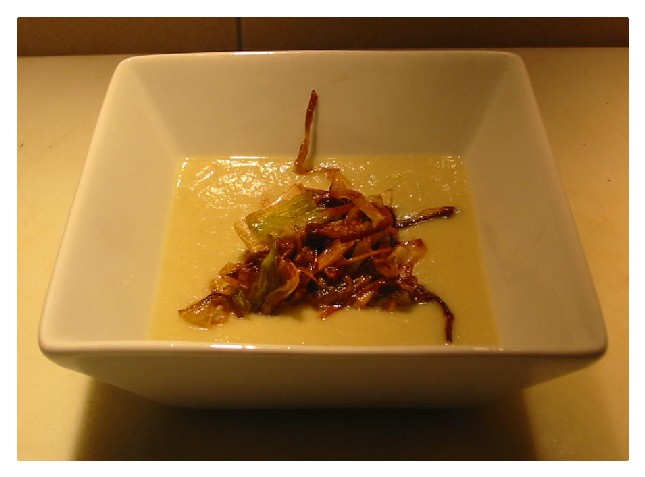
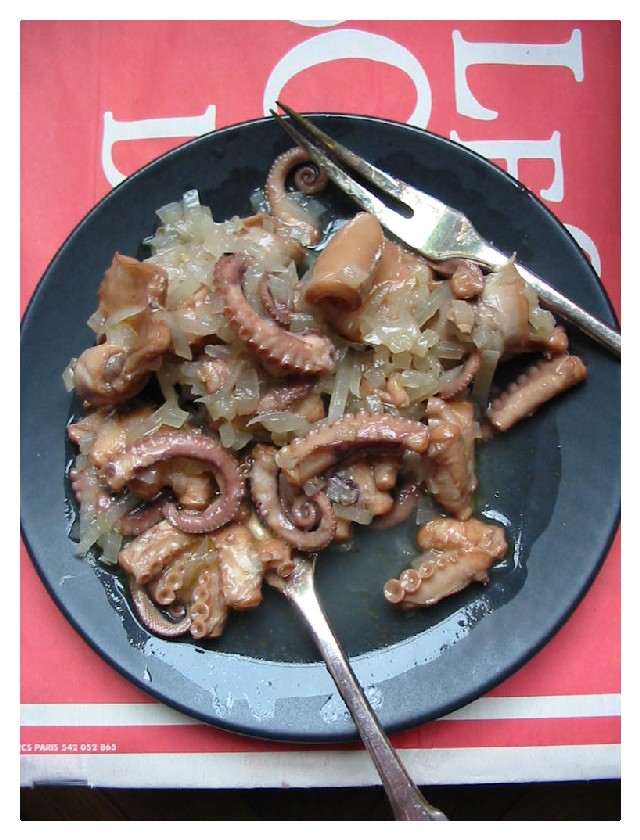
Caramelized leeks and scallops are a natural compliment.

Labels: ,


Share/Bookmark

Thursday, March 01, 2007

Playing Hookey

The plan is to swing by the station I pass each day to go to work and instead of passing it climb aboard after a quick look to find a track. Into the center of Paris in the blink of an eye, suddenly in the middle of it, almost like getting on the metro and stepping off. I'll pack light but also pack as much into the weekend as possible. There are things to see and people to meet. Meals are slotted in one after the next with one person and then the other. In between I will look and gather and align myself along the groove swirling round the arrondissments. Gifts and presence, bisous and breakfasts. A lunch date clenched it and I've pulled it out like an accordian. I will take some time for myself on the streets in between, with a special visit to the quartier Chinois planned alone. There are certain things I need. I will go to the Japanese movie theater for a talkie in VO and remember when we were in the little one room place with ancient yellowed wallpaper by the canal.

Labels: ,


Share/Bookmark

Sunday, February 25, 2007

How Chocolate Came to Save Fran


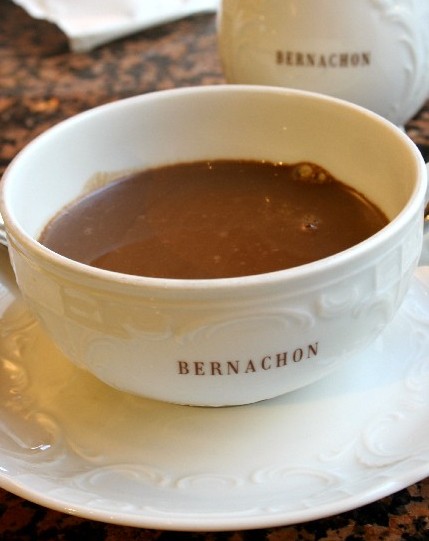
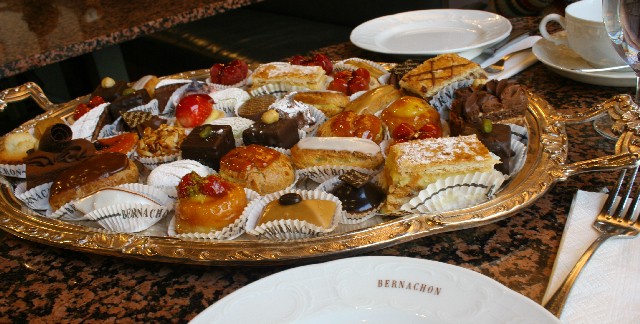
We met outside the Collège Hotel in Vieux Lyon, somewhere between her place and mine. Immediately I could see that this chick needed some chocolate in her. Pale, wan, and with a sad look on her face, Francine presented herself, standing up a bit straighter than usual and buttoned up tight in an effort to put up a good front. At least she had her camera. That was when I think I saw tears swell in her eyes. She said "PMS" and I said "Bernachon". With that, we were off.


Did you ever have a friend that charges you with positive feelings just from being near her? A friend who is encouraging, helpful, generous, inspiring, beautiful, nurturing and creative all at the same time? My freind Francine is one of those. The first time we went out to lunch we found that we had more to talk about than we could fit in that day. Meeting Fran was like I had finally met a fellow member of the circus and right from the get go we were synchronizing double backs and gracefully mastering the leap from one to the other’s trapezes with the greatest of ease. I sometimes wonder if her inner eye has more strength and focus than she even knows. Her creative endeavors always bloom forth with a lot of energy and purpose.


Francine moved to a new apartment last month, a place with a garden. While moves are stressful and expensive in general, she was casting a positive light on the experience by putting a lot of thought into how her garden will grow, and how to arrange her studio space, etc. Once they got there and unpacked, Fran, being an island girl and accustomed to warmth and light, had to adjust within the winter confines imposed upon her by a new angle from the sun. It was the darkest part of the year. Her bones caught a chill, and it was at that moment yesterday that I caught her.


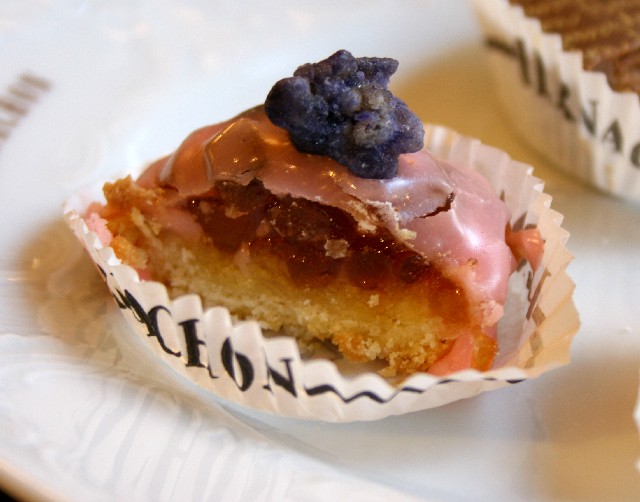
“What’s Bernachon?” She asked. Oh goodie, it was going to be just the thing. When they poured the chocolate we were both in rapture. Since she instinctively chose all of the chocolate flavored treats from the platter (the poor dear was really in need), I chose some of the other little mignardises and discovered they are very skilled at more than chocolate at Bernachon Passion. Oh la la. Pastry time! We have decided that we’ll hit the tea salons of Lyon one by one as we reach the milestones and deliverables of our respective life projects, or when we need a boost. That should give us plenty of opportunity, either way.

Labels: , ,


Share/Bookmark

Saturday, February 24, 2007

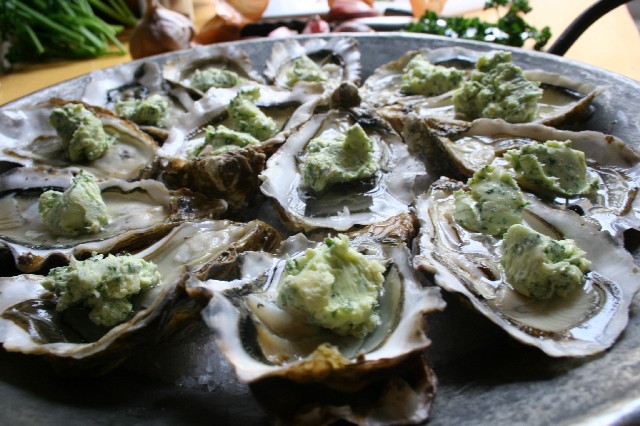
Snail Butter - Beurre d'Escargots


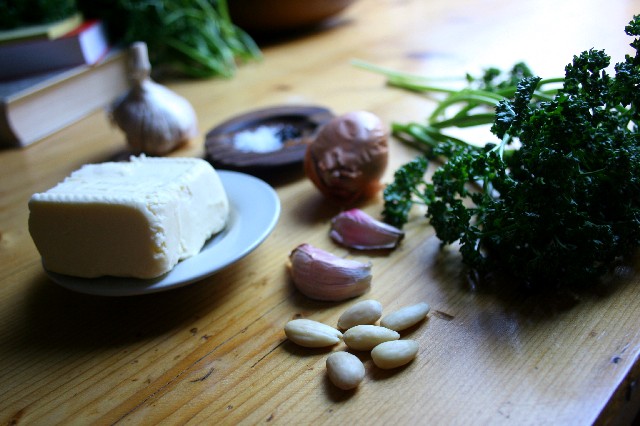
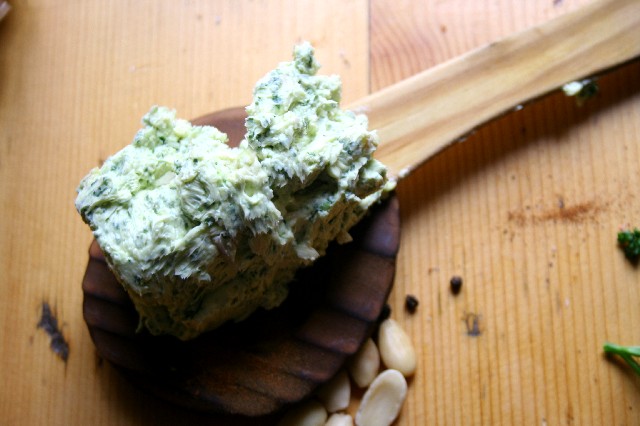
In Burgundy they eat their snails swimming in delicious garlicky parsley butter, spearing them from their shells with cute two pronged forks made just for the purpose. But beurre d'escargots is not just for snails anymore, you know. It can be spread on warm crusty bread, a knob can be set to melt on a freshly seared steak, it can be spread on cod to be baked in papillote, melted over potatoes, and more. It keeps for weeks, if you don't find uses for it all at once, and it also freezes well. Today I made some to try out an idea for oysters.


Hum de dum dum...


The recipe I finally settled on over the years as my standard in fact comes from Paul Bocuse's cookbook La Cuisine du Marché. I initially had a rather blah feeling about this cookbook because some of the recipes say things like "garnish with sliced truffles and serve", and Lord knows only Kate can do that. Lets just say some of the recipes are not put into a realistic framework for the home kitchen, even for a French home kitchen, and the market is often missing those truffles! I wasn't too convinced at first that I could cook from his book as a companion to my common market excursions, although logically it seemed that the market he must have had in mind was one like St. Antoine. The method was bare bones as well. Not one photograph, no context given for anything, and no description about how to do anything. Just reminders and advice about ingredients, how to choose them, and proportions. In fact many of his recipes are missing oven temperatures or times of cooking. One day I realized that this book is actually Paul Bocuse's kitchen notebook, with information he compiled over many years, and like many of the best references, the content seems richer the more I learn. I started getting more and more from it, and it is now one of my first references when I'm curious about how to do something, because the proportions are always true.

His proportions for beurre d'escargots:

1 kilo of butter
20 grams coarse sea salt
1 gram of ground black pepper
a grating of nutmeg
50 grams crushed garlic
40 grams chopped shallots
50 grams almonds
100 grams finely chopped parsley

this translates to a reasonable amount as follows -

100 grams of butter (or a bit less than a stick)
2 grams of coarse sea salt or about 1/2 teaspoon
a grind of black pepper
a light grating of nutmeg
5 grams or about a clove of winter garlic (more if the garlic is fresh - use your judgement)
4 grams minced shallot or about 3/4 of a small shallot
5 grams of almonds or about 5 almonds
10 grams or the leaves from about 20 sprigs of healthy parsley, finely chopped

Crush the shallots, garlic, and almond with a mortar & pestle until smooth. Add the minced parsley and the lightly softened butter. Mix them well until it is a homogenous paste. Keep cool in a ceramic container.


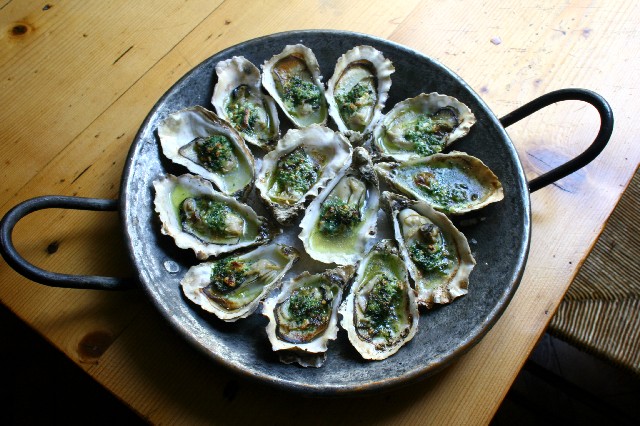
Hey! Lets try it on some OYSTERS!


After about 7 minutes in a very hot oven.

Philippe Dupuis, Produceur-Ostréiculteur, always gives us 13 when we order a dozen. I always make sure Loic has the last one. We got into a heated discussion on the way home about the difference between the claires and the specials. We ate 6 no. 5s raw and then cooked the no. 3s. They were all delicious.
Just as we were finishing up the no. 5s I saw that I was not the only one inspired by oysters this morning.

Labels: , ,


Share/Bookmark

Friday, February 23, 2007

Inspired by Oysters


We are still in high oyster season. This time of year there’s a guy on the quai who drives from the coast of Brittany with his load of oysters in the wee hours of the morning to hit St. Antoine at sunrise. We can get them cheap and fresh and just the way we like them, and when we’re buying them to take home, we take them from him.

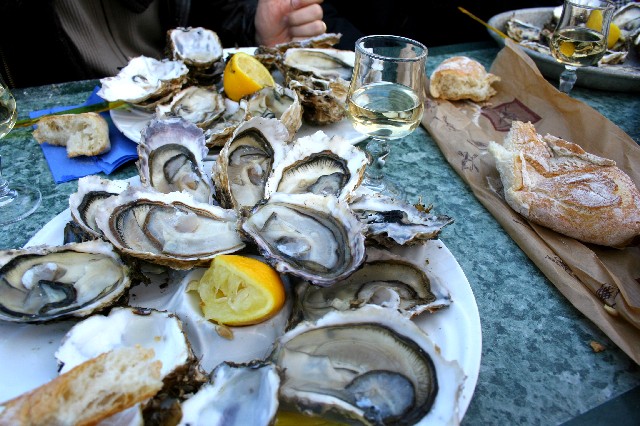
One café at the market located down near the level of Place Bellecour is a great place to sit outside and enjoy des huîtres freshly shucked from another supplier who gets them from the Mediterranean. Although I prefer the flavor of the northern variety better, (the southern ones taste more salty and just paint another flavor picture) nothing beats sitting out in the open air with a plate full of freshly shucked huîtres, a pot of the café’s cool dry Macon that seems just right, a fist full of rye bread from the people who baked it in their stone oven in neighboring town Caluire-en-Cuire that morning, and a pat of M. Coche’s hand moulded farm butter.

The people at the café don’t mind that we enjoy the oysters bought from someone else while we sip the wine we bought there, even if it means we’ll hover for an extra hour and only buy a few euros worth of wine. I suppose if they were only serving coffee shots to the market goers, they’d make a heck of a lot more profit from the drinks. We do happily pay a couple extra bucks when we have a dozen shucked and stacked onto the platter heaped with shaved ice and seaweed. If we've really got a huge platter, the oyster shuckers lend us a rack to be placed on the little square table and the oysters placed atop that, so there's still room for your drinks.

I suspect that at least half of the shucking fee must go to the café although we’d never know it and they’d probably deny it if asked. I can imagine if this kind of situation were taking place at a riverside café in the States, they’d be pretty transparent about an extra fee paid to the café to eat the food bought elsewhere. It would be normal, kind of like a restaurant would charge a corkage fee. But such an idea of outright charging a fee to the people would not go over well at a café in this country. It would not be in the spirit of the café culture. People have the right to order a single drink and stick around all day occupying a table if they want, it's the custom. In any case, in the grand scheme of things, we break all kinds of rules, drinking wine on Sunday before noon and slurping them down with the best of them.

Sunshine bouncing the warm glow from sepia, rose and yellow toned buildings along both sides up the old and snaking Saone river adds value. Add the boats slowly making their way along, the stories they evoke from the burnish of their woodwork to their provenance and captains, a cool winter breeze that whispers home fires, and there you have a moment to remember.

You can choose sea snails, called bulots, boiled shrimp, and various other creatures in season and compose a seafood platter if you wish, getting as fancy as you like.

When you have had your fill of them raw on the half shell, it’s time to start cooking. Using oysters in cooking can give a dish that je ne sais quoi that sometimes people get from anchovies or their sprinkle of spice mix maison, or any number of secret ingredients. In the winter, oysters become a part of that. A marinade and sauce from agrumes (citrus fruits) is the perfect foil for the inclusion of oysters in a poultry dish. I love pairing oysters with bitter winter greens in stuffing for pigeons or other game birds as well, adding them to meat glazes, soups too. Of course sometimes we cook and serve them as the star of the first course.

Legend has it that the dish called Oysters Rockefeller comes from a New Orleans chef inspired to serve oysters like classic Burgundy escargots when he ran out of French snails. Necessity is the mother of invention. Drive an hour north from Lyon and you are in the heart of Burgundy. After having been properly cleaned and softly simmered in any number of secretly guarded broth configurations, snails in Burgundy are served in their shells with what we call beurre d’escargots, which is a hefty farm butter with tons of chopped parsley worked into it, a generous dose of garlic, and enough hand mashed ground almonds to take the flavor to another level without actually tasting the nuts.

Since on Fridays we have a poissonnière at the Halle on my square, tonight I’ve decided to cook up some oysters inspired by this very idea. I’ve decided just on my personal principle that crème fraîche is going to play a role, and well, of course I will throw myself into the whole intriguing story behind Oysters Rockefeller, grilling them under the broiler with cheese to finish and serving them with their shells nestled on their beds of salt. Hmmm. Now to decide on a cheese.

I wonder if I'll find a pearl?

Labels: ,


Share/Bookmark

Thursday, February 22, 2007

On Friendship and Frescoes

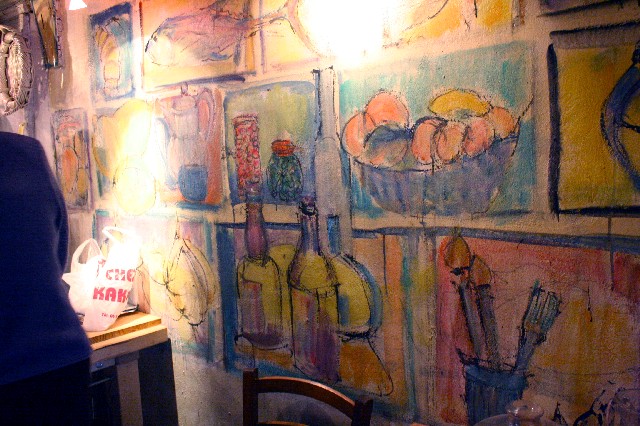
It was clear when we were standing at the doorway of Franny Golden's gallery that she had a special relationship with Kate. The sing-song 'woo-hoo!' said volumes as she trundled down to the door and let us in. The beautifully finished tile floor and mosaic pattern that she's begun to work on tell us that this is a woman of ways. Since birds are special to me, I was drawn to the paintings she had on the left as we entered the gallery. They're lovely little birds, gathered in and centered in their fields of color. After taking in her work, we continued through into her house. It was a beautiful topsy-turvy spiraling bungalo stacked on three levels. She has painted murals on just about every flat surface.


Kate bought a big chunk of Cantal from the Auvergne and ham from the market that morning. With salad, it was lunch. I was thankful she brought me along. I believe that Franny Golden knows something important. I've already told mother that if Franny is this side of the pond the next time she comes, we should go down on a discovery trip through the area and she should take some drawing classes with her. Her work was really thought provoking and beautiful.


The wall in Franny's Kitchen.

Labels: ,


Share/Bookmark

Wednesday, February 21, 2007

The Land of Duck Necks and Honey


Well, in my research on how to skin a duck neck for stuffing, and my forays into duck neck gluttony and how to use a duck neck to take soup to another level of excellence, I should have gone down south, where the entire dish is done for you by the volailler! Kate, why didn't you tell me before?!

On Saturday morning, Kate Hill took her houseguests to her market in the town of Neyrac, where I found to my hearts content that the volailler had them ready for cooking. This was one thing I could not pass up, because when the artisans do poultry, people should listen. In Lyon, there are plenty of things to do with readily available chickens and rabbits and we do get the various typical duck parts, but if I want serious Southwest preparations at home like duck necks, I have to seek out the ingredients, roll up my sleeves, and get to work. I was really happy to see that the volailler had them ready and in their native habitat, because I can tell you now, preparing this dish takes planning when you're not in the land of duck necks and honey! I was curious too, I wanted to know what they tasted like, because as we all know, things are never better when produced and sold fresh in their local context by people who know and have lived the story of the Southwest.


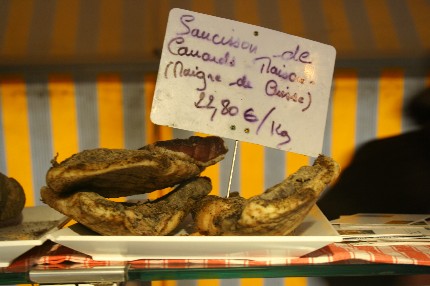
There were cured duck parts on offer as well, which really made my day. I ended up picking up nearly a kilo of duck "craquelins", which are completely different from anything we get in Lyon, half of a duck chorizo, and several stuffed duck necks for good measure. These went directly into Kate's freezer and having been frozen solid, they traveled well during the 6 hour journey back to Lyon on Monday.

Fresh new garlic was ready for using - we won't see that in Lyon for a few weeks!

We had the duck necks for dinner last night. They were delicious.

Labels: ,


Share/Bookmark

Saturday, February 17, 2007

Arrival at Kate Hill's Kitchen in Gascony

The train left Lyon at a quarter to three on Friday afternoon. As the sun was setting, the pink sky pulled with it the silhouettes of trees black on the landscape, and they flowed by like paper cut-outs along the horizon. I sat mesmerized by the view of the splendor through the window. I slipped by TGV into Southwest France from the brisk streets and hustle bustle of Lyon with one thing in mind - to see Kate, and Pim. They met me at the station. I was a bit afraid and tried to pin my hair back and thought of lipstick when I stepped down on the platform. I paused and stood still as the wave of travelers went on their way. Pim hit me first, with a wide smile and open arms. Her gorgeous elocution pierced through my shell in a whisper as she gave me a warm hug and said, 'So great to meet you'. A burst of joy. Kate then enveloped me in her arms and they swept me out to the white country car and into the night.

I was sitting in the back seat and wisps of bacon smells were tickling my nose. I said - Your car smells like bacon! Kate threw her head back in a wide open laugh as Pim giggled and the car barreled between trees lit by the headlights in the country night. You see, Kate has a new puppy she has christened - Bacon. My eyes, having adjusted to the dark, saw that the back seat was lined with a blanket. But it didn't smell of dog. Bacon is just a new puppy and hasn't been in the car much since he arrived to live with Kate.

They each took one of my bags and I was led into the house. The first thing that struck me was the fire. A huge chimney along one side had a well seasoned log fire burning, the smells and sounds of crackling, radiating stories of grilled meats.

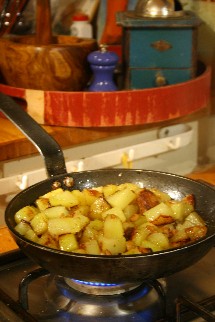
Kate scored the magrets and Pim poured me a glass of local wine. Where to begin. Where to start. Bundling bustling about. Duck cracklings in fat and hearty potatoes.


My eyes were drawn to the stoves. Burners galore, enough to really do some cooking, and then up swept my gaze, to the walls and the space, cavernous and cozy at once.

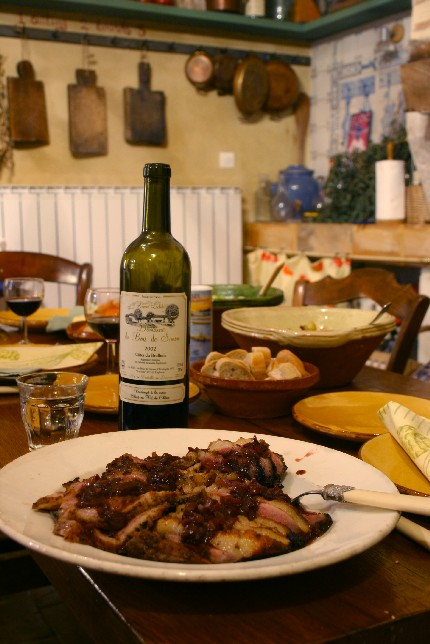
But then the magrets were placed on the fire where they sizzled and spit. Simply sliced and served with potatoes and a winter salad, it was enough.

Sitting in Kate's kitchen, we ate and drank by the fire. I wanted to know more and felt that hard yearning to encapsulate them both which was not possible in an evening. But we had given it a good start.

Labels: ,


Share/Bookmark

Thursday, February 01, 2007

February


As anyone who does not shop at the hypermarchés here in France is aware, the pickings are rather slim in the winter months from local producers at the market. Although we do buy certain imported fruits and various fresh herbs no doubt grown in hothouses, I do still frequent the market get what I can from the local sellers. I imagine that before market logistics got to where they are today, people still ate well in Lyon and all through the Rhone valley through cold winters.

Recipes come in from Burgundy, the Limousin, Auvergne, specialties from Grenoble, and the upper Rhone Valley and the Alps, some even just floating in on the mist of the culture in general. What they have in common is that they elevate the most basic of winter vegetables to simple splendor. Every year a handful of good ones are added to the list. The great thing about these recipes is that they’ve been around long enough to spark stories and debate about their origins, yet as a rule are simple to execute. Some are as easy as bacon and chicory in winter salads, others involve a bit more lore. I love the hunt that comes with digging out all of the juicy details of a regional recipe.

Living in the modern world, during certain months we do resort to imports to stay healthy, of course. Last week I was drawn to a Carrefour circular that had been stuffed in our mailbox, because I have a particular weakness for mangoes, and my légumier at the Martinière Halle sells them at a pretty high price. Ripe, juicy, imported, yes. A ray of sunshine in the winter months. My favorite way of avoiding rickets. The ones he sells are small and sweet, ripened exactly to the day. “When do you plan to eat it, Madame?” he asks, and chooses just the right one. The price at Carrefour was precisely 1/3 of the price of my neighborhood specialist’s mangoes, so I decided after all to make a trip to the store. The last time I went to the hypermarché was April of last year.

I slogged in coat and gloves through the shopping mall, up two escalators and through security at the entrance of the store, then hiked through house wares to the escalator that would take me to the mango section. Indeed they were there, at the price advertised, and two women in robes and matching headdresses were shuffling through them, picking them up, squeezing them, and pitching them like fast balls back into the bin. Unacceptable. Rock hard and dark green. Shouldn’t I have guessed?

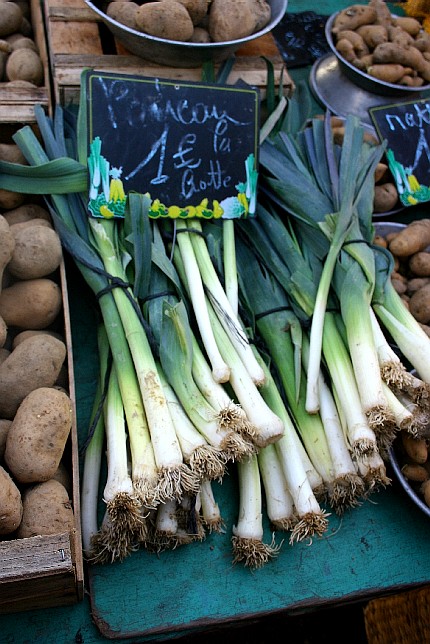
From our local vendors, rutabagas, turnips, cabbage, carrots, and tasty winter greens like chard and chicory bring their heft and earthy flavor to the forefront, in addition to leeks and endives, very popular around this time of year. Bins of apples carefully stored since autumn are ready for cooking. Of course there are plenty of eggs and the hens that lay them, the larder is stocked with dried nuts, fruits, and our stock of spices, and we have the basic tools and ingredients for sauces and savory pastry of all kinds. The butcher brings out some aged sausages and cured meats as well as the first tender veal and lamb. The cheeses coming from summer milk are coming into their own. We have many choices there.
The method to good seasonal eating in winter lies in seeing the beauty and variety of possibilities in winter’s vegetables. The best thing to do is to begin with a vegetable, no matter how humble or simple, and concentrate on as many of the possible ways that people have passed down ideas through the generations to prepare it. Many of the interesting regional and country dishes don’t include a whole lot of meat, depending on the region and the time the recipes became standards.

Sometimes great inspiration comes from the memories of others and other times, but most of all it comes directly from the thing itself. Go and look at it. What seems plain can be packed with flavor and nutrition not to mention being fun to cook. Seen through the cool lens of low winter light we can find a certain inspiration in this produce that we don’t find at any other time of year.

Labels: ,


Share/Bookmark

Friday, January 26, 2007

Top Secret Chocolat


What is Chocolate Nirvana and how is it achieved?

When I was going through a particularly turbulent adolescence in the early 1980s, my mother and I bonded over what she called "chocolate nirvana" in the front seat of her beige Ford Taurus station wagon. Like many mothers of teenagers, through my stilted life lens, she was one of those boringly dependable figures in my life who rarely ever revealed that she had any weaknesses at all, except through these little flashes that had hit us very rarely, over the years, like the sun through beveled glass. When I was going through the "crise", she took the old school approach – no comprehension between us. Mom has since allowed us to see the more human facets of her personality, and I appreciate her friendship now and love her in all of her complexity. But at the time, she was my perfect mother, and regretfully for everyone involved I was not.

The first time I was enlightened to her secret weakness for chocolate was much earlier, in the mountains. But just as I'd forgotten that snowy day in an onslaught of worries of cup sizes, makeup, tails dyed which shade of pink, how I was going to raise the cash for my next pair of pastel colored leggings, dozens of vacuume cleaner belts as bracelets, braces, and fine thin hair that just would not stand up on end without gasoline, she sprung another glinting hint at me at a traffic light somewhere near James street on the east side. She instructed me out of the blue that the idea was to fill your mouth to capacity with chocolate in order to completely overwhelm the senses in a wave of chocolate flavor. In a stupor I forgot to blame her for ignoring my weight loss attempts and was sucked into her instruction.

The goal was to weather the little crunching that came after the jaw had worked through a mouth stuffed completely with plain M&Ms, holding thin Ford Musgrove lips together in order to not God forbid let any M&M juice drool flow down our chins as we tried not to laugh. She had to pull the car over into the muddy slush on the shoulder after crossing under a railroad bridge to pull herself together, before merging back into the traffic. These little flashes gave me hope that she was human. At that time, in the dawn of my womanhood, plain M&Ms were just about the pinnacle of the chocolate experience available in the slushy salt-cracked streets of Syracuse New York.

Since that time, my relationship with my mother has grown, and so has my understanding of her love of chocolate. I always try to bring her the best of the best now, she must enjoy it sparingly for health reasons, and she eats it pure. We have enjoyed chocolate together from just about every country it is produced.

There is eating chocolate, and there is cooking chocolate. I didn't really get it until I came to France, and realized that all of the best tasting home cooked chocolate recipes from the French specified chocolate with the lower percentages.

Why? How can you get a better tasting fondant au chocolat, cake, mousse, etc. from a chocolate containing a lower percentage of cocoa? How can the cocoa content affect the end consistency of a dessert? I dove right into cooking home desserts here in France and by sheer empirical experience had every reason to maintain a die hard faith in the "dessert" chocolates, especially formulated for cooking. It is not just a marketing ploy. I have tried all grades, and have concluded from experience that it is a shame to waste the eating chocolate for cooking. Using haute gamme chocolate usually ends up with dense heavy results, and the flavor balance of many baked desserts is lost by using it. "Dessert chocolate" melts better, makes a more stable ganache, and its flavor comes through betterwith melting and cooking. It makes a better tasting sauce. People choose chocolate with a cocoa percentage of 60-65 percent for the best cooked chocolate desserts. If you don't believe me, conduct a test, and get back to me.

I have done tests with all of the common cooking chocolates available to me here in France. The winner on all counts comes from a company called Ethiquable, and is a product of equitable commerce, coming from the Dominican Republic. But that’s just a bonus. In my opinion, this is the best dessert chocolate available. If you live in Lyon, you can purchase it from the equitable commerce shops, one upstairs at the bookstore “Raconte Moi La Terre”, at the Ethiquable Gourmande shop at la Halle Martiniere, etc.


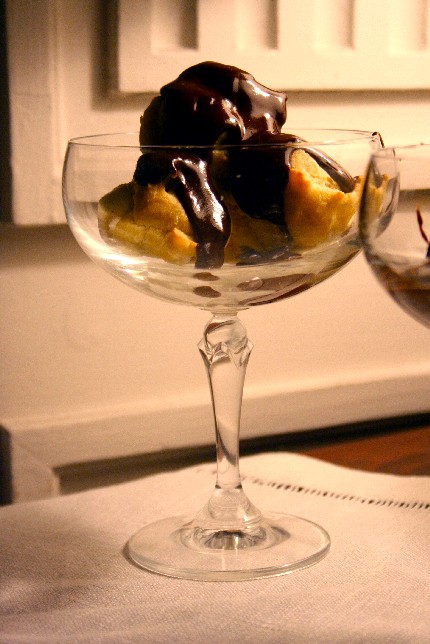
There are those recipes that you transmit immediately without hesitation to all of your friends, and there are the recipes that you hold like an ace in the sleeve. There are recipes that project such classic beauty that everyone assumes they have the personality of a historical figure, difficult and complicated. When you bring a beautiful classic dessert to the table, and your guests have no idea how simple it was to prepare, do you do need to make an effort to hammer in just how simple it is? With profiteroles au chocolat, I do not feel that need. I bask in the glory of their deceptive simplicity.
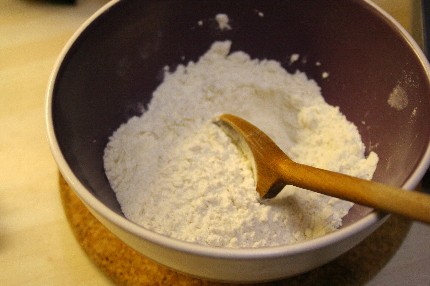
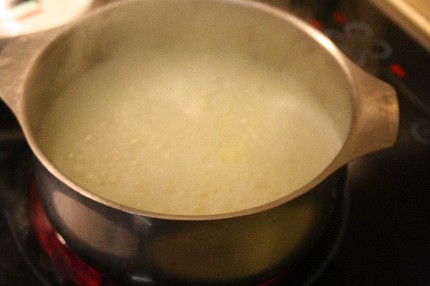
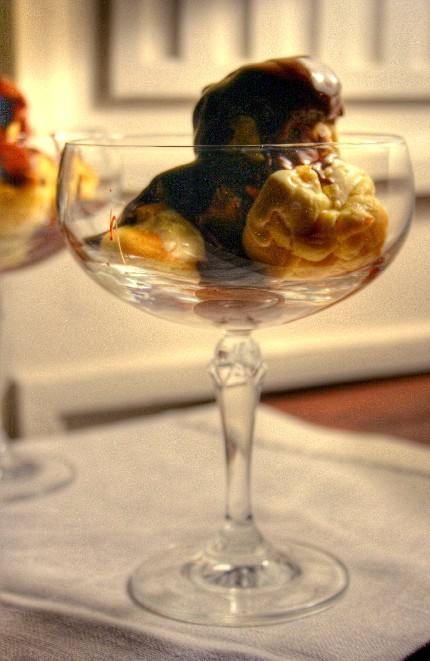
Home-made profiteroles au chocolat. This dessert is not about chocolate overload, it is about choosing the absolute perfect setting to leverage the taste of chocolate to the hilt by presenting it just so. There is a reason why they call this dessert profiteroles au chocolat and not "ice cream stuffed choux pastry served with sauce". The reason is that this dish begins visually and virtually with chocolate, takes you on a tactile journey right on through, starting and finishing with it on the palate, stating it's theme and summary in the perfect words, rebelling against it for a moment with convincing sumptuousness, and telling us in plain words finalement that this dessert is, as the spoon scrapes the dish, once and for all, about chocolate.

Profiteroles au Chocolat
(serves 4)

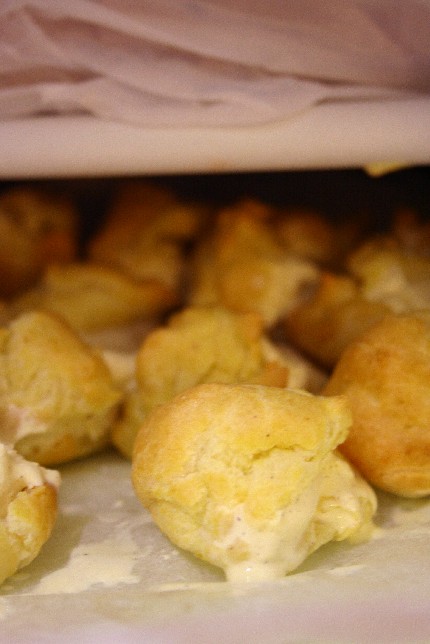
Profiteroles au chocolat can be whipped up in the course of dinner preparations very easily. The recipe is not fussy in the least, there is nothing to master, nothing to worry about, and it takes very little time. You can make the choux paste in 5 minutes and work on other things as they puff up into golden pouches, let them cool while you prepare and serve dinner, fill them with ice cream just before serving, and have them on the table in the blink of an eye.

Make the choux paste. This is the exact same recipe as gougères, without the savory spices and cheese. On the evening you plan to serve them, as a first task before getting dinner started, get these in the oven. It takes no more than a 5 minutes.

½ cup water
50 grams or 5 tablespoons of butter
¼ teaspoon salt
75 grams or 2/3 cup flour
a grate of fresh nutmeg
2 eggs

Mix the flour and nutmeg, and have it ready in a cup.

Put the butter and salt into the water and bring it to a rolling boil.

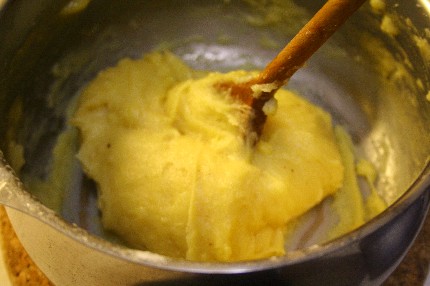
Add the flour all at once, and stir it briskly with a wooden spoon until the dough separates from the sides of the sauce pan.

Off heat, roughly stir in one egg in the same manner to incorporate it fully, and then the other.

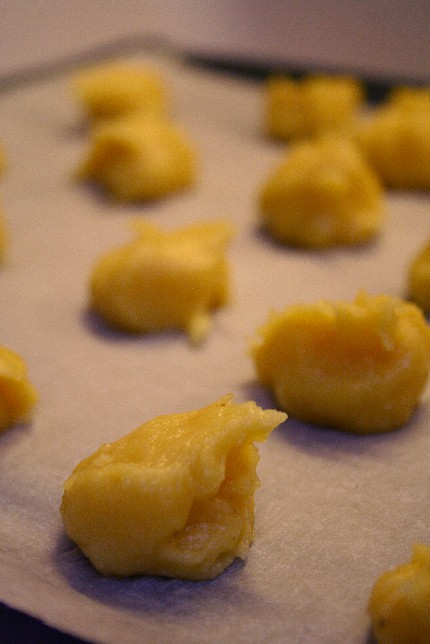
It is impossible to mess this up. Put the dough by teaspoonfuls onto a papered cookie sheet. Give them a little personality with the shapes, and the puffs will better take the chocolate sauce. Bake at 210C/400F until golden and puffed. Let the choux pastries cool enough to handle, slit a hole in the side of each one, and let fully cool.


Just before serving dessert, take 15 minutes to fill them with ice cream and make the chocolate sauce.

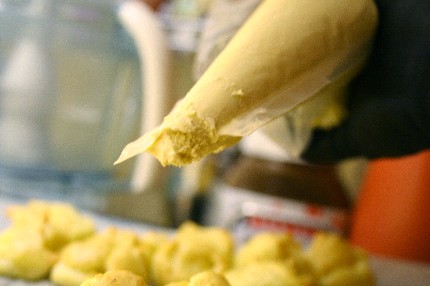
Use a disposable pastry bag or a ziplock with the corner cut off to pipe ice cream into each cooled puff. Cut the end rather large, small enough to fit into the end of the puff, but large enough to effectively squeeze them full of ice cream quickly.

Set them in the freezer to keep them from melting while you make the chocolate sauce:

1 200g. bar of dessert chocolate (60%)
¾ cup water
30 grams or 3 Tablespoons butter
1/3 cup whipping cream

Melt the chocolate along with ¾ cup water in a bowl suspended over simmering water, stirring from time to time. (you can fill the puffs while the chocolate is melting.) You do not need to hover over the chocolate, and you only need to stir it enough to mix the water and melted chocolate. When you are ready to serve dessert, remove the bowl from heat, whisk in the butter in, and add the cream. If the sauce thickens more than you like, add a few tablespoons of water and return to the heat to liquify.

Put the ice cream filled cream puffs into dessert dishes, and spoon the hot steaming chocolate sauce over them. Serve immediately.


This post was written for Sugar High Friday, a monthly blogging event in which bloggers, given that they can pull their act together in time to do so, produce a dessert following a group theme. This month's Sugar High Friday desserts around the theme "Chocolate by Brand!"

Labels: ,


Share/Bookmark

Sunday, January 21, 2007

Sunday's Tartiflette


In the past few weeks I have been looking through the recipes I gathered through the first winter as a newlywed here in France in my first Kitchen Notebook. There are some real oldies but goodies that we go back to every year. Recipe number 18 is one such recipe, an absolutely delicious potato dish that uses a specific cheese from the Savoie region, the Reblochon.

At the ski and hiking station towns in the Alps, especially when there’s a snow problem like we have this year, you'll find would-be skiers wandering through the ski stations looking for something to do. This year is bound to be a banner year for the local cheese co-op. We made a cheese pilgrammage to the town of Thones which has a Reblochon creamery, with more description of the co-op there.

The ski town co-ops are usually found in the heart of the ski station or not far from it, and is the place where local farmers with troops of the right kinds of cows (Abondance, Tarine and Montbéliarde in the case of Reblochon) that have eaten the right kinds of things throughout the year bring their milk. Creamery produced Reblochon de Savoie produced on site is the Cooperative cheese you can find in these local shops. You can identify the creamery made cheese by the little red label on the cheese.

Reblochon de Savoie which has been produced directly on the farm from only one herd is marked with a green label. It is produced in much smaller lots, and can be more expensive. One of the main differences with this cheese is that the milk, being direct from the milking, is warm from the cow when the natural rennet is added. Most farms which are certified to produce Reblochon cheese from their single herd’s milk do it directly from their twice daily milkings, thus produce two small lots per day.

With creamery produced cheese, the milk that comes in from local farms is put together once daily and brought up to cow body temperature before they add the rennet, although like the farm produced cheese, it is not pasturized. Some farmers take some of their milk for farm production of Reblochon, and send the leftover to the co-op. Under both conditions, the milk comes from specially raised and fed cows with living conditions that are specified under the AOC.

Like most traditionally produced cheeses, the flavor of Reblochon cheese varies throughout the year. The cows for Reblochon producing herds eat herbs and grass in the open air throughout the warm months, and have a specially AOC controlled diet in the barn during winter.

The differences in flavor really depend various subtle differences in method between the cheese makers, located within strict geographical boundaries, but most of all the conditions during affinage. Your local fromagère can have a lot to do with how the taste develops.

Choosing farm-produced Reblochon will not necessarily give you a better flavor, but it may taste a bit different from the co-op cheese in the same town. The conditions for production are strict enough and so similar that both farm and creamery produced Reblochon have the same wonderful rich creamy tangy flavor redolent with the pastoral goodness we find so typical in this cheese, and the differences are sometimes not discernable. We never hesitate to stop at the co-op and buy lots of creamery Reblochon, because co-op produced cheese is still excellent, not to mention the price – about half of what it costs from the fromager in the city.

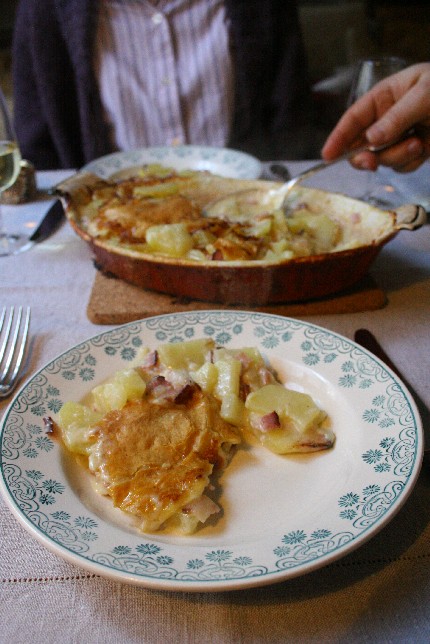
We serve Tartiflette in winter, with a salad and crusty French bread. This is truly a one dish meal, and it’s very easy to prepare.


Tartiflette

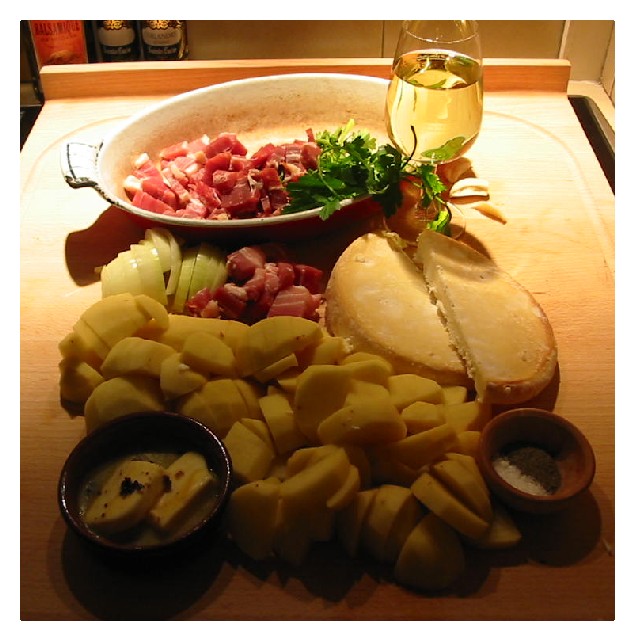
Potatoes to fill a small gratin pan
1 medium onion
200 grams (6 ounces) of smoke and salt cured pork in any combination: poitrine fumé or the best smoked bacon you can find, smoked bacon plus salt cured Savoie ham or Southern style country cured ham. Just get what’s the best cured pork available to you.
1 clove garlic
2 tablespoons fat: butter or duck fat
Salt and pepper
1/3 cup crème fraiche epaisse or heavy whipping cream if you don't have creme fraiche
1/2 cup dry white Savoie type wine
1/2 of a Reblochon de Savoie
Fresh parsley


- Peel the potatoes and cut them into slices.
- Roughly chop the onion.
- Heat the duck fat in a heavy skillet and add the onions, bacon and ham, and sauté gently for 3-5 minutes.
- Add the potatoes and continue to sauté for 5 more minutes.
- Add the wine, give the potatoes a stir, cover, season with salt and pepper as desired, and let simmer and steam in the wine for 10 minutes more.
- Grease the gratin pan with duck fat, crush the garlic clove, and rub the garlic clove all over the inner surface of the pan.
- Reserve the remaining garlic for another use (the vinaigrette for the accompanying salad, for example).
- Add the crème fraiche to the potato onion bacon mixure, and transfer it to the gratin pan.

- Slice the Reblochon in half with a sharp knife flat wise, and place the two pieces on top of the potatoes, rind side up.


- Place into the very hot oven and bake for 10 minutes at 250C or 550F
- Turn the heat down to 200C / 400F and bake 10 more minutes
- Turn off the oven, and leave the dish in the oven without opening it for another 10 minutes.
- Serve hot with a salad, crusty bread, and the the wine you cooked with.

Labels: , ,


Share/Bookmark