



Saturday, January 17, 2009

An Even Easier Tarte au Citron


This past weekend, I was juggling thoughts of what I need to start hauling
back and forth between the two kitchens, the one in Lyon and the one in the Alps. We got in the habit of loading up the car with lots of stuff when we were first going up there, and it stuck. I dream of one day just saying: lets go! and getting in the car and going, without worrying about packing anything. A day when we don't have to make lists and carefully ensure that everything is there before we leave. So far, the hauling things back and forth has worked alright, although we did forget to pack the keys to the house once!

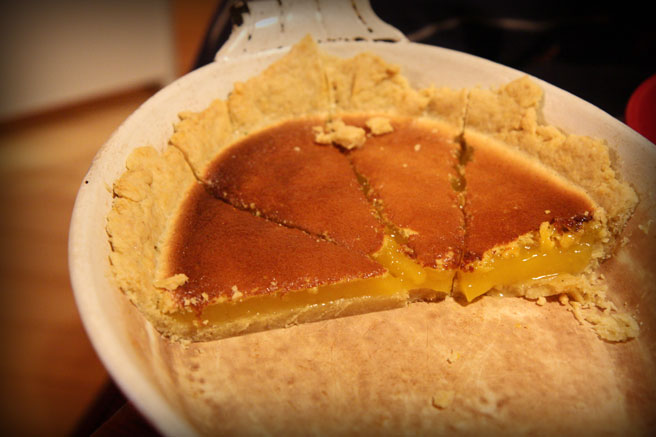
There are so many essential things that we can't get doubles of right now. The kitchen scale, real knives, certain cookbooks I look to for inspiration, the pressure cooker (which comes in very handy on the wood stove), and the blender. I had this bunch of lemons and wanted to bake a lemon tarte, but I didn't have the blender for the one I like to normally do. So I just made up a new recipe loosely based on the one I had done a million times already, a mechanically simpler one that makes use of no implement more sophisticated than a hand whisk. The pay off was incredible when compared to the effort that went into it. Oh man. This one is dangerous.

An Even Easier Tarte au Citron, la recette.

Begin with your favorite short crust. I used this base recipe, substituting cold water for the creme fraiche for no other reason than I didn't have any, and adding a tablespoon of sugar that I'd kept in a jar with a vanilla bean to the mix, because, you know, it was going to be a lemon tarte.

Roll out the crust, cradle it into a small tarte pan (I would say no bigger than 8 inches), or any receptacle that you can imagine holding a tarte, pierce it in regular intervals with a fork to keep it from puffing up as it cooks, and pre-bake it in a moderate oven (350F/180C) until it is firm to the touch and lightly brown around the edges.


In the meantime, take

2 untreated lemons,
4 egg yolks
3/4 cup granulated sugar.

- Wash the lemons, and cut the zest off of one fruit, just the very thin outer yellow part, and sliver it into a very fine mince. Set the zest aside.
- Squeeze both lemons and set the juice aside.
- With a wire whisk, beat the egg yolks and sugar until it lightens in color. This is easily done by hand in about 4 minutes.
- Add the lemon juice, whisk again until it is fully incorporated, and add the minced zest.
- Pour the egg, sugar, lemon and zest mixture into your pie crust, and bake in a moderate oven (350F/180C) for 25 minutes, rotating it in the oven about halfway through to make sure the top browns evenly. (pay special attention to that if you are cooking it in a wood oven!)
- When you pull it out of the oven it will still be a little jiggly, but it will take its lovely firmish curd like texture as it cools. Let it cool completely before serving.

Note: I probably could have topped this one with meringue but it was raining slush out and I didn't want to push my luck.

Labels: , ,


Share/Bookmark

Tuesday, April 03, 2007

On Men and Beef Stew


When I had some mysterious back pain and was feeling under the weather, I let Loic baby me. What do you want to eat? He asked, as I languished in bed last weekend, just feeling tired. He thought I might say toast with butter or oatmeal or some such nonsense.

Beef stew, I uttered, quietly, in English, in the still dark back bedroom with shades drawn. "Pardon?" He came closer to listen. I wanted some beef stew. I couldn't explain it. He took to the project readily and made a trip to the butcher, enjoying the chance to commune with him. He occupied himself with the various neccesary trips, chose herbs, squeezed veggies, relied on the expertise of the vegetable boy to choose the navets, etc. He came back with secret packets of this and that and set to work.

The order was put in Saturday morning and it was delivered the next day. That's fine. It takes time, a good beef stew. I was nestled in on the couch, already feeling better really when I heard him begin peeling and chopping so I let him be. He had chosen his recipe.

Loic cooks excellently from recipes. He is a great measurer. I have watched him with the scales and he fiddles with measurements down to the gram. He levels cups and boils over not in, and is meticulous in his ways. I don't think Loic has ever messed up, burned, forgotten an ingredient, stirred when he should have folded, failed to sift, made sacrreligious substitutions, added too much salt, mixed up paprika for cayenne, conducted experiments which failed, or any of the outrageous mistakes that I have committed in the process of learning how to cook, ever. He popped out of the womb a natural born follower of recipes. Quite logically, he became in his adult life, a scientist.

Thinking back, I do remember one time. On the inaugural visit to meet my family when we were dating and had gotten serious, Loic prepared a flan at their house to impress them. It was the only recipe he ever messed up. The flan was heavy and floury and something was awry. My family loved him and proclaimed that they loved heavy floury things and praised it to heaven. He knew it was a mess-up and was terribly upset. I think he got over it, but you never can be sure if it is one of those things that when his mind is racing in the night, if it comes to poke at him from time to time. That time he messed up that very important flan. I should tell him but I know now that it wasn't his fault - he was using a different kind of flour than he was used to. It took me a couple of years of cooking here in France to realize why his flan didn't work.

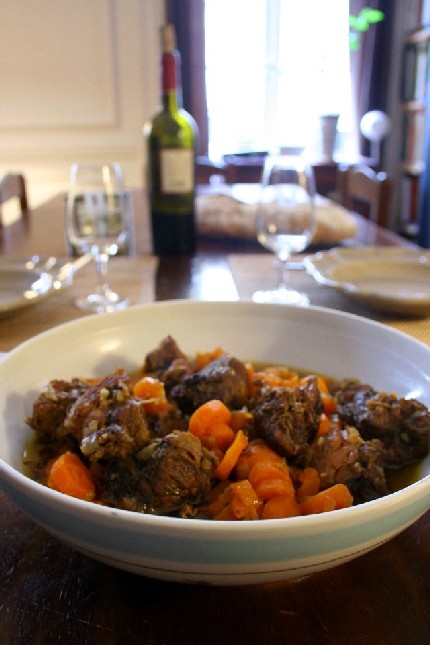
The beef stew was outrageously delicious. He did everything right, including averting his eyes at the dinner table and confessing that he didn't add that cup of white Bourgogne that the recipe called for. This, in my mind, was a milestone in the liberation of Loic from his meticulous ways in the kitchen and an opening for the inventiveness that we will see from him, given the chance. He got a thrill from replacing the white wine with water in the recipe. I did too, because it is what I would have done in the absence of that kind of wine. Tasting the stew, I honestly thought it was perfect. I put a thought into what the wine might have added, and was sure that he had done the right thing.

There is nothing wrong with water! This is one of my mantras in cooking, I write it down but Loic never hears it. People are always trying to replace it with something else in a recipe and sometimes I wonder if people do it because they want to assert some kind of one-upsmanship in cooking. When it comes to stock, I wonder if it's a belief based in inexperience in slow cooking that stock automatically trumps water and is thus required.

There are hundreds of contemporary recipes I have in print on my shelves that wrecklessly throw in the common barrier of home-made stock (page X) as the liquid medium in a braise when it really won't matter. Don't get me wrong, I am a stock advocate, it has its place. I use wine in cooking often, and there are certain dishes that really do call for and require a special kind of wine. But I would like to assert that not having the right kind of wine or stock should never, ever, let me beat this into your head, ever - stop you from slow cooking any meat dish. Never. Because water is a basic ingredient that has an amazing capacity to absorb flavor. Having been infused in advance with poultry or a delicately flavored veal foot, for many of these recipes, will NOT make a discerable difference in the finished product.

Water has a much more important function, that of circulating moist heat in the slow cooking of meats, and the liquid in many of these recipes serves that purpose as its primary function. Water is a wonderful thing, and its power should not be underestimated, even if you are making a soup in a quarter of an hour.

Sometimes you just have to let fresh things speak for themselves. A head of spring fennel, a shallot, a fresh bouquet, and a chunk of the flesh of any number of fish or fowl can speak more beautiful poetry than you'd think. If you are a person who's formative cooking experience comes from stock or die recipes, this realization may be a brutal and liberating shock to you. Beauty can be coaxed from these simple things - directly, in a very short time. In short, don't fall on stock as a crutch or use the absence of it as an excuse not to throw yourself headlong into savory cooking. Look at what you've got. Your fresh simple and flavorful results will suprise you.

In any case, Loic's Boeuf à la Mode was simply divine, the tender meat melted in my mouth, beautiful perfectly seasoned simple broth spread like sunshine, the carrots' clear flavor ringing like churchbells among the squares in the city center on a Sunday morning. You know, those churchbell moments that happen when they all ring at the same time. The window's open, and you've got a glimpse of the clear blue sky, Sunday dinner and then the afternoon spread out before you. This beef stew tasted like freedom. And I really felt great when he said - "you know, I could serve this to guests". I knew this thrill, and seeing it in his face gave me a lot of pleasure.

Labels: ,


Share/Bookmark

Saturday, February 24, 2007

Snail Butter - Beurre d'Escargots


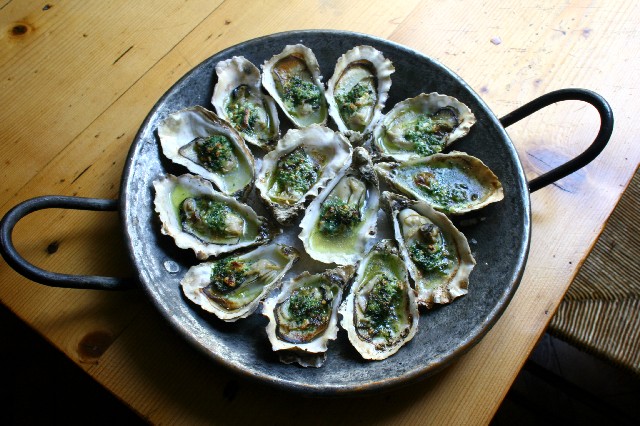
In Burgundy they eat their snails swimming in delicious garlicky parsley butter, spearing them from their shells with cute two pronged forks made just for the purpose. But beurre d'escargots is not just for snails anymore, you know. It can be spread on warm crusty bread, a knob can be set to melt on a freshly seared steak, it can be spread on cod to be baked in papillote, melted over potatoes, and more. It keeps for weeks, if you don't find uses for it all at once, and it also freezes well. Today I made some to try out an idea for oysters.


Hum de dum dum...


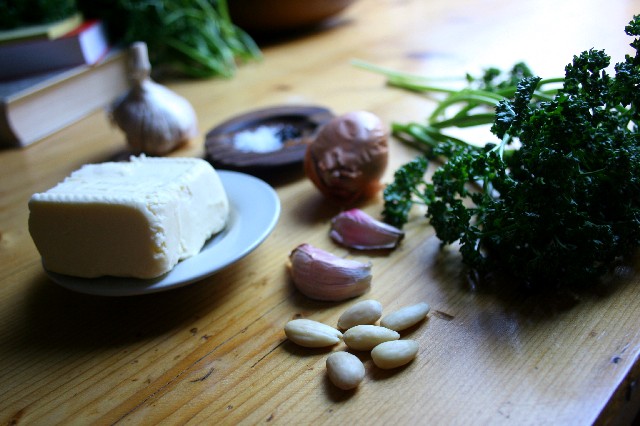
The recipe I finally settled on over the years as my standard in fact comes from Paul Bocuse's cookbook La Cuisine du Marché. I initially had a rather blah feeling about this cookbook because some of the recipes say things like "garnish with sliced truffles and serve", and Lord knows only Kate can do that. Lets just say some of the recipes are not put into a realistic framework for the home kitchen, even for a French home kitchen, and the market is often missing those truffles! I wasn't too convinced at first that I could cook from his book as a companion to my common market excursions, although logically it seemed that the market he must have had in mind was one like St. Antoine. The method was bare bones as well. Not one photograph, no context given for anything, and no description about how to do anything. Just reminders and advice about ingredients, how to choose them, and proportions. In fact many of his recipes are missing oven temperatures or times of cooking. One day I realized that this book is actually Paul Bocuse's kitchen notebook, with information he compiled over many years, and like many of the best references, the content seems richer the more I learn. I started getting more and more from it, and it is now one of my first references when I'm curious about how to do something, because the proportions are always true.

His proportions for beurre d'escargots:

1 kilo of butter
20 grams coarse sea salt
1 gram of ground black pepper
a grating of nutmeg
50 grams crushed garlic
40 grams chopped shallots
50 grams almonds
100 grams finely chopped parsley

this translates to a reasonable amount as follows -

100 grams of butter (or a bit less than a stick)
2 grams of coarse sea salt or about 1/2 teaspoon
a grind of black pepper
a light grating of nutmeg
5 grams or about a clove of winter garlic (more if the garlic is fresh - use your judgement)
4 grams minced shallot or about 3/4 of a small shallot
5 grams of almonds or about 5 almonds
10 grams or the leaves from about 20 sprigs of healthy parsley, finely chopped

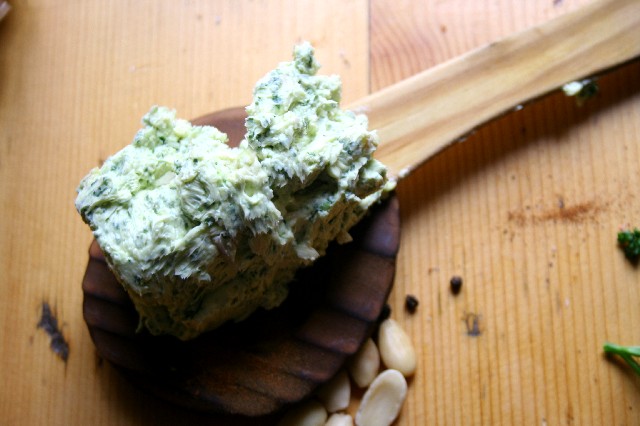
Crush the shallots, garlic, and almond with a mortar & pestle until smooth. Add the minced parsley and the lightly softened butter. Mix them well until it is a homogenous paste. Keep cool in a ceramic container.


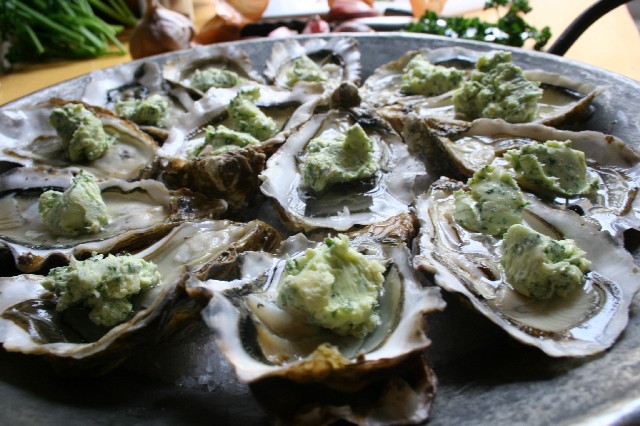
Hey! Lets try it on some OYSTERS!


After about 7 minutes in a very hot oven.

Philippe Dupuis, Produceur-Ostréiculteur, always gives us 13 when we order a dozen. I always make sure Loic has the last one. We got into a heated discussion on the way home about the difference between the claires and the specials. We ate 6 no. 5s raw and then cooked the no. 3s. They were all delicious.
Just as we were finishing up the no. 5s I saw that I was not the only one inspired by oysters this morning.

Labels: , ,


Share/Bookmark

Sunday, January 21, 2007

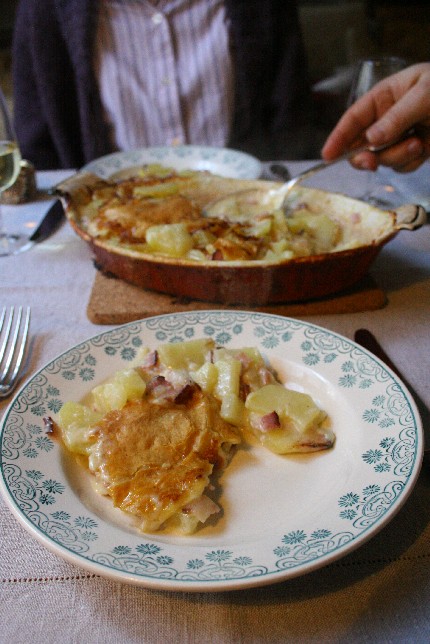
Sunday's Tartiflette


In the past few weeks I have been looking through the recipes I gathered through the first winter as a newlywed here in France in my first Kitchen Notebook. There are some real oldies but goodies that we go back to every year. Recipe number 18 is one such recipe, an absolutely delicious potato dish that uses a specific cheese from the Savoie region, the Reblochon.

At the ski and hiking station towns in the Alps, especially when there’s a snow problem like we have this year, you'll find would-be skiers wandering through the ski stations looking for something to do. This year is bound to be a banner year for the local cheese co-op. We made a cheese pilgrammage to the town of Thones which has a Reblochon creamery, with more description of the co-op there.

The ski town co-ops are usually found in the heart of the ski station or not far from it, and is the place where local farmers with troops of the right kinds of cows (Abondance, Tarine and Montbéliarde in the case of Reblochon) that have eaten the right kinds of things throughout the year bring their milk. Creamery produced Reblochon de Savoie produced on site is the Cooperative cheese you can find in these local shops. You can identify the creamery made cheese by the little red label on the cheese.

Reblochon de Savoie which has been produced directly on the farm from only one herd is marked with a green label. It is produced in much smaller lots, and can be more expensive. One of the main differences with this cheese is that the milk, being direct from the milking, is warm from the cow when the natural rennet is added. Most farms which are certified to produce Reblochon cheese from their single herd’s milk do it directly from their twice daily milkings, thus produce two small lots per day.

With creamery produced cheese, the milk that comes in from local farms is put together once daily and brought up to cow body temperature before they add the rennet, although like the farm produced cheese, it is not pasturized. Some farmers take some of their milk for farm production of Reblochon, and send the leftover to the co-op. Under both conditions, the milk comes from specially raised and fed cows with living conditions that are specified under the AOC.

Like most traditionally produced cheeses, the flavor of Reblochon cheese varies throughout the year. The cows for Reblochon producing herds eat herbs and grass in the open air throughout the warm months, and have a specially AOC controlled diet in the barn during winter.

The differences in flavor really depend various subtle differences in method between the cheese makers, located within strict geographical boundaries, but most of all the conditions during affinage. Your local fromagère can have a lot to do with how the taste develops.

Choosing farm-produced Reblochon will not necessarily give you a better flavor, but it may taste a bit different from the co-op cheese in the same town. The conditions for production are strict enough and so similar that both farm and creamery produced Reblochon have the same wonderful rich creamy tangy flavor redolent with the pastoral goodness we find so typical in this cheese, and the differences are sometimes not discernable. We never hesitate to stop at the co-op and buy lots of creamery Reblochon, because co-op produced cheese is still excellent, not to mention the price – about half of what it costs from the fromager in the city.

We serve Tartiflette in winter, with a salad and crusty French bread. This is truly a one dish meal, and it’s very easy to prepare.


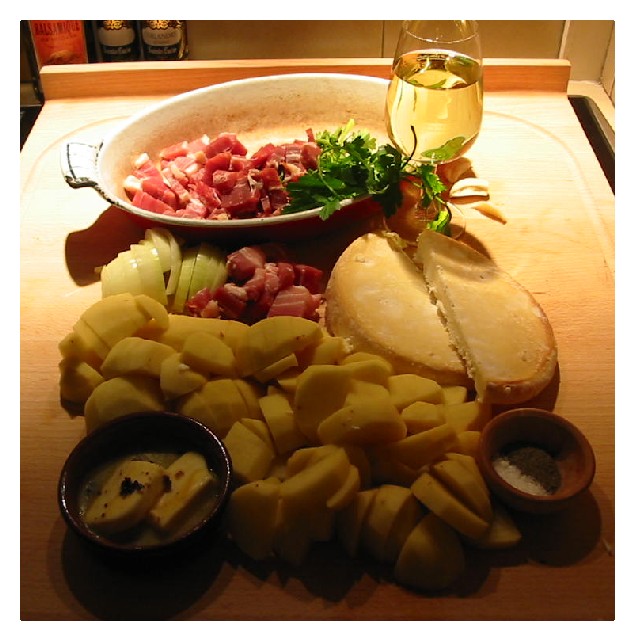
Tartiflette

Potatoes to fill a small gratin pan
1 medium onion
200 grams (6 ounces) of smoke and salt cured pork in any combination: poitrine fumé or the best smoked bacon you can find, smoked bacon plus salt cured Savoie ham or Southern style country cured ham. Just get what’s the best cured pork available to you.
1 clove garlic
2 tablespoons fat: butter or duck fat
Salt and pepper
1/3 cup crème fraiche epaisse or heavy whipping cream if you don't have creme fraiche
1/2 cup dry white Savoie type wine
1/2 of a Reblochon de Savoie
Fresh parsley


- Peel the potatoes and cut them into slices.
- Roughly chop the onion.
- Heat the duck fat in a heavy skillet and add the onions, bacon and ham, and sauté gently for 3-5 minutes.
- Add the potatoes and continue to sauté for 5 more minutes.
- Add the wine, give the potatoes a stir, cover, season with salt and pepper as desired, and let simmer and steam in the wine for 10 minutes more.
- Grease the gratin pan with duck fat, crush the garlic clove, and rub the garlic clove all over the inner surface of the pan.
- Reserve the remaining garlic for another use (the vinaigrette for the accompanying salad, for example).
- Add the crème fraiche to the potato onion bacon mixure, and transfer it to the gratin pan.

- Slice the Reblochon in half with a sharp knife flat wise, and place the two pieces on top of the potatoes, rind side up.


- Place into the very hot oven and bake for 10 minutes at 250C or 550F
- Turn the heat down to 200C / 400F and bake 10 more minutes
- Turn off the oven, and leave the dish in the oven without opening it for another 10 minutes.
- Serve hot with a salad, crusty bread, and the the wine you cooked with.

Labels: , ,


Share/Bookmark

Sunday, February 19, 2006

How to make a homespun soufflé


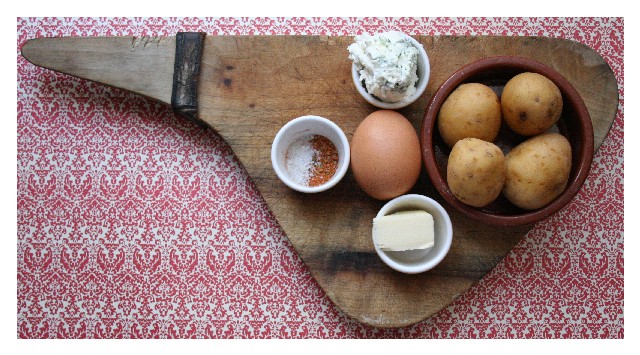
The consummate home economist, Madame St. Ange tells us how to make a potato soufflé for the family dinner table. I 'update' and divide the recipe by 3, mess it up and even then it tastes divine. It is a ramekin of breakfast goodness.

Breakfast Potato Soufflé

1 egg
twice its volume in old potatoes
2 teaspoons butter
1/4 teaspoon salt
1/2 teaspoon spice mix maison
2 teaspoons cream cheese or creme fraiche
a pinch cream of tartar

Preheat the oven to about 375F/175C. Separate your egg, putting the white in a medium sized mixing bowl and the yolk on a saucer. Set aside. Pierce the potatoes with a fork and nuke them until soft. Working while they're hot, remove the skin and mash with a fork in a saucepan. Over low heat to evaporate moisture, add the butter with a wooden spoon, vigorously working the potatoes and butter until their form a thick homogenous paste. Add the cream cheese one spoon at a time. Off heat, add the egg yolk and the seasonings, and fully incorporate them. Beat the egg white with the cream of tartar until it forms stiff peaks. Take 1/3 of the beaten egg white and incorporate it gently into the potato mixture. In turn, add the potato mixture to the bowl containing the remaining egg whites, and carefully fold it together. Transfer this to a ramekin, and smooth the top with a knife. Place in a medium oven for 15 to 20 minutes, or until the top is brown. It will puff up. Not really like a soufflé, but enough to be considered elegant and of a delectable nutritious consistency. Make note to double or triple this recipe the next time. Always eat your potato soufflé immediately, while hot and steamy. One more example of a dish where the result is an elegant 'much more than the sum of its parts'.

Labels: ,


Share/Bookmark

Friday, February 03, 2006

Piping Hot Gougères


Gougeres are easy. They are also delicious, and can be seasoned and stuffed in so many ways. The next time you have guests, whip up some gougeres to go with the aperetif. They are a great way to say you care and much less expensive than gourmet snacks or nuts! I estimate that making a batch of gougeres which yields about 3 dozen bite sized cheese puffs costs approximately €1,70, and you don't have to buy anything special in order to make them. Choux paste is seasoned with my house spices and whatever cheese I have on hand, to make a welcoming start to a meal. They go perfectly well with a Chablis, or a Clairette, Cremant, or Champagne.

Gougères (a small batch)

125 ml water
50g. butter or 40g. duck fat
1/2 teaspoon salt
75 g. flour
2 teaspoons spice mix maison
100g. fresh grated Parmesan or a mix of Parmesan and Emmenthal
a grate of fresh nutmeg
2 eggs

Mix your flour, spice mix, and nutmeg together and have it ready to use. Put the fat and salt into a saucepan with the water. Bring to a rolling boil. Add the flour mixture, all at once. Beat vigorously by hand with a wooden spoon over the heat until the dough begins to separate from the edge of the pan, having lost some moisture. Remove from the heat and incorporate the first egg fully with the wooden spoon, then the second. Mix in the grated cheese. Place rounded teaspoon-fulls on a cookie sheet lined with parchment. Bake at 210 C / 400 F until they turn golden brown. Turn off and open the oven slightly to keep them warm until service.

Note of thanks to the reader who kindly prompted me to keep my ml and cl's straight!

Labels: ,


Share/Bookmark

Wednesday, February 01, 2006

Uses of Parsnips


What I do know about them: We find them freshly harvested here at the markets starting in January. Their sweetness develops when they're cooked, and they are especially sweet when harvested after the first frost. The older a parsnip is, the more "woody" it's going to be, so beware of large parsnips. Choose parsnips as you would carrots, they should be crisp and firm. They're sweet. They're sold under the name Panais here in France.

Three experiments worth trying: Parsnip cake, like carrot cake. Confit de Panais to serve with liver pate. Parsnips grated into fruit salad.


Parsnip salad:
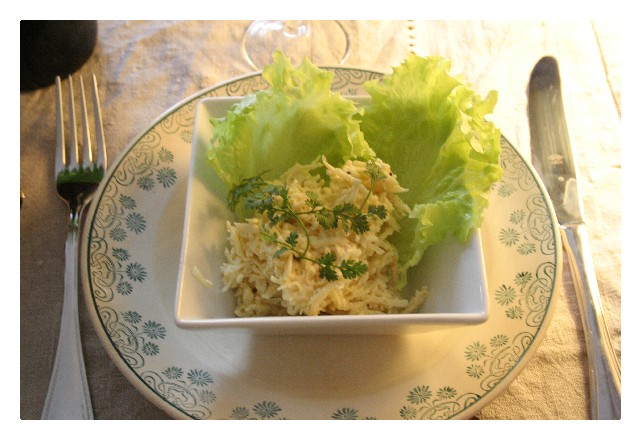
Grated parsnips, mayonnaise, spice mix maison, and extra fresh ground black pepper.

Parsnip Cake (one layer, can be doubled):

1 cup cake flour (+2T. type 55 if you are in France)
1/2 teaspoon baking soda
1/2 teaspoon baking powder
1 teaspoon cinnamon
1/2 teaspoon salt
1/4 teaspoon fresh ground nutmeg
2 large eggs
90ml duck fat, at room temp
90 grams granulated sugar
1/2 cup packed brown sugar
1/4 cup milk
2 cups shredded parsnips

Mix dry ingredients together and set aside. In a mixing bowl, whisk together the eggs, duck fat, sugars, and milk until well blended. Stir in the dry ingredients until just combined. Fold in the parsnips. Put into a one layer pan or small loaf pan and bake at 175C/300F for about 30 minutes, or until a toothpick comes out clean.

Labels: ,


Share/Bookmark

Tuesday, January 24, 2006

Ski Picnics

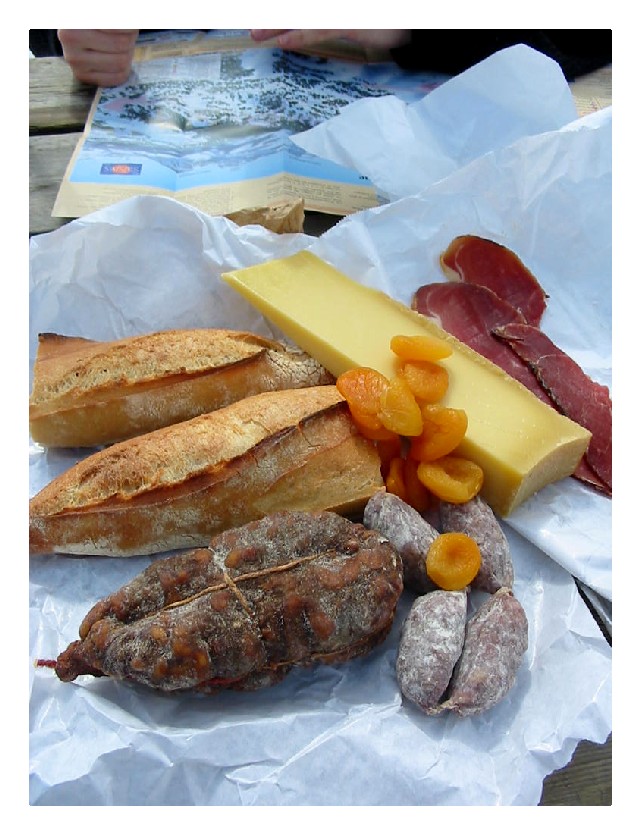
Loïc's idea of the perfect picnic is squatting in the woods with a swiss knife and a piece of cured meat. I like luxurious spreads complete with proper linens, silveware and glasses, and food that has been thoughtfully planned for the event. We have come to compromise on picnics when we ski. This past Sunday we went for a nice jaunt into the forest. Along with a thermos of hot pumpkin soup, we brought simple things. I have hauled very big meals to far-flung places, but simple picnics also have their place.

The first ski picnic I have the pleasure to remember was one prepared by my mother. I suppose I was 10 or 11 years old at the time. This was when my father went all out and bought everyone cross country skis when they were on sale at Marjax. My mother and I soon lagged behind the group. I was just learning to ski and hadn't dressed properly, so I was hot, tired and hungry by the time she pulled out our individual lunches, each in their brown sack. In addition to some sandwiches which I remember weren't too remarkable because of some tomatoes that had gotten everything soggy, she brought out nuts and dried fruits, and something I could not believe: chocolate. I suppose someone had told her the things one was supposed to take skiing because my mother would never choose to feed me chocolate or any sweets if she could help it, or that was my impression as a 10 year old, anyway. I remember that as the first time my mother and I ate chocolate alone together. My spirits lifted immediately after that special picnic with my mom. She said she was proud of me when we finally reached the station to find the others drinking hot cocoa in the lodge.

The next ski picnic I remember very well, it was the first one I had ever prepared. I was to go skiing with my dear friend Willy. We were about 14 years old, I think. Willy was a remarkably graceful person, and was a champion figure skater. We spent a great deal of time together during the holidays. When I suggested we start doing some cross country skiing, he really caught on fast and before we knew it he'd convinced his parents to get him some skis and he got his mother to drop us off at the trails. He was very good at convincing his parents to do things. For the picnic that day, I carefully prepared corned beef sandwiches on rye with russian dressing, with lots of crispy lettuce and pepper. For good measure, I topped them with thick wedges of cheddar cheese which where I grew up was made locally and was extrordinarly good, but at the time I didn't realize how good it was because I had never had any other. We were alone on a rather advanced trail, and lo around lunch time we happened upon a shack beside the trail. We sat down and had our sandwiches, which were packed tight and heavy and full of goodness. The snow was deep and there were icicles hanging pristinely from the roof at the front of the shack with the sun sending off beams of light in all directions. A cardinal came to join us. I was just thinking how great it was to be eating that sandwich when he said - "This is the best sandwich I have ever had". I glowed with pride and we laughed for a long time, I don't know why. It was a pretty good ski picnic.


-------------------------------------------------------------------------------------
Note to mom:

Lest we forget your last visit:


Hey mama! If you're in the mood for another adventure, please book your tickets soon! I miss you very much! Love, me.

Labels: , ,


Share/Bookmark

Monday, January 23, 2006

Cabillaud à la Ménagère

Cod has a great tasting fillet. Being an oily fish, the fillet can be braised along with potatoes with absolutely delectable results. You don't have to worry about this kind of fish going dry if you bake it along with root vegetables for awhile. This surprised me at first, because I always felt that nothing was more regrettable than overcooked fish, and I used to hover needlessly over them all. The more I learn about fish in the French diet, the more happy I am to discover that a variety of species tolerate different cooking methods and times. Cod is a relatively low maintenance fish with high taste ratio for the effort. I'm happy to enjoy more time with my family while I cook up some delicious cod in this simple way.

Preheat the oven to 180C / 350F.

1 onion, sliced not too thin
6-8 peeled new potatoes or 1-2 large potatoes that have been washed, peeled, cut into 4 pieces and tourned. (tourning is optional)
1 tablespoon good olive oil
4 tablespoons butter
1/2-1 teaspoon sea salt
pepper

Grease a porcelain or terra cotta oven proof dish that will hold the fish. Place the sliced onions in the bottom of the dish. Microwave the butter in a small dish until just melted, and add the olive oil, stir the mixture to blend. Drizzle roughly half of the butter/oil mixture over the potatoes. Lay the fish filets flat over the potatoes, drizzle the rest of the butter/oil over the top of the filets, and sprinkle the salt and pepper. Cover the pan with foil, to seal it the best you can. Place in the pre-heated oven for 25-30 minutes. The onion and potato will heat up and release steam, in turn steaming the cod, which will release it's own liquid to mingle with the rest. Serve hot with steamed vegetables.

Labels: ,


Share/Bookmark

Saturday, January 21, 2006

Gambas Sabayon


The sabayon is an excellent addition to any kitchen notebook. Its origins are in Italy, but the French have adopted it quite well. It is a foam that when warm takes the consistency of a sauce, and when chilled becomes a mousse. The formula: eggs/flavorings/wine/heat works equally well sweetened and chilled or as a savory sauce. Some times I make an elegant sweet champagne sabayon to serve as dessert, chilled. It is a thick rich amagam of concentrated flavors.

This dish is a nice appetizer for a special dinner.

Gambas sabayon
For 4 people as an appetizer
Equipment: 4 ramekins, double boiler or metal bowl that fits over a sauce pan.

16 medium to large wild fished gambas or netted ocean shrimp, uncooked
8 spring roll wrappers
2T. butter
1 T. spice mix maison
100 g. green mixed salad

1 head garlic, unpeeled
4 egg yolks
1 T. spice mix maison (that makes for a total of 2 tablespoons)
2 T. lemon juice (fresh)
1 cup white wine
1 t. dijon mustard
1 T. minced fresh tarragon

Method

-Cut the base off the head of garlic, wrap in foil, and bake in a hot oven for approximately 20 minutes.
-Remove from oven and when cool enough to handle but still warm, squeeze the softened garlic into a metal bowl (that will eventually fit over the saucepan.) Add the Creole seasoning and lemon juice and mix the paste well.
-Mince your tarragon.
-Peel the shrimp, remove the heads and de-vein. (For beginners, please note that uncooked shrimp will be blue or green in color. When it cooks it will turn orange.)
-Preheat the oven to 375F / 190C.
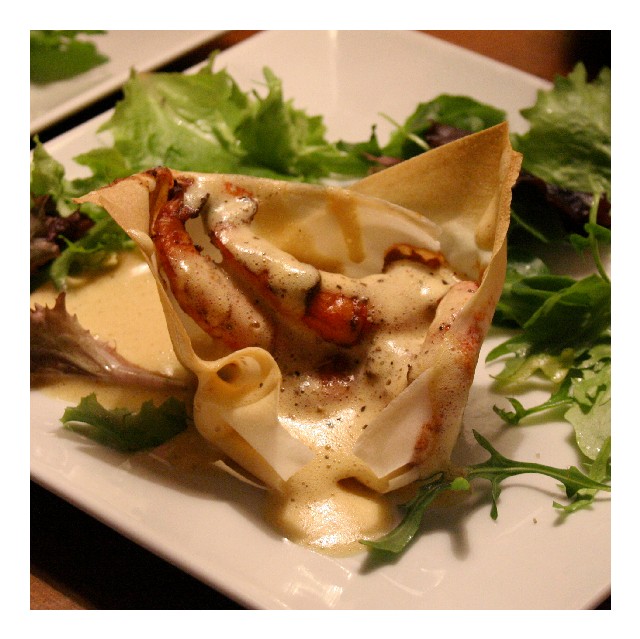
-Grease the ramekins and fit two spring roll shells into them, fluffing them into pretty shapes that will eventually hold the shrimp and the sauce like a nest.
-Heat up 2 T. butter in your saucepan and add 1 T. spice mix maison. When the foam has subsided, add the shrimp all at once and cook about halfway, stirring and flipping them constantly. The goal is to finish cooking them in the oven in the shells. (This is just enough to get the outsides to start to turn orange, but not any more, because if you fully cook them before they go in the oven, they will overcook in the oven and that would be a shame.) This should take no longer than about 3 minutes.
-Remove the shrimp to the prepared shells quickly and arrange them in a pretty way, this is how they will be presented in the end. Careful about drips. I use chopsticks to do this for more precision. Slide them in the oven, and set the timer for 5 minutes.

-Rinse out the saucepan right quick and put about an inch (2cm) water in the bottom, and heat the water to boiling.
-lower the heat to keep the water simmering, and place the metal bowl containing the garlic and spice paste on top ove the pan, over the steam.
-Break the 4 egg yolks into the bowl containing the paste.
-Whisk for a few seconds, incorporating the egg yolks thoroughly.
-Add the wine and continue to whisk over the steam until the sauce begins to thicken. -Keep whisking, and add the dijon mustard when you see the first wisps of steam rising from the sauce. It will thicken quickly at this point, and this is when you should add the minced tarragon. At this point in adition to having thickened, it will have turned into a foam. A delicious foam. Be careful not to let this sauce cook much more beyond this point or it will turn.

-When the timer rings (this should time out approximately to the sauce being finished) Remove the shells from the oven. They should be browned around the edges, they will be pretty. Arrange the salad around the plate and leave a little place for the pastry nest. Carefully lift the pastry nests from the ramekins and place them on the plates, use a ladle and give a nice dose of the foamy sauce over the shrimp and around the plate, without covering the salad or the forms of the shrimp too much, their forms are special. Take them to the table immediately.

-Bring the leftover sauce to the table for mopping up by the gourmands.

Variations: Some people don't like tarragon. Never fear, this dish can and has been done without it, with a beautiful garlicky result. The roasted garlic, instead of lifting up and complimenting the tarragon flavor, will become the central flavor. You should consider the seasoning if you omit the tarragon, and adjust with a bit of extra salt just before serving. Another way to do that, if you have some in the kitchen, is to dust the finished dish with fleur de sel.

Labels: ,


Share/Bookmark

Friday, January 20, 2006

Tripes


There's a reason why the French refer to tripes in the plural. Cows have four different stomachs, each with its own function. Form follows function in each of the stomachs, and we have different patterns and shapes to appreciate when we find them freshly prepped for the cook pot at the butcher. Any respectable tripe dish should have a sampling of each stomach, because their shapes and forms allow them to sopp up sauce in different ways. A perfectly prepared dish of tripes will give you a variety of mouthfeel all throughout the dish, as each piece will pick up the stewing juice differently.

Since tripes prepared from their raw form take several hours to reach a digestible consistency, for the most part, your butcher will carry tripes that have been previously cleaned and boiled, and are ready to take on whatever style you choose with another hour of simmering. One great thing about tripes is you can never simmer them too long! Prepared tripes run from a brilliant white to a faded tea stained color, depending on which parts of the stomachs they came from. The ones that have not been pre-boiled will look like they need a good cleaning. If you are not sure, ask your butcher.

A nice way to fix tripes

1 kilo beef tripes, cleaned and boiled by the butcher
1/4 cup good olive oil
2-3 cups white wine
5 or 6 tomatoes or 3 tablespoons tomato paste in winter
4 cloves garlic, peeled but left whole
2 medium sized onions, roughly chopped
1 bouquet garni
2 or three poivre long or black peppercorns
1 teaspoon spice mix maison
salt and pepper

-Cut the tripes into about 2cm sized (1 inch)crisscrossed chunks.
-Faire fondre the onion in olive oil (that is saute until soft without browning)
-Add the tripes and let sizzle for a little while, then add the whole garlic cloves, the herbs, tomato paste and white wine. Bring to a boil and then lower the heat, and simmer for an hour. Add the spices at the end.

A wonderful variation of this dish which I like very much is to replace the tomato paste with the juice of one lemon and 2 tablespoons white cider vinegar. At the end, in the last five minutes, when you add the other seasonings, add about a 1/2 cup of pitted black olives. Which one you prepare depends on your mood for tomatoes. You really can't go wrong with tripes, they like acidic mediums to simmer in. I have served tripes over rice, with country bread, etc. Greens of any kind go well with tripes, but what I like best is to serve them alone, followed by a clean crisp simple salad.

Labels: ,


Share/Bookmark

Thursday, January 19, 2006

Tourtes


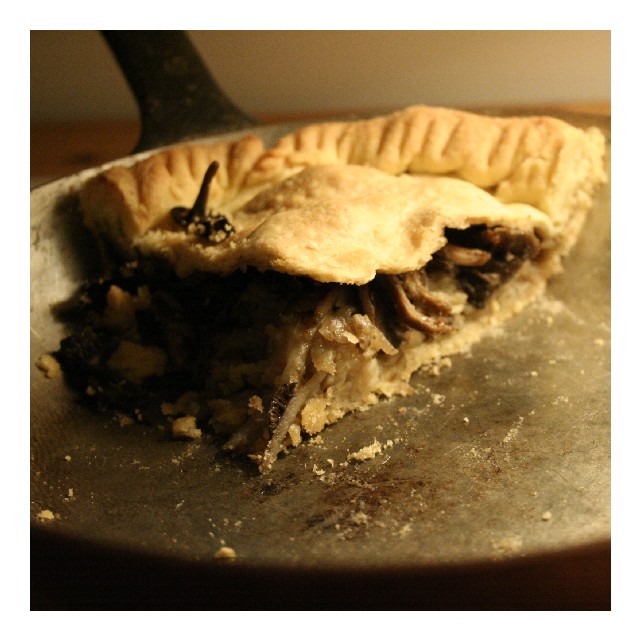
Tourtes are covered pies in France. They are not called tourtes by virtue of their roundness or their contents. Sweet or savory, tourtes are pies with an upper crust. No matter that in Germany they are round sweet cakes with nuts & cinnamon, no matter that the origin of the word comes from the latin torta, round. Escoffier said so, and so it is. No matter, we still see exceptions here and there, but ask any booksmart gourmand or gourmet, and they may have a thing or two to say if you don't include that upper crust! Anything different and it's a tarte, they'll say. By my twisted logic, I think tourtes are an older, wiser, more thoughtful, slightly more modest version of the tarte.

Labels: ,


Share/Bookmark

Wednesday, January 18, 2006

Petite Tarte aux Poireaux

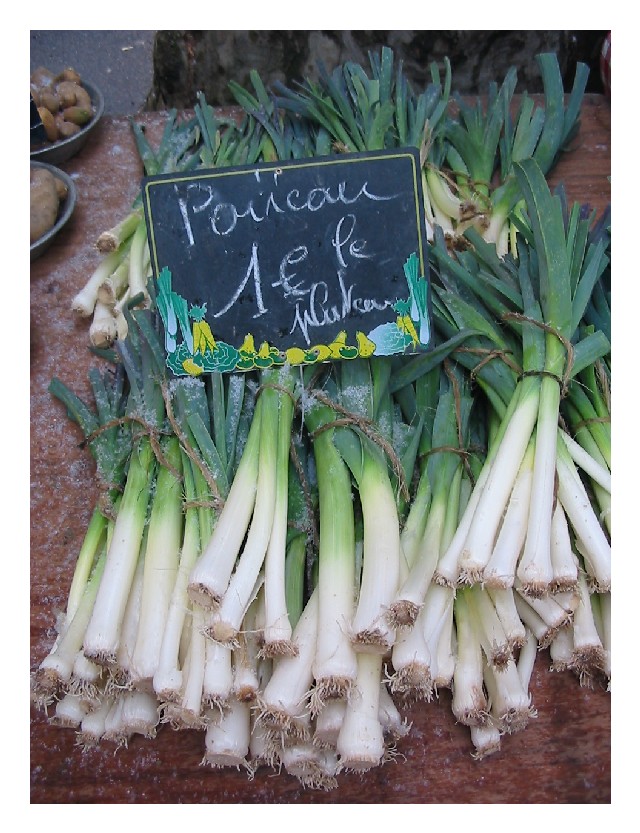
Profound deliciousness lies in the midst of the season’s scarce pickings. A winter’s kitchen repertoire is like a closet full of thick warm woolen sweaters, each a different color and each knit by a separate hand. Winter is a time to prepare comfy foods that nourish the soul as well provide everything we need to keep us warm. In the French kitchen, the leek plays a supporting role all year round, but is by far the star of the show during the dark winter months. In winter, the leeks are often new, small and thin, the kind I like best, because they are bursting with life out to their skin, and the flavor goes such a long way. Leeks are an important part of the petit salé, the pot au feu, and many other long cooked soups and winter ragouts, and perfect in combination with potatoes in a velouté we call the Vichyssoise. One of the best and easiest ways to enjoy fresh young hardy winter leeks fresh from the producer’s garden aside from eating them plain, is to make a petite tarte aux poireaux.

The Recipe
Prepare one batch of your favorite Pâte Brisée recipe, and prebake a small tarte shell.

4 small fresh leeks
1 shallot
2-3 new onions (they look like fresh white bulbs with green stems) or 1 small yellow onion
2 leaves of sorrel
1 bunch chervil
50 g. butter
1/3 cup crème fraîche
salt and pepper

- Wash and dry the herbs. Remove the chervil leaves from their stems. You are going to have between 1/2 and 1 cup of leaves. Roll and slice the sorrel into a fine chiffonade, which is thin strips made by slicing across the roll you have made.

- Cut the end from each leek, and remove the outer leaves only if necessary. Wash them well, without taking them apart. There may be areas near where the green shoots form where sand or dirt have accumulated. This is rare for the fresh young leeks, but be careful and ensure that it is all removed. Slice the whites into very thin rounds, and keep slicing a little way up into the green stem, to give the mix a little color. (Leave the remaining green part in your collection of scraps and cuts to be used later for a vegetable stock.) Mince the onions and shallot.

- Sauté the onions, leek, and shallot in the butter over low heat, pushing them about with a wooden spoon, until they soften (this is called faire fondre, to melt, in French). You don’t want to have too much caramelization. Use your judgement and once the roots are soft and tender, and not browned very much at all, add the herbs and push them about until they wilt but not so long that the sorrel begins to change color from bright green to drab. Turn the melted bulb / herb mixture into the prepared pastry shell and spread it all over the bottom. Remember, a little leek goes a long way in flavor.

- Stir up the crème fraîche and add a little water if necessary to get it to the consistency that it can pour. It should still be quite thick. Drizzle the crème fraîche over the whole surface. Return the tarte in which you have placed the melted roots and crème to the oven, and bake for another 10 minutes. Serve this tarte warm, hot, or even cold.


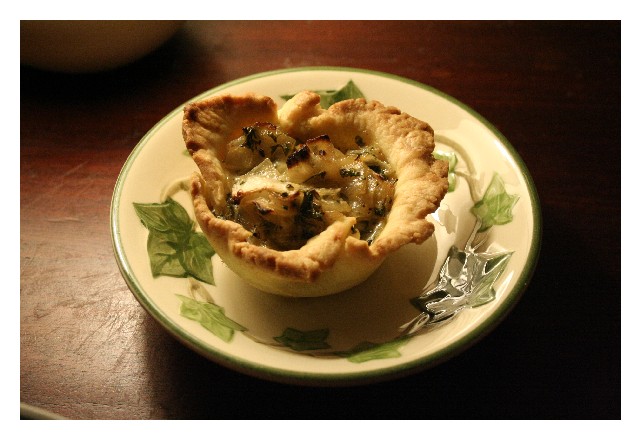
This recipe does very well as little bite sized aperetif tartelettes. The photo above is a portion-sized tartlette which was done without pre-baking the shell. It is nice to serve this is as an appetizer, or what the French call an entrée. A variation of this tarte is to grace the top with slices of fresh goat cheese and a generous grind of white pepper before baking. This marries very well with the sorrel and chervil. Be sure to note your variations in your kitchen notebook, because they'll serve you well in the future.

Labels: ,


Share/Bookmark