



Friday, January 25, 2008

The Plain and Fancy of a Great Velouté


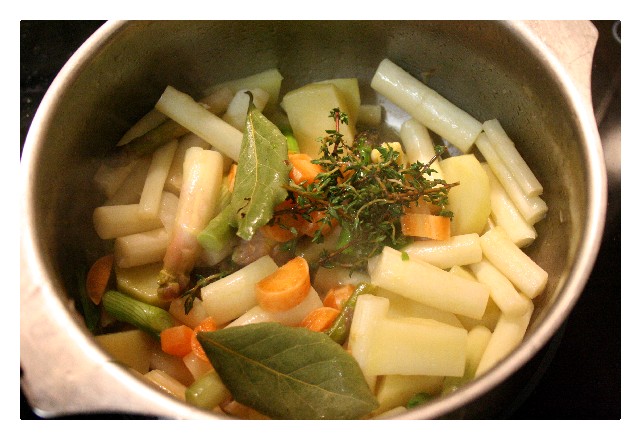
Salsify and carrot on a guinea hen base.

Velouté means velvety in French. Have you ever had a soup that tasted so velvety and delicious you were actually taken off guard by the pleasure? It's more than a puréed bowl of soup, it's a poem in texture and flavor.

All veloutés have their base in the plain and simple. During the winter, we have cold stored roots galore: rutabaga, turnips, potatoes, carrots, celeriac, salsify, and parsnips, among others. Legumes like soissons, coco beans, fava and lentils can also be great core ingredients to a velouté. When Spring comes around, there will be all kinds of amazing flavors to play with. But beginning with roots infused and softened in your house stock with carefully selected aromatics: garlic, shallots, onions or leeks, it's easy to create a great base, kind of like stretching and preparing a canvas with a perfect smooth layer of gesso, ready for the color.

For the stock challenged: If you are short on stock, adding a little bit of meat to your simmer is an effective substitute to home made stock to infuse a rich flavor element. If you are vegetarian, your added yeast based veggie demi-glaces you have prepared at home should also be incorporated at the beginning, to give your vegetables a chance to absorb the flavors.

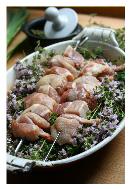
Keep the base simple. Remember complimentary flavor pairings you have enjoyed in the past. Bacon and rutabaga, for example, or lamb and soissons. Keeping the number of predominant flavors down to one or two main flavors and keeping them separate and complimentary is the secret to a soup with impact. Potatoes are a very good neutral thickener. I add at least one small potato to the mix. You would be surprised at the beautiful singular flavor that can be coaxed from a root like celeriac. When paired with spatchocked quail...

Don't simmer too long. Just do it long enough to soften the vegetables. For 4 servings, When preparing velouté, I begin with my carefully chosen roots, and use in general enough so that when washed, peeled, and chopped, I've filled a small saucepan up 3/4 of the way. I put them in the pan, wedge the aromatics, herb bouquet, and meats in between, and cover the lot with house stock or even water, depending on my ingredients. Brought to a boil and then lowering the heat, this simmers for 15 to 20 minutes, until the vegetables are just soft. No more.

Blend it, then strain it. Remove any bouquet you have infused with the base ingredients, and use the stick blender to puree everything to a smooth finish, including the meats you have included with your roots. Push it through the chinois. straining is paramount in achieving the sought after velvety smooth texture of a velouté that takes you to that higher plane. If you're not going to bother with straining it, be prepared for a thick soup that might be great on a cold day with some crusty bread, but not the luxurious texture you find in a velouté. You might think that with today's technology in blending equipment, we shouldn't need to send it through a sieve, but the difference in mouth-feel really does make it worthwhile.

Enrich it. The addition of cream, butter, or egg yolks is a step that when done with care, really can have a beautiful effect. I reserve this for when we are serving to guests these days. Although it is indisputably fattening, there is something in cream: fresh or lightly cultured, that tops off the rich velvety impact for an "oh" effect. Good butter does even better. Enrichment can push a fabulous flavor combination to something sublime.

Brighten the flavor. Everyone has had home made soup that just flew under their radar. It was bland. Heavy. Stodgy. It didn't have any particular punch. It reminded them of their childhood stay in an orphanage. Brightening the flavor is a step that can take an otherwise perfectly boring soup and give it that elusive gastronomic wonder appeal. Sorrel, a lemony garden herb, is a good brightener minced and added just at the finish. Otherwise, there are all kinds of great vinegars that while being all but imperceptible in the final product, a spoonful whisked in at the last minute will add a certain brightness that can transform a pretty good but forgettable soup into a great memory for your guests. A simple squeeze of fresh lemon juice can do wonders.

Finish it carefully. Don't forget salt and pepper, plus any combination of spice additions as a last finishing touch to flavor a soup. I recently ground up some dried chipotles, and love the light smoke and warmth it gives. My house spice mix also gets lots of action in finishing my velouté, but remember, these flavors are meant to enhance and uplift the existing flavors in a soup, not become the theme.

When serving soup to guests, you can top it off with a little composition of sauteed meats, crisped bacon, wild mushrooms or sprigs of herbs. I reserve a pinch of this and that from previous meals just for this purpose. The velouté will be rich enough to support a little colorful raft of delectable goodies that compliment the flavors underneath. When you quickly crisp up meats in a sauté pan for finishing, give them a nice dose of seasoning that echoes what's in the velouté, because that little burst of colorful flavor on a translucent field of delicate velvety soup has a lot of impact. Sometimes when staying light and simple, just a sprinkle of fresh herbs is just right.

Carefully note your successes. With time, you'll realize that while happy accidents can happen, it's not always the case, and you don't want to forget how to get that great combination and balance again.

Labels: ,


Share/Bookmark

Sunday, September 30, 2007

Fumet de Sparassis


We picked up some locally gathered sparassis wild mushrooms at the market, sometimes known as coral mushrooms or cauliflower mushrooms. When I got home and I cleaned and tossed some in a hot pan to see where their flavor was (it can vary widely depending on their maturity), I knew immediately the best thing to do with them. These will make a wonderful fumet de champignons, or a mushroom broth. This I can freeze, generally use in cooking, and also set any number of things afloat in it. Burgundy escargots (in a teacup, I can see it now), seared scallops with some fresh pepper shavings (coming to the table an assiette creuse), or ravioli that I have stuffed with anything from lobster or crab to herb seasoned white cheese (with curled shavings of spring onion and chervil, brought out in square white bowls on a tray). I can also add some ceps and a little sage to the bouquet, if I want to use it for a sauce.

Fumet de Sparassis

1/2 pound of sparassis or cauliflour mushrooms
an ounce or two of cep mushrooms (optional)
1 teaspoon of duck fat or butter
1 shallot
1 liter of light poultry stock or water
1 mild bouquet (parsley, chervil and chives, sage if you are using the ceps)
1/2 teaspoon of coriander seeds
salt and pepper (when serving)

Equipment: A non stick pan

About subsitutions: you can use just about any wild mushroom with this recipe. You may choose to add some celery or thyme to your bouquet if you are using a more flavorful mushroom. The more flavorful mushroom you use, the more aromatic your bouquet can be.

Clean the sparassis mushrooms well in several rinses of water (an example of how to do this can be found in this recipe). The most important thing is to remove the dirt and debris, so break the puff and carefully clean it. Cut out the areas at the base where the mushroom has grown around dirt and debris. Once they are clean, press them dry in a clean kitchen linen. Trim and wipe off the cep mushrooms (an example of how to do this is here). Heat the teaspoon of fat over high heat and throw the mushrooms in. When you have evaporated completely the moisture they initially release, turn the heat to medium and add the minced shallot and the mild bouquet. Stir for a few minutes, and then top this with light poultry stock or water, and the coriander seeds. Lower the heat this time to low and simmer at barely a murmer for 20 minutes. At the end of that time, remove the pan from the heat, and let cool without removing the contents. Strain off the solid contents and filter the cool broth into a nice clean jar for later use. Season before serving, when it is hot.

Labels: ,


Share/Bookmark

Sunday, October 29, 2006

Sunday's Velouté Fumé d'Automne


This morning the shades were closed and I was dreaming strange dreams. After some tossing and turning, I got out of bed with a start. I thought it was Monday. I had agreed to meet a friend, and we hadn't exchanged rendez-vous details, so I started looking for her phone number. Loic had the coffee going, and he asked me if I knew what time it was, because today the clocks got turned back.

I stood there squinting in the uncommonly bright salon, ready for breakfast. Since it was actually an hour earlier than I thought it was, I wondered if it was too early to call my friend. It's amazing how much the light differs from one hour in the morning to the next. At the breakfast table, Loic seemed to be taking his time and yawned in a relaxed kind of way, uncommon for a Monday morning. He told me we were getting low on fruit: "Do you want to go to the market this morning?" It suddenly dawned on me that I had just gained an hour and a day. What a great way to begin a Sunday.

We indeed went for a bike ride and talked to the neighbors on the way back in. It looks as if the pretty little ladies' place where I used to have a cup of tea and a boiled egg from the bowl on the bar from time to time has been sold and the new owners have painted the entire place matte black. Oh well.

At the market we got salad greens, a wedge of pumpkin, pears and apples, olives, and fennel seeds. We completely replenished the cheese plate with Brie, Reblochon, Comte, a sechon from a local farmer, and Rocamador, which I plan to cook with. We purchased Diots de Savoie from two different vendors to compare them, sheep merguez, and thick slice of lightly smoked pork poitrine from my friend who grows the black free range pigs in the Bugey.

Today's soup was a recipe I have had in my kitchen notebook for the past couple of years. About 4 years ago, Hélène Darroze prepared a soup on Joel Robuchon's cooking show in which she simmered pureed chunks of smoked bacon along with beans to a smooth velouté. She did not mention where the recipe came from, but a couple of years after that I saw a collection of Fernand Point's cooking notes. One of the 9 soups in the collection is an excrutiatingly simple 35 word recipe for a velouté of smoked bacon and feves. It gives the soup a light smoky taste which is just the thing on autumn days. My soup evolved as I experimented with various pureed soups, a kind of soup I love to serve when the weather begins to cool down.

Velouté Fumé d'Automne

1T. butter
1 shallot
1 onion
2-3 potatoes
500g. or about a pound of pumpkin or autumn squash
1 carrot
2 leaves of dried sage
2 French bay leaves
3 sprigs of parsley
250 grams or 1/2 pound lightly smoked pork poitrine (bacon)
3 cups mixed poultry stock
salt and pepper
leftoever duck neck, sliced thin
seasonings: juniper berries, spice mix maison, szchwan pepper corns, etc.
salt and pepper
optional butter, creme fraiche, creme liquide, and or egg yolks.
lemon juice for brightening

Note on the seasonings: Since this veloute can take on many personalities depending on what meats and leftovers you have on hand for the garnish, keep an open mind about the seasonings. Today I ended up not using the leek or the garlic. I had initially considered them, but changed my mind. I was wavering between two ways to garnish it and decided to use the secret stash of duck necks, so I left the heavy seasonings out. I did decide to dust the soup with two juniper berries and szechuan peppercorns, which I do not regret at all.

Mince the shallots and onions, and cut the pumpkin, carrot, and potatoes into a pieces that will cook through quickly, thin slices, rough julienne, big matchsticks. Cut the bacon into small pieces. Melt the butter and saute the onions and shallots for a couple of minutes, and add the potates, carrot, pumkin, and bacon, and saute for about 5 minutes. Add the whole herb leaves and pour in enough mixed poultry stock to cover, bring to a boil, and lower the heat to medium low. Simmer for 15 minutes. Remove the bay leaves, leaving the sage and parsley in the soup. Puree the soup in a blender or with a mixer until it is smooth. At this point, if you are serving guests, you might consider sending it through the chinois, to strain out any fibers and make it velvety smooth. Once you've done this, you can also enrich the veloute with butter or cream, egg yolks, or any combination therein, off heat to take it just exactly to where you want it to be in terms of smoothness and richness. I did not enrich the soup today for dietary reasons, although when guests come I do think the enrichment adds enough oomph to really be worth it. Season the soup carefully with salt and pepper, and add lemon juice to brighten the flavor.


There are several ways to serve this soup. One way is to saute bacon chunks or sausage and place them in the bottom of the a flat bowl before ladling the soup over the meat. The other is to use leftover meats, mushrooms, etc. as a garnish to the soup. Throughout the week, I always reserve small bits and pieces of the dishes I prepare during the week to use in Sunday's soup. Today I pulled the secret stash of stuffed duck neck and browned and crispened some thin slices in a hot pan to garnish the soup. Oh la la.

Leftover stuffed duck necks are sliced thin and crispened in a hot pan before the soup is served.

Crush the szechuan peppercorns and the juniper berries (Note: sublime with the crispy browned duck gratons) with a mortar and pestle and sprinkle over the top of the soup. Serve into hot bowls and enjoy with a local red wine.


The star of the plate today for me was the locally produced sechon.


Labels: , , ,


Share/Bookmark

Sunday, September 24, 2006

Sunday's Soupe Auvergnate


This morning, Loïc and I took a Sunday stroll through the neighborhood and had a cup of coffee at an outdoor café on the riverside near the booksellers. It looked like it might rain, and as we finished our coffee, he asked me if I needed anything from the market. I didn’t think so, I’d already planned to prepare a nice soup using some of the things I already had in the larder. We stopped by the bakery, and once we were home, as the raindrops began to fall, I put together a soup that we often see on the country tables in the Auvergne. I had the pleasure of discovering the cuisine of the region last year as part of my culinary research.

In principal, this type of soup begins with cabbage. Along with whatever meats you have available, you make a stuffing with a panade of garlic, demi-glace, and day-old bread, add scraps like sautéed vegetables, eggs, plenty of herbs and enriching spices: a loaf of Sunday goodness representing the labors of the week wrapped in cabbage and poached au torchon in mixed poultry stock.

Just before serving this soup in the minutes while it poached today, I set the table and cleaned the kitchen. I was taking the kitchen waste-basket down, and ran into Monsieur Maugère coming up from the cave. He had a bottle of wine in his hand and greeted me with a cheery bon appetit. He proceeded up the elevator while I walked up the stairs. I suspect that there were several families enjoying Sunday dinner in our neighborhood today at the same time, a meal that in France typically takes place at noon time. Through the back window that opens to the courtyard, echoes of kitchen and cooking sounds filled the air.

Please don't feel bound by the kinds of meats or vegetables I used today. The spirit of this dish lies in knowing how to save bits and pieces throughout the week and to assemble them together with the key components of this kind of soup when you have the fixings.

Soupe Auvergnate
serves 4 as an entrée, 2 as a meal.

Ingredients (all pictured above):
4 large leaves of fresh green leaf cabbage, the kind with the veins
1 cup mixed cooked poultry wing meat from stock (duck, guinea hen, and chicken today)
1 cup vegetable saute from a previous meal - (celery root, zucchini, white button mushroom and pepper today)
2 slices of leftover pain de noix or thick country bread
1/3 cup demi-glace
1/2 a bunch of chives
4 sprigs of flat leafed parsley
4 sprigs of thyme
1/2 teaspoon ground nutmeg
1/2 teaspoon coarse sea salt
1/2 teaspoon ground black pepper
1 teaspoon brined green peppercorns
1 rounded teaspoon duck fat
1 onion
2 pink shallots
2 cloves of garlic
3/4 cup cubed pumkin type squash
2 eggs
1.5 liters of unsalted poultry stock
2 French bay leaves

Equipment: large stewing pot for parboiling the cabbage leaves, a large breakfast bowl that holds approximately 2 1/2 cups, a clean linen poaching cloth which has been thoroughly rinsed of all traces of perfumes and detergent, small sauté pan, a small heavy cast iron casserole type soup pot with a heavy lid, wire mesh strainer, soup terrine type bowl and ladle.

- Bring a large pot of water to a boil and immerse four large cabbage leaves in the boiling water for 5 minutes. Remove from the water, and set the water aside for possible future use. When the leaves are cool enough to handle, cut out the heavy stem, using a paring knife.


- Ensure that your linen poaching cloth is absolutely clean. Lay it over a breakfast bowl that holds about 2 1/2 cups, and press two or three of the cabbage leaves into the bowl over the linen, with the edges overlapping.


- Grind your day old bread in a food processor and transfer to a deep bowl where you will mix your stuffing. Cut the mixed poultry meats into a dice and add them to the stuffing bowl. Add any leftover sauteed vegetbles from the week (this week it was celery root, zuchinni, button mushrooms, and spicy peppers). Wash the herbs, remove the leaves from the thyme stems, and mince the parsley leaves and chives. Add to the stuffing bowl. Add the seasonings: salt, pepper, and nutmeg to the bowl. Mix thoroughly.
- Heat the teaspoon of duck fat in a small saute pan and add the minced garlic, onion, shallots, and pumpkin type squash. Lower the heat to medium and saute the vegetables, pushing them around in the pan, for 5 minutes or until they are soft but not brown over medium low heat.


- Add the sauteed onion / squash mix to the stuffing bowl. Mix thoroughly, allowing the onions to cool slightly in the mix, then add the brined green peppercorns, poultry demi-glace and the 2 eggs, and mix the stuffing thoroughly.


- Press the stuffing into bowl which has been lined with the poaching linen and the cabbage leaves. Fold the leaves over the stuffing, and fit the last cabbage leaf over the folded leaves.


- Lift 2 edges of the linen and tie them once over, as tight as you can pull it. Lift the moulded ball out of the bowl and twist or tie it closed. I usually just twist it but you may also get a good effect if you tie it tightly around the neck with string.
- Heat 1.5 liters of mixed poultry stock with the two bay leaves to a boil, and reduce the heat to medium. Place the linen ball into the hot soup, holding the edges out of the soup. Place the cover on the soup pot, holding the poaching ball in place. Smooth the edge of the poaching linen up on top of the lid of the soup pot to keep it out of the heat of the fire.
- If your cooking pot is too wide around to allow for the stuffed cabbage to adequately submerged in 1.5 quarts or liters of stock, do two things: 1) add as much as 2 cups of the cabbage parboiling liquid to raise the liquid level somewhat, and 2) if the liquid still does not submerge the stuffed cabbage, turn it over once during cooking at the 10 minute mark, and add 5 minutes to your cooking time.
- Poach the stuffed cabbage in the soup for 20-25 minutes, disturbing it as little as possible. The steam inside the covered casserole will also cook the cabbage, so don't lift the lid unless you need to.
- Remove the poached stuffed cabbage to a cutting board, and carefully unwrap it. Slice it into 4 pieces with a sharp knife and place the pieces carefully into a warmed serving bowl. Carefully strain the poaching liquid though a mesh strainer into the serving bowl around the stuffed cabbage.


Serve hot with fresh bread and a sturdy white table wine, followed by the cheese plate.


Enjoy your Sunday dinner!
Remember you can click on any image on the blog to see a larger version.

Labels: , ,


Share/Bookmark

Saturday, September 23, 2006

Fond de Volaille


Shall we talk about stock? I know that sometimes fresh homemade stock can be the make or break factor in a decision to cook a certain dish. Have you ever discarded the idea of a recipe because it called for homemade stock (and referred you to yet another page number)? Now is the time to consider that with a very small weekly expense and effort, you can always have that stock on hand. The more you use it, the more you’ll see the difference it makes in your cooking.

Having stock of various concentrations on hand is not a luxury. It is a necessity for anyone who takes cooking seriously and wants to make the difference between just dabbling from time to time and being a good cook. It takes no special skill or innovation, in fact it is one of the easiest ways you can appreciably improve your cooking.

Some cooks recommend using high end poultry cuts or whole birds in stock making, but I have found through experience that I get a more flavorful stock with a better viscosity by using only wings and necks, which are also cheaper. Due to the high level of cartilage in these parts, they give a more gelatinous, rich, and flavorful stock. That is good news, isn’t it?


In French, the word for stock is fond, alluding to its role as a foundation upon which good cooking will take form. The primary goal of stock is of course to provide a backdrop to a soup or a sauce, like priming a canvas for painting. Another important use for reduced stock which is sometimes called glaze or glace in French, is to provide a certain finish - like a painter uses the glaze technique to allow a painting’s many applied layers to catch the light. If you have ever been mesmerized by the depth and purity of color in a Rothko color field or even felt inspired by the luminescence radiating in the shadows of a Rembrandt, you have appreciated the use of the glaze technique in painting. If you have ever finished a sauce with veal or poultry demi-glace or glace, you can understand that it takes the quality and richness of your sauce to a higher plane of expression.


I choose my ingredients for stock with the idea of keeping the flavor balanced. It is the secret to good cooking. A poultry stock should not have a strong flavor of any one particular ingredient other than that of poultry. I don’t hesitate to add carrots, and onions and the occasional pink shallot to my stock because they are great team players that enrich the flavor in general. I also believe that a judiciously assembled herb bouquet also has a place in a mixed poultry stock.


Certain flavorful aromatics, tubers and vegetables in the onion family with strong personalities like tarragon, turnips, parsnips, grey shallots, garlic and leeks do not have a place in my basic stock. If I want to add the flavors of these vegetables to a soup or make a dish that puts them in the leading role, they are certainly welcome in my kitchen, just not in my basic weekly stock.


Every week I head down to my volailler on the riverside and pick up the poultry. These days I use chicken wings, duck wings, and guinea hen (pintade) necks, which are her cheap cuts. I rarely spend more than €5 on my mixed poultry stock. For example today, 2 kilos of duck wings, a kilo of chicken wings, a duck neck and 2 pintade necks cost me about €4. I am going to make a batch of regular stock and a batch of demi-glace to use during the week, so I am doubling my normal batch of stock. Here is my recipe for one batch:

Fond de volaille & demi-glace (mixed poultry stock and glaze)
Yields 2 ½ to 3 liters of stock.

4 pounds or 2 kilos of chicken or mixed poultry parts: backs, wings, necks, and feet if available.
1 basic bouquet garni – celery, bay, thyme, parsley, using chives to tie.
2 carrots
1 onion
4 black peppercorns
cold tap water

- Rinse and clean the poultry parts, and place them in a large stock pot.
- Peel and chop the carrot and onion into chunks and place them into the pot with the chicken. Tie your bouquet garni. Add the peppercorns, and the bouquet garni, which you should tuck in between pieces of meat to keep it from floating to the top.

Remember to take that bouquet and tuck it under a piece of meat.
- Add enough cold water to cover the meat by an inch or two (5cm) and bring to a boil over high heat.
- Let the soup boil at a rolling boil for 4 minutes, and use a wire skimmer to remove any foam and sediment that comes to the top during that time. During the initial boiling, the meat releases blood and marrow. It coagulates and floats to the top. It should be removed from the top to allow for a clear final stock. Once you reduce the heat, it will generally stop producing sediment.
- Reduce the heat to low. Partially cover the pot to leave an opening of about 2 inches to let steam to escape. Allow the soup to just barely simmer for 1.5 hours. Don’t let the soup boil on and on at a rolling boil, it will cloud and take on a livery taste. The top surface of the soup should slightly tremble. Don’t ever completely cover and seal a simmering stock. If you do let it simmer longer than usual, turn the heat way down. Don’t let it simmer much longer than 2 hours while it still contains the meat, since it will take on a bitter stale flavor from the bones if it cooks too long.
- Remove the long poached meat, bouquet, carrot, and onion from the stockpot, using a slotted spoon. Set the meat aside to cool. You will remove the good meat from the bones for use in other dishes.

Think salads, pot pies, poultry and dumpling dishes, stuffed ravioli, rillettes, spreads, and more.

- Strain the stock into a tempered glass jar (meaning that the jar can handle sudden heat), and leave it to cool down to room temperature. I find that 1.5 liter jelly jars do very well.


- Once the stock is cool enough, place the jars in the refrigerator, to chill until the fat on top has set. (I leave mine overnight). You can easily degrease (remove the fat from) the stock by scraping it off the surface when it is chilled. The poultry fat you remove from the chilled stock can be used in cooking.
- Add salt to the stock to taste once you are certain of its final use. Waiting to salt the stock avoids over-salting should a soup or sauce be reduced.


To make demi-glace or glace de volaille
: Place one quart of carefully degreased stock into a saucepan, and bring to a boil. Boil to evaporate it down to 1 cup. Salt to taste, if desired. Strain it into a jar to keep in the refrigerator for use. It will form a hard jelly that can be spooned out and used as needed in enriching the taste of savory tarte and tourte fillings, in sauces, egg dishes such as soufflés and omlettes, and as a flavor booster in any savory dish.

To make clear consommé: Blend one 3 oz. Or 100 grams raw skinless chicken breast with fat and sinews removed, one egg white, and 1 quart completely degreased cold stock together in the food processor or blender until smooth and homogenous. Pour mixture into a saucepan and bring to a simmer but not to a boil. Move the pan so that the fire is heating up one side of the pan, and let it simmer that way, the stock circulating slowly up and through the crust that forms from the egg white & chicken mixture. It is a complex filtering system that will completely remove the impurities and sediment from the stock. Simmer for 15 minutes, rotating the pan periodically to ensure that all of the liquid filters, but do not touch or stir the egg white and chicken filter. Before serving, line a chinois or colander with a clean linen which has been rinsed with water to ensure that absolutely no trace of perfume from detergent remains in the fabric. Strain the soup through the lined chinois for the ultimate clear sparkling broth. You may enrich this with a few spoonfuls of cognac before salting to taste, and serving. This consommé is ideal for aspics.

This is a Consommé de poule de Bresse with home made foie gras ravioli. I like to start the meal at Thanksgiving with this soup.

Labels: , , ,


Share/Bookmark

Thursday, May 25, 2006

Soupe au Fenouil avec sa Truite de Petit Pecheur

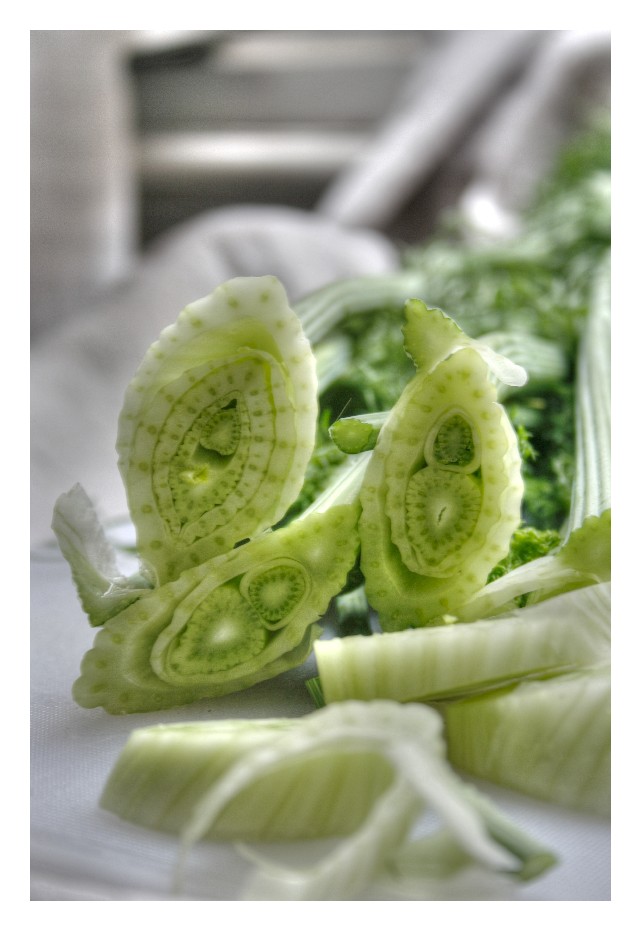
Having some ultra fresh ocean fished trout on hand and wanting a simple way to enjoy it, little invisible strings pulled me to the little fennel and the herbs we've been enjoying lately. Poaching this kind of fish is just right, and why not in a palette of complimentary green flavors? Since for the past couple of days it has been sweater weather here in Lyon, soup was a natural choice. Here's the recipe.

Soupe au Fenouil avec sa Truite de Petit Pecheur

(serves 4 as an appetizer and 2-3 as a main dish)

2 small heads of spring fennel
1 new potato
1 small shallot
1 teaspoon minced fresh ginger root
6-10 (a handful)of fresh green beans
1 tied bouquet: bay, chervil, and parsley
2 cups of chicken stock
1 teaspoon rough sea salt or 1/2 t. fine salt
1/2 pound of fresh sea trout
2 leaves of fresh sorrel, minced

Wash your vegetables and peel the shallot and potato. Roughly chop the fennel, potato, shallot and green beans, and put them all into a sauce pan. Add the fresh ginger root and herb bouquet.

Pour the chicken stock in and add water to cover the veggies. Bring to a boil, and then lower the heat to simmer for 15 minutes. Once the simmering is over, remove the herb bouquet and puree the soup into a smooth veloute. Incorporate the sea salt. Bring to a simmer again, cut your fish into chunks, and place them into the barely simmering soup. Gently poach the fish cubes for approximately 3 minutes before adding the minced sorrel. Turn it about carefully and try to keep the disturbance of the fish to a minimum. When the sorrel turns from bright green to a warm olive color, that is in about 45 seconds, remove the soup from the heat and ladle it into bowls. Serve with warm crusty bread.

Note: Something that also adds to the visual appeal of this soup is to microplane cross cuts of fennel and add it to the soup just before serving.

Labels: , ,


Share/Bookmark

Saturday, April 15, 2006

Lake Trout with Spring Fennel Sorrel Sauté

It's really all because of the baby fennel. I have had my eyes peeled for weeks and it has finally arrived.

Labels: ,


Share/Bookmark

Asparagus Sorrel Soup


The Asparagus producer will be on the Quai St. Antoine for the next several weeks. Asparagus is just too delicious to hold back from buying. However much I love to pick up a long tender delicious tendril of freshly steamed asparagus and delicately eat it with my fingers, we can't really afford to do that at the moment. In order to still fully enjoy the taste of asparagus, I took advantage of the producers bargain bin, and bought some of the scraggly stems that cost 2€ a kilo. No need to worry, I know from experience that this will make a divine soup. We got some of the bottom rung asparagus, and I made sure to pick up a bunch of sorrel for 80 cents, among the other fresh new spring roots.

Asparagus Sorrel Soup

1/2 pound of asparagus
1 old potato
1 spring onion
1 small new carrot
1 tablespoon butter
a pinch of fresh thyme
2 european bay leaves or 1/2 california bay
sea salt
1/2 a bunch of sorrel, about 16 leaves
about 2 cups chicken stock (optional)

Wash your vegetables and herbs, and put the thyme and sorrel aside. Cut the ends off the asparagus but don't bother to remove any rough spots from the stems. Slice them into 1 inch lengths. Roughly slice your spring onion, including the green part, if it's fresh enough, peeled potato, and carrot into chunks. In a two quart saucepan, melt the tablespoon of butter, and once the foam subsides, add add the chopped asaparagus, onions, potato, & carrot. Over medium heat, sweat the vegetables until they begin to soften, about 5 mintues, stirring regularly. Toss in the thyme and the bay leaves. Add liquid to cover. If you don't have home made chicken stock, use water. (we used water today - don't be tempted to add bouillon powder or canned stock!) Bring to a boil, then reduce the heat and keep at a rather lively simmer for 15 mintues. At the end of the 15 minutes, remove the thyme and bay leaves. Use the blender to puree the soup thoroughly. Strain the soup through the chinois to remove any rough fibers. Rinse the pan right quick and return the puree to the pan and put it over the heat again. Roll your sorrel leaves into a cigar and quickly slice them thinly into ribbons. Bring the asparagus puree to a simmer over medium heat and stir in the sorrel leaves. When the leaves soften and lighten in color (about a minute), puree the soup again, taste, and season with sea salt only. Serve with crusty bread. This goes well with a simple wine like a Macon on the dry side or petit Chablis.

Labels: ,


Share/Bookmark

Thursday, March 16, 2006

Soupe de Soissons

The day after the dinner I prepared, in 23 minutes, the soup that my vain shot at soup one-upsmanship scorned the night before. Why oh why did I not prepare this soup? My gourmandise for expensive ingredients got in the way of what could have been the perfect meal.

The soup:


The beans for this soup were soaked and simmered over the weekend, and were actually leftovers from a white bean and lamb dinner. The bean, Le Haricot de Soissons, is the largest French white bean available while it also packs the most flavour. They cost quite a lot by weight but when they are soaked they multiply in size and then enlarge even more with cooking. I got them for a dinner with friends over the weekend, but not knowing that they would end up expanding to an enormous size, I ended up soaking and cooking way more than we could eat that evening. Le Haricot Soissons is protected under AOC rules. You can learn more about this lovely bean at the website of the co-op that grows them. If you don't have these beans in your home town, you can replace them with any kind of white bean you like, navy, coco, etc. Just use the most flavorful one you know.

200 grams broth cooked Haricots de Soissons (big white beans)
1 branch sage
1 clove garlic
1 European bay leaf or 1/3 to 1/2 of a California bay
water to cover
1 courgette
1 small onion
1 slice of leftover leg of lamb
2 tablespoons duck fat
salt and pepper
2 tablespoons veal demi-glace
the juice of ½ lemon
a drizzle of good olive oil

Make a bouquet with the sage and bay. Put the beans, the bouquet, and the clove of garlic of which you have peeled and removed the germ in a small pot and cover with water. Bring to a boil, and then turn the heat down to very low. Simmer for 15 minutes. Cube the courgette and mince the onion. Cut the slice of lamb into strips and heat the duck fat to very hot. Toss and turn the strips of lamb in the duck fat until they are browned and crisp. Remove the lamb from the pan, and add the courgettes and the onion. Put two soup bowls in the oven to warm. Turn the heat down on the courgettes and cook them slowly, stirring occasionally until soft, about 5 minutes. Remove the bouquet from the beans, leaving a leaf or two of the sage. Mix the beans and their liquor with the blender into a smooth puree. Add the demi-glace, stir, season with salt and pepper, and brighten with lemon juice. Taste and adjust seasoning. Bring the hot bowls from the oven and mound a spoonful of courgettes into the center of the bowl. Cover with soup, and then pile the crisped lamb strips in the center. Drizzle with fruity olive oil and serve immediately with dense crusty bread.

Labels: ,


Share/Bookmark