

Thursday, February 04, 2010

Le Matafan: A French Savoyard Staple
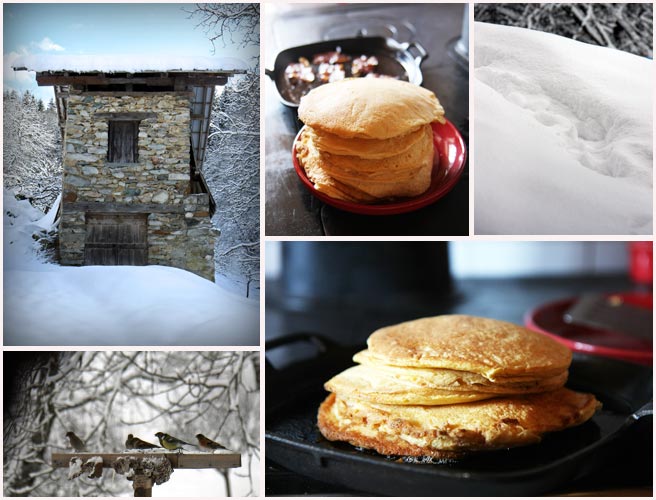


Loic came back to the mountains from his trip to Italy. We’d just managed without him, keeping the house warm and the firewood stocked and the daily hot water rationed just so. I felt like a frontier woman, but we managed through it without major incident. The day he was supposed to be coming back, the anticipation, you know, the kind that you have when your lover is on his way, set in. By mid-afternoon, we were just dying to see him. Ennui hit us both. I made the mistake of telling the baby that when he woke up from his afternoon nap, he’d see his papa again. It was a trick to ply him and I didn’t think he would remember. When he woke up, he still had over an hour to wait. As we all know, to a baby, an hour is an eternity. He loves his papa so.

It had been snowing pretty heavily and I did not realize how much had fallen. Night fell. He was late. We can get a phone signal if we stand at one window. Indeed he had left a message, precisely four minutes before. “Lucy, I am stuck in the snow down by the Martinet house. I’ll be there when I can.” My first question was “which Martinet?” There are four families called Martinet in the village, and at first they claimed that they weren’t the least related. Then we found out that one young fellow is indeed somehow related to the woodsman who supplies us our firewood. Then we found out that he is also a some kind of cousin to one M. Martinet up in the neighboring hamlet who is trying to sell a barn near our house. We still haven’t figured out their ways in naming relations.

I deduced that where he might be stuck in the snow and bundled up the baby, put on a hat and gloves, grabbed the flashlight, and went out into a blizzard, headed in that direction. Imagine one of those films where a blizzard hits and the trail from the house to the barn is kept by pulling oneself through snowdrifts, along a knotted rope. Then know it wasn’t that bad. There was no way we could get lost. In fact, it was quite charming. I knew the car would be warm and that the baby would find this little journey a better distraction than anything else.

The wind wasn’t blowing at all. The snow was crisp, powdery and deep, reminding me of my winters as a child. My boots were crunching delightfully into every step, snow falling in a lacy shroud around us, illuminated by the flashlight. The baby’s hat was covered with a thick layer of snow by the time we saw the headlights shining in the forest. Loic had just succeeded in getting the chains on the front tires of the car. There we enjoyed the perfect climax to our little journey: Running through the snow filled forest (remembered in slow motion), calling out, Loic opening his arms wide and swinging the baby in a big circle through the snow which swirled around them both. The baby was enchanted. It was the biggest adventure he’s ever had.

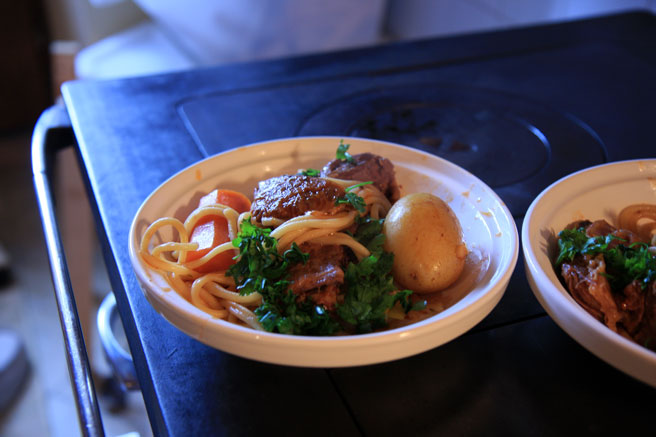
He saw how things looked down in the valley, and my husband being the smart one he is stopped off and picked up some of the kind of provisions we like to keep when we’re snowed in. Raclette, Savoyard ham, bacon, a slab of Tomme, a big loaf of that delicious local bread, plus lettuce, endives and frozen green beans to keep us virtuous. I put on the potatoes while Loic got reacquainted with his baby boy, and we enjoyed a lovely raclette supper just the two of us that evening. The next morning, we woke up full of the anticipation that comes when you’ve just been granted the gift of two feet of fresh white snow, a wood stove, and the man you love after a week apart. There were two potatoes left, and we had nothing to do but stoke the fire up hot. I decided to prepare potato matafans.

I have been collecting recipes for matafans for some time now, because they’re emblematic of le Pays de Savoie, my respite from the city. There are a whole lot of recipes, because everyone does them differently. Families all through this stretch of the French Alps do their own variations on the pancake but different, some serving them with toppings to be eaten with knife and fork, some slapping local cheese between two of them to make a delicious fluffy warm sandwich to eat with your hands. These are great prepared in advance of a good uphill hike and taken out of the sack to serve as a fortifying lunch. Indeed, for what’s in them, you can estimate that a couple of matafans will be the equivalent of a small 2 egg breakfast with hash browns and bacon, so plan some extra activity to burn them off.

Savoyard is its own language, and in Savoyard, the word Matafan means to calm hunger. A directly translated French name for these cakes are matefaims, and you’ll see the two names interchanged throughout the Savoie region. Traditionally, they were consumed hot in the morning by mountain peasants before embarking on their daily work. Before I ever prepared these in my own Savoyard kitchen, I imagined that they would be heavy things that would sit like rocks in our stomachs. Indeed historically they were made purely with potatoes. They certainly are caloric, but the best thing about them is that the best ones are so light and fluffy they don’t slow us down a bit. A little like savory genoise if you can imagine such a thing, and a little like soufflé, but they don’t deflate and they don’t lose their fluffiness. They are better than pancakes by far.

This particular recipe comes from Madeleine Kamman, in her treatise on the Savoie, which is so chock full of historical and ethnographic detail in addition to her childhood memories of summers here that I never get tired of reading it. I use bacon fat when I have it instead of butter, but for the most part it is true to her ratio and method.

Potato Matafans

½ cup AP flour (I use bio type 65 in my kitchen here which is a rough equivalent to American AP)
2 cold potatoes which have been steamed or boiled in their skins
6 eggs, separated
½ tsp. salt
2 Tbs. bacon fat or melted butter
½ cup warm water

Mme Kamman’s recipe calls for a half-cup of leftover mashed potatoes but since I usually don’t prepare mashed potatoes up here in the mountains, I just start with the plain boiled potato. I usually throw a sprig of rosemary into the pressure cooker when steaming potatoes for raclette, so this is also the treatment my potatoes have for my matafans. I think it adds a little something.

About the warm water: Mme Kamman says that the use of warm water is a Savoyard grandmother’s trick to make the matafans fluffier. I take her word for it since these do come out luxuriously fluffy. There’s never been any need for me to even test how this comes out with cold water.

Put your flour in a rather large mixing bowl and peel the skins off of the potatoes. Mash the potatoes roughly with a fork, turn them into the bowl with the flour, and work the chunks of potatoes into the flour with your fingers. Don’t worry if you leave a few potato lumps here and there.

Dissolve the salt into the warm water. Add the salted water, the 6 egg yolks, and the bacon fat to the flour potato mixture. Mix it well into a batter with a spoon or a whisk.

Beat the 6 egg whites until stiff peaks form. Fold the egg whites into the initial batter, lightly turning it together just until incorporated, don’t stir too much or the egg whites will deflate and you will defeat the purpose of having whipped them.

Put a cast iron crepe pan or griddle onto a hot stove and melt a couple of teaspoons of butter on it. Cook the matafans on the stovetop as you would a pancake, flipping them over with a spatula once the underside turns brown. Transfer them onto a plate which you keep in the cool corner of the oven (oh I’d say about 300F or 180C) and one by one, add to the stack, sort of baking them along the way. This treatment makes the edges take on a delightful crisp texture.

I serve my matafans with an array of savory things to tuck into them, folded over, for brunch on mountain Sundays we plan to go out walking. Today it was bacon and some of the dent du chat Swiss gruyere, cut in wedges. You can do what you like, they’d even be good with jelly or maple syrup if that floats your boat.

Labels: ,


Share/Bookmark

Friday, January 22, 2010

Simple Potato Gnocchi


This year my kitchen has been running in a little bit of a different way. Partly because we've been focusing on the household budget, something that has curtailed my game, boutique grain and exotic heirloom vegetable habit, and partly because I am devoting a good deal of my daily energy to the nurturing of my son's self-sufficiency while he steps out of the cocoon of his babyhood. He is walking now. Can you believe that? He astounds me with his capacity to learn and his sense of humor. When you have to manage your time and thoughts around a bundle of energy and love for the world that has, in the blink of an eye, developed a will of his own, you must prioritize differently. This has manifested in our kitchen with a lot of what you might call mama's cooking.

I have begun to rely on the simple dishes, and Gnocchi falls in that category.  This goes very nicely with any ragout or winter stew, in soups, or with a dollop of that delicious nettle pesto that was put up last spring. Try your gnocchi in oxtail soup if you find the meat on sale. The baby can eat them one by one, and husbands appreciate them too. I don't buy gnocchi anymore because they are so cheap to make. Homemade tastes better anyway.

Simple Gnocchi di Patate - Judy's recipe

This is originally a Judy Witts Francini recipe, from her book, with my notes from the margin. One of the great things about this gnocchi is that you can prepare this in advance and refrigerate it. You can have it ready to plunge into a pot of boiling salted water when it's time for dinner. Once you've prepared it a couple of times you will know by feel if you have enough flour.

2 lbs baking potatoes (the floury kind)
2 1/2 cups flour
4 Tablespoons grated Parmesan
salt for the dough (about a teaspoon) and for the water

*about the potatoes: if you care enough to get the right kind of potato, this can make a world of difference in your gnocchi. Make sure you get the most flavorful, floury kind you can.

*about the flour: We all know it varies from country to country. I have been preparing this with French flour type 65 which can be rather soft in comparison to many flours, requiring me to up the flour ratio a bit. Experiment, do the drop test, and find a good ratio for the flour you use at home. Don't feel like you have to go out and buy any special flour.

- Boil unpeeled potatoes in salted water until tender and remove the skins once cooked. Rice or mash them. Let them cool slightly and add the rest of the ingredients, stir. When stirring becomes difficult, knead the dough lightly by hand.

- Bring the salted water to a boil and lower the heat to a simmer. Take a pinch of the gnocchi and do a drop test, it should sink to the bottom initially, then rise to the top when done. If the gnocchi is disintegrating, add more flour to the dough.

- On a lightly floured board, roll out into cigar-like ropes, no thicker than a finger. Cut into pieces and roll on fork prongs to form ridges and poke your finger lightly into one side to form an impression.

- Poach the gnocchi and remove from the simmering water after 20-30 seconds with a slotted spoon into the serving dish. From this point you can layer it with your favorite sauce, or save it for reheating later.


Labels: ,


Share/Bookmark

Wednesday, December 23, 2009

Living It

Labels: ,


Share/Bookmark

Wednesday, December 16, 2009

Our Own Christmas Bricelets


Last year I began sorting things out so that we could celebrate Christmas at home. This may seem strange, but in our many years here in France, we've always packed our bags, closed the door on our home, void of holiday cheer save a rather chintzy fake tree that got a little more dog-eared every year, and spent Christmas with my husband's parents. Last year's knowledge of the coming baby, however, had me reminiscing about the Christmas of my childhood, and it was what set things in motion.

Over the years, I'd swept out of my mind how much the little things meant. Picking out the tree, hauling it home, breaking out the lights and the old dusty carton of ornaments wrapped in crinkly tissue was never on the agenda. Putting on an extra sweater, playing the music, making wreaths (or getting one from the Hosmers), tromping through the snow, baking, planning, reading Christmas stories, ice skating, all a distant memory which had retreated to the shadows cast by the light of the Cote d'Azur. The thing I missed most of all was the feeling of really being at home. The house in the Alps has slowly been transformed from an old house that needed a new roof to our little cozy place away from the city, our refuge, the place where we unhook and breathe. I often catch my spirit there even when I am walking the alleys and stairwells of this ancient city. We decided to have Christmas there this year, Ian's first, and our first there as well. I am cherishing every moment.
I don't think I mentioned this, but last spring, we went to a garage sale in an Alpine village and I happened across an antique bricelet iron. Luckily I knew exactly what it was since I had seen and been intrigued by a brush with the bricelet in Switzerland on a recent visit. The old woman who passed the iron to me told me that her mother and grandmother had made these thin waffle cookies at Christmas time. The iron had clearly fallen out of use. She seemed happy enough to let me take it off her hands, but I still wondered what had made her quit using it. Had she gotten an electric press, the kind that most people use now? This iron had developed a thin layer of rust, but I knew it would be easy to take up the task to scrub and season it. I am so happy to have it now especially since all of our cooking up in the Alps is in the wood fired stove. The kitchen ceiling's beams display quite a collection of cast-iron accouterments for country cooking these days.

A similar thin waffle is called the pizzelle in Italy. The difference is that in France and Switzerland the cookies are thinner. It will be good fun to toast these over healthy glowing coals from a long lit hickory fire on Christmas eve. Since this is our first year, and we want to make sure we've got it absolutely right, I'm going to share recipes I have gathered after more testing. Italian, Swiss, and French Alpine recipes for both sweet and savory biscuits are in the works. Stay tuned!

Labels: ,


Share/Bookmark

Wednesday, October 14, 2009

121 French Market Menu Ideas for your Apples


Apples from our tree at the house in the country and my current favorite apple pie, recipe below.

In addition to the yield from our apple tree this year, neighbors came bearing baskets full of apples. Time to take out my country notes and get the creative juices flowing. Forthwith one hundred and twenty one ideas from French market menus, followed by my current favorite apple pie recipe. We've got guests coming this weekend. Lets roll up our sleeves and get to peeling apples!

Field rabbit sausage served with apples
Shortbread in the style of Brittany with sautéed apples and caramel cream
Poultry liver and apple terrine
An apple pastilla seasoned with Armagnac
Duck foie gras with tart cider vinegar apple chutney
A ginger-seasoned apple turnover served with shaved manzana verde ice and honey jelly
Pont-l’évêque cheese presented with yellow apples and pepper seasoned cider caramel
The apple croustillant with Calvados
Apple tart served with pain d’épice (a spice bread specialty from the north) flavored ice cream
Deep dish apple tourte served warm
Apple bettelman (a traditional Alsacian bread pudding)
French grandmother-style apple caramel cake
Pan seared foie gras with an apple and sweet potato chutney
The apple croustade, a Gascon tart made with many layers of thin pastry
Honey roasted duckling with apples in the style of Brittany
A scallop salad seasoned with apples and Guillevic cider
Flat oysters and roasted green apples served in a fish broth
A composed dessert of frozen green apple parfait, lemon jelly, Manzana apple liqueur over shaved ice, featuring a slice of caramelized apple
Apple pastis (see croustade above!)
Caramelized apples paired with creamed chestnuts and served in a chocolate shell
A simple thin caramelized apple tart
The caramelized apple douillon (a specialty of the Normandy region- stuffed fruit enveloped in pastry), served with a Calvados sauce
A vanilla seasoned apple mille-feuille
The duck foie gras terrine with a spoon of lightly spiced apple chutney
Tatin style roasted apples (or a crustless tarte Tatin, if you will)
A deep dish apple, prune, and Armagnac pie
Thin apple tart with cinnamon ice cream and caramel sauce
Duck breast served with roasted apples
Pigeon in a dried porchini crust with garlic and green apple seasoned pan drippings
The hazelnut and caramelized apple financier with green apple sorbet
A hot apple and ginger tart
An apple prune crumble with Armagnac and pain d'épice ice cream
Caramelized apple charlotte
Foie gras in puff pastry with apples
A flambéed apple tart
An apple and pear tarte Tatin
Shortbread cookies in the style of Brittany presented with a layer of butter simmered apples
An apple and pear crisp
Blood sausage with apples
A roasted slice of avocado served with green apple & whisper of wasabi ice cream
Apple marguerite (pudding baked in a decorative mould) topped with cinnamon seasoned puff pastry
Baked apples presented in a pyramid with calvados sauce
Apple nougat glacé
Pain d’épice tartined with a foie gras and green apple chutney topping
Apple fondant with Cavados caramel sauce
Apple and berry crumble
Lobster seasoned with sherry and cocoa, served with an apple raisin "afterthought"
Simple warm brioche with caramelized apples
Rice pudding with an apple and pear marmalade
A apple cake served flambéed
A salad garnished with slices of warm veal sausage, golden apples and a Gascony mustard sauce
A foie gras terrine with apples and cinnamon
Scallops with celery juice and green apples
Almond croquant with Tatin-style baked apples
Slow cooked apple with pralines and farm milk ice cream
The thin hot apple tart with caramel curd
Pommeau seasoned foie gras, served with an apple compote
Blood sausage and apple Tatin, served with crique, an Ardeche style grated potato cake
Pan seared foie gras, seasoned with Granny Smith apples and hibiscus
Apple stuffed brioche perdu with maple syrup
The apple and blood sausage in puff pastry with a chive speckled beurre blanc sauce
Gâteau lyonnais with apples and pralines
Calvados flambeed apple chaud-froid
The green apple spring rolls
Apple meringue pie
An apple verrine presented with berries
An apple strudel served with cinnamon ice cream
Duck breast with apples and pine honey
A sweet tarte flambée (Alsacian specialty) with thick cream, apples, and Calvados
Apple and pear mille-feuille with salted butter caramel
An apricot and caramelized apple tart with light almond cream
Thin bacon wrapped langoustines on a bed of grated green apples
An apple duo served with with honeyed drizzled foie gras
Buckwheat blinis served with warm apples
Tarte fine aux pommes
Apple and Mascarpone kouign-amann bathed in Calvados
Thick wedges of toasted pain d’épice served with pots of apple and orange marmalade
Foie gras in puff pastry with Granny Smith apples
Golden apple tart topped with caramel cream, sprinkled with fleur de sel de Guerlande
A mille-feuille layered with pan tossed apples, drizzled with salted butter caramel sauce
A carpaccio of fresh chevre sprinkled with walnuts and grated apples
Cider simmered pollock presented with pan softened apples
Roasted apple rum-raisin brioche
Apple streussel
Warm apple and raisin spring rolls served with caramel ice cream
Wild sea bass fricasee with cider and acidulated apples
Apple tiramisu with Calvados and pain d’épice
Kouign-amann wedge on a bed of caramelized apples
Coconut and apple mille-feuille with saffronned sauce
An apple and orange tarte
Apple caramel mousse
Duck breast with apples and honey
Foie gras terrine with apple jelly
Millassou, a cake specialty of the Landes region cooked old style with rum and roasted apples
A pear and apple clafoutis
Reinette apple shortbread
Lambic caramelized apples served with a cider sabayon
Crispy duck breast served with thyme seasoned caramelized apples
Haddock pastilla with apples, figs, and saffron jus
Warm oysters with lettuce sauce, and foie gras in apple jelly and peppered oil
Hot apple soufflé with Calvados
Calvados flambeed apple crepes
An apple and Camembert charlotte topped with a glaze of glistening cider jelly
John Dory with thin sliced chorizo, swiss chard, and apple jus
Strips of duck breast drizzled with reduced sour apple sauce and served with puréed sweet potatoes
Apple marinated salmon
Seared duck foie gras "exalted" by saffron seasoned sautéed apples
Sweet take on a baeckeoffe (alsacian specialty) using apples, pears, and raisins
Suckling pig with adiculated apple compote
Pan simmered quince and apples with salted butter caramel
Sesame and coriander seasoned caramelized apple served with a mini crème brûlée
Catfish fillet cooked in cider
Baked apples with raisins
A tarte Tatin served with coriander seasoned caramel sauce
An apple and almond tart
Caramelized waffles dressed with a ladle of slow cooked apples then topped with a Mascarpone ice cream
Apple pastilla with crème pâtissière
Saint-Romain blood sausage presented with its butter rich apple compote

Now. Did that give you some ideas?

Lucy's Favorite Apple Pie (pictured above)

About a pound of fresh tart cooking apples
1/4 cup (50 grams) granulated sugar
1/4 cup (50 grams) brown sugar
1 level teaspoon ground cinnamon

For the crust:
8 tablespoons (100 g) butter
1 3/4 cup (200 g)organic whole wheat flour
1/2 cup (100 g) granulated sugar
1/4 cup (50 g) brown sugar
1/2 - 1 teaspoon fleur de sel or sea salt (to your taste)
1 petit suisse or 2 tablespoons cream cheese
2 tablespoons virgin walnut oil

-Peel, core and cut your tart cooking apples into chunks.
-Take a generous handful of the chunks of apple and toss them in a saucepan with about a 1/4 cup of water.  Set them over medium heat to soften.
-Combine the rest of the apple chunks with 50 grams white, 50 grams brown sugar and the cinnamon in a bowl and set aside.
-Once the apples cooking in water have softened (about 5 minutes), give them a blitz with a blender to turn them into a puree.
- In a separate mixing bowl, Combine the butter and flour with your fingers in a large bowl until it resembles breadcrumbs.
-Add the sugars, and work them in.
-Finally work in the cheese and the walnut oil and press it together into a dough.
-Remove approximately 1/4 of the dough, form it into a ball, flatten it, and place it in the refrigerator.
-Press the rest of the dough with your fingers rather thickly in an even layer into the bottom of an ungreased pie tin.  Don't press it too high along the sides, just a flat layer at the bottom,a little thicker around the edges.  Pre-bake the shell at 400F/200C for 10-15 minutes, or until the dough begins to turn a golden brown. 
-Slather the bottom of the pre-baked shell with the apple puree.
-Top with the apple sugar cinnamon mix, mounding it up in a nice thick layer.
-Remove the chilling dough from the refrigerator, and roll out a circle shape about 2 inches smaller than the pie shell.  No need to get too fastidious about the shape.  Turn the thin layer of raw dough onto the center of the mound of apples.  When you bake it, it will kind of melt into the apples before hardening into a cookie crust on top.
- Cover the pie with foil, and bake in the hot oven for about 40 minutes, until the apples get nice and soft.
- Remove the foil and return it to the oven to brown and crispen on top.

Labels: , ,


Share/Bookmark

Sunday, June 21, 2009

Postcard: Our Field of Flowers


We planted this packet of seeds and this is the first wave of blossoms. It took awhile,
I'd say between spreading the seeds and the first blooming, 2 months. They should really get colorful at the end of July, early August. I also put a bunch of bulbs out but not sure which plants they are, everything is growing in one big tangle. I have completely forgotten even what the bulb flowers are supposed to look like. I do remember I thought they were pretty, and that they grow tall. During the planting, I had this packet of seeds for edible sprouts from the health food store, which contained all kinds of funky grasses, and sunflower seeds, removed from their hard shells. We have a few sunflowers towering up thanks to that mix. They say on the website for the field of flowers that you should cut as many as you can if you want to see them bloom longer. I dutifully took to the garden with my basket and a pair of scissors. It was the first time I have ever done something like that, although for some reason I felt like I'd done it forever. There's nothing like it, clipping the flowers you've grown from seeds yourself. I can tell you that the hardest part was pulling out all those nettles before planting the seeds. I am happy with the result so far.

Labels: , ,


Share/Bookmark

Monday, June 15, 2009

Super Mini Best of: Fraises des Bois


Walking up a forest path that wound its way up from a gorge and quickly enough arriving at some sunny open pasture land got me to thinking, during that week alone. Something about the way the land opens up above the tree line just sucks out the trivial thoughts and allows my mind to breathe. The incline, the one you work on before you arrive at the top is actually quite steep, but the path has been beaten in such a way that any reasonable person can handle it if they aren't in a hurry. One side of the path (the sunny side in the morning) runs along on your right side, sort of like one of those walls full of plants we see designed by artists in the city. The downhill side gives you the feeling you're surveying a kingdom of sorts. A dark deep world that plunges into the gorge to the river below, a chance to see the straight uprightness of the trees and contemplate their numbers. I have always been the sort to zoom in and find little microcosms along my way, when drawing, when writing, when observing. I think it comes from my love of miniatures. I love to study the varying flora, bathed in sun early in the morning.

The first time I climbed this hill, it was when we had some interesting early spring flowers. The fiddleheads were still tight little fists ready to either pinch off and pop into that day's salad or be left to unfurl like green versions of the lace panels you find dangling like icicles in the windows of Alpine chalets. There was a glorious mess of vines, pretty exotic looking yellow and blue spritzes of mountain blossoms of many kinds, lizards, and freshly melted source water babbling down the layers of folded crushed slate deposits. One pretty little flower that was easy to identify and seemed prolific was the wild strawberry, the fraise des bois.

I took out Loic's trusty Opinel and a little plastic sack that I had so level-headedly prepared in my pre-parental clarity for occasions such as these, and dug out two fraise des bois plants, which I transplanted directly into the crook underneath the cherry tree in the garden when I got back to the house. Over the weeks, I checked and weeded around them, hoping they would get enough sun. Lo and behold, last weekend, there were several ripe berries ready to be eaten.


I was terrible about it. It was late afternoon. I had been busy and unable to take a moment to myself for many days. Loic had brought some work home and wasn't able to help, and I was juggling the brave task of keeping the stove going and also working out the logistics of getting the baby's system perfected at the country house. I hadn't even had a moment to bathe. He decided to take a break to play with the baby - my chance to get some air! I headed straight out to the far end of the garden before either of them could call my name.

I looked, quickly gathered that these juicy buttons were prime for a harvest, and plucked off the ripe berries. I popped them down like they were magic pills and crushed them with my tongue. In that instant I finally was transported back to that frumpy bed in St. Petersburg, hit with a wave of exquisite memory from the exact beautiful flavor. Hey Loic! No on second thought, I better not say anything, because I didn't save any. Any at all.

Jump to this weekend when finally he was freed from the clutches of the national concours and we were able to go out walking as a family. We chose that particular forest walk because it is easy, and I also was pushing for it because of that lingering burst of flavor that kept springing up in my mind. I remembered thousands, but memories can be deceiving. At the bridge over the place where two streams meet, he first pointed to a bunch of ripe fraises des bois, and I brought out the sack. We worked our way up the hill. I am not exaggerating when I say we were both completely astounded at the harvest before us, it was like a wall of wild strawberries. We gathered and gathered, and with every few steps up, it was like we'd not even seen that the best was yet to come. By the time we got to the top of the hill, the sack was full.

Loic told me I was being unreasonable when I dug my hand in, slightly crushing some of the berries, to bring out a handful for each of the two horses that had been set in their pasture there at the top. I don't know. I think they enjoyed them, although now that I have tried to tame a baby, and thinking of their relative minds in my imagination, I cannot imagine that these horses will ever tell family stories about the silly lady with hair like straw who came and opened her palm full of fraise des bois that day. I think they forgot me about 5 minutes after we were gone.

We did two things with them. We put them in yogurt, and we made a coulis.

Labels: , ,


Share/Bookmark

Thursday, May 14, 2009

The Garden


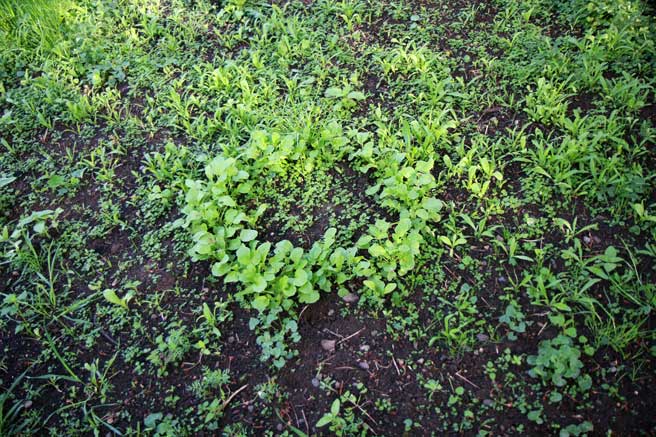
Our neighbor up there was working in his garden a few weeks ago at the same time we were, and he came to the fence and handed me a sprinkling of seeds. They looked a bit like poppy seeds. I planted them in a circle. I don't know, it seemed like the thing to do at the time. A little wreath of goodwill sprouted up shortly thereafter.

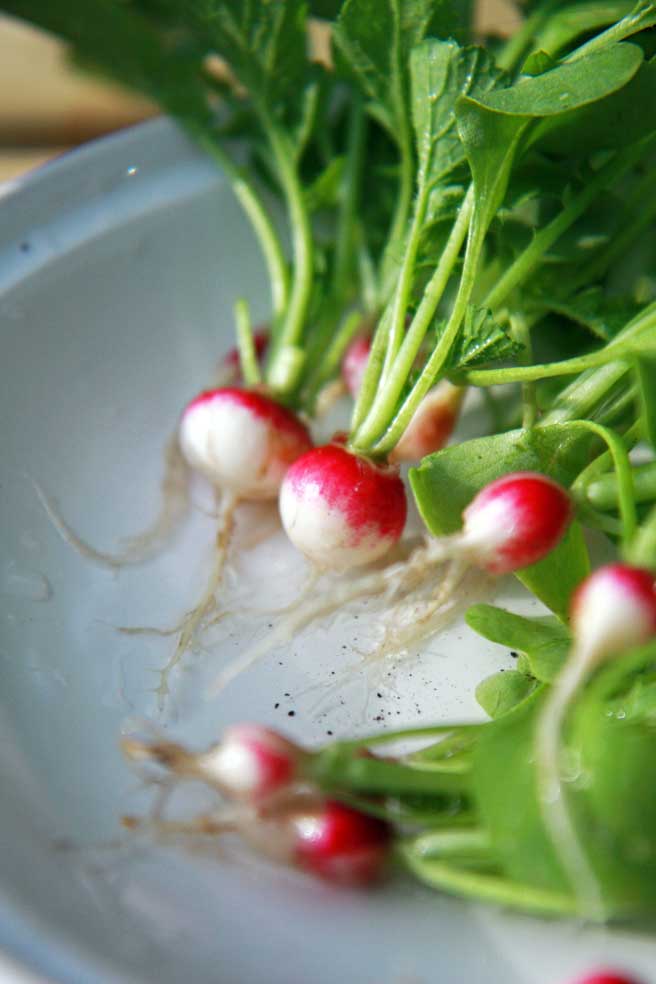
They were radishes, and I was told that I would have to cull out some to make sure the best ones got big. I couldn't bear to thin them out, I guess because I liked looking at that perfect ring. So we got all sizes of radishes. I like them that way.

We planted a whole bunch of stuff, but not in rows, so now I don't know what anything is now. I figured at the time that if an animal saw nice neat rows of things growing, they might come on up and start munching. But if I kind of planted stuff all willy nilly, keeping some loose rules in mind about what likes to be next to what, we might be able to slip some by the deer and rabbits. I even went so far as to toss a whole sack of bulbs into the air and plant them where they landed. Our gardening technique is a source of great amusement to our neighbor. He is an encyclopedia of rules and parables about how a garden works. I gave him a handful of Soissons, big white beans I bought from a producer, at the market. They were dried eating beans, and I was hoping they would sprout. We both planted some, and my neighbor's are growing much more handsomely. I still have faith that one day this summer we'll shell some beans.


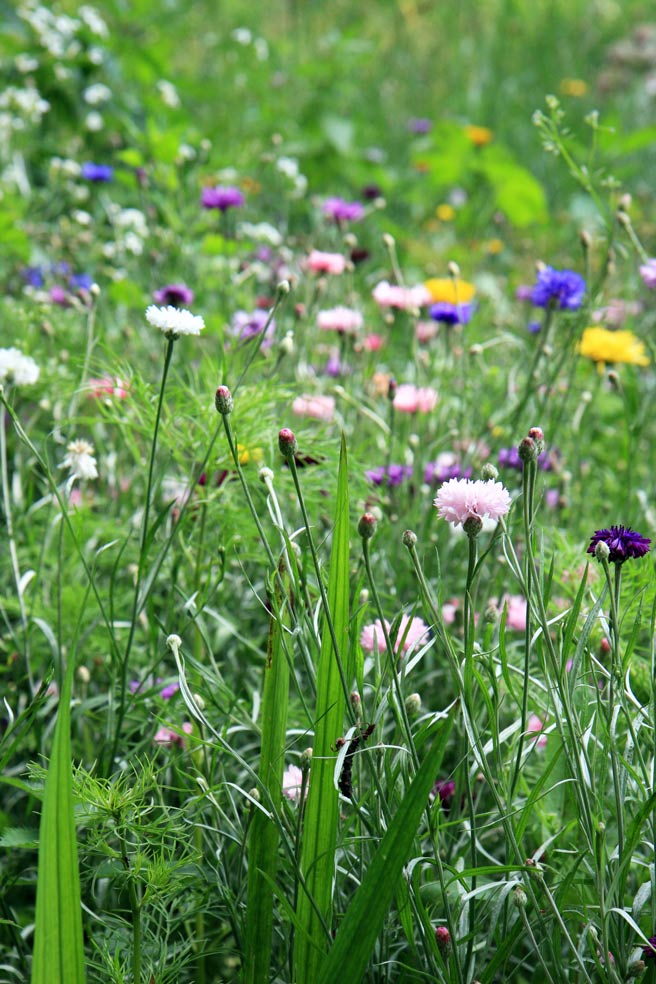
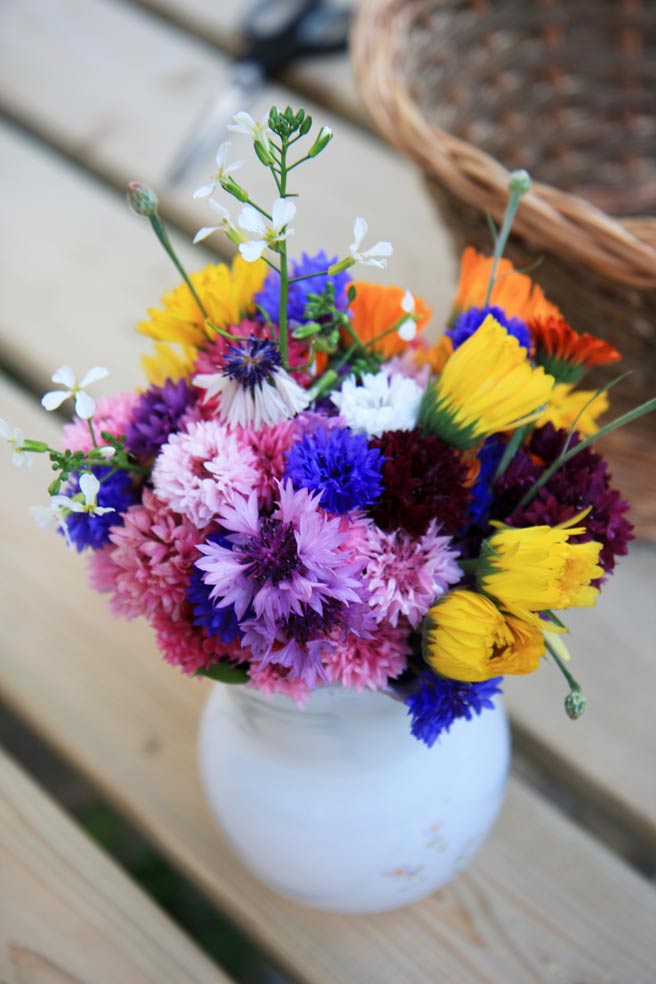
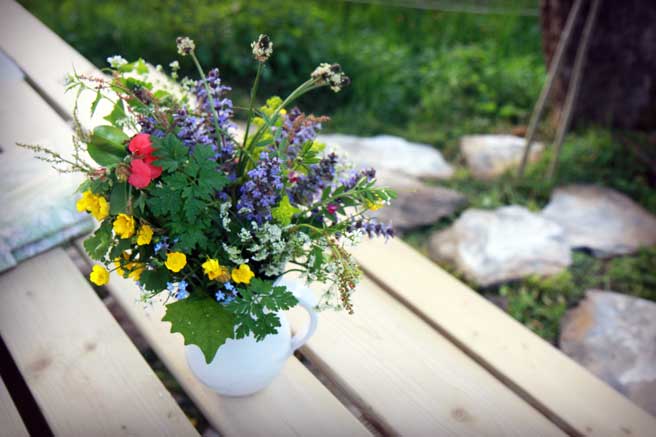
There are millions of wildflowers, everywhere. Looking out over the pasture that goes down into the valley from out the kitchen door, you can stop there for a minute and try and take it in. Keep still except maybe drying your hands in a dish towel, and watch for a bird at the feeder. Wait for every part of you to come outside into the sun. Start thinking about just what the field looks like. You'll see that the pasture is actually a palette of hundreds of colors, a sea of color, not just green. These colors are in so many gradations, and dabbed all about. The spots are literally thousands of wild blossoms splayed out in natural patches. That's when you'll take notice of the hum of the bees like they've just started, even though they've been out there all along. Stroll on out into it, go around plucking wild flowers, and have a pitcher full in a matter of 5 minutes. The reason why it will take so long is that nine times out of ten you have to wait for a bee to finish a particularly pretty flower you've chosen before you can pick it. Of course you want to be choosy, the pitcher is a small one.

Labels: ,


Share/Bookmark

Wednesday, April 29, 2009

Late Bloomer


Every garden is basically its own micro-climate. In our little crook of mountain, the season seems to run a couple of weeks behind many others we see along the route as we climb in altitude. I waited the longest time for the cherry tree to bloom. I went out every day and examined the swelling buds, hoping for something to happen when I spent my time there. It was kind of like I was hoping for a sign of some kind. Wouldn't it be nice, I thought, if the tree would bloom while I am here. It would be like a word, a promise.

Waiting is numbing, and it is like a hand across my mouth. I wait for the cherry blooms to fold out. A flash of fear while I pitch my will like a stone and wait for a return. Maybe, somehow, I have made bad choices, done something wrong, never giving the seeds I put in the ground a chance. Maybe something happened and somehow also the tree in the garden has died.

I finally had to go back down to the city, sending my will over my shoulder one last time, to see if the blossoms would spring open before turning my back on the dark barren branches. In the city, friends are gathering, shaking off the winter chill, meeting outdoors, and visitors stream through. Cousins, sisters, relatives near and far call and we meet. We sit in the square in front of Cafe Perl, sipping red wine under a fragile shower of rich pink petals floating down on the breeze.

Daily work takes on an urgency again, discussions resume, calls are returned, notes are sent. Lists begin to fill out. The rhythm of the season is pulsing in the city, the river valley churns through its blooming process. I am still waiting inside.

Back up there, with wisps of chimney smoke and cool breezes cutting through a new frank strong sun, stronger than before, blooming was like a fan had been snapped open at the opera. We arrived and there she was, the diva, tall and fluffy, booming, there in her position of power. She speaks. See? You could have waited. It would not have killed you to wait.

The tree was full of big balls of fluffy pale flowers. I thought the blooms would be more pink, but I am happy, wondering what the apple blossoms will look like. One by one, things will fall into place.


Labels: ,


Share/Bookmark

Wednesday, April 15, 2009

Nettle Beer - Take One!


It started a long time ago, when I was having a strange confusing week, and I was positively shocked by my horoscope in the Beijing Scene, a free paper that was available at expat frequented junctures around China's capital. All kinds of unlikely events and situations had been coming about at the time. Accidents, near misses, strange gusts of wind. That morning, a lightbulb violently exploded not 20 feet from me, in a lone retro street lamp in silhouette near where I picked up a taxi every morning to go into work. My regular taxi stopped, I got in, and I flipped back to where the horoscopes were.

Scrolling a creamy pink 20 something manicured fingernail down the page to Leo, I read what Rob Brezsny, my horoscopist, says. It began with: "Are street lamps exploding as you walk by?" My eyebrows raised in interest at that point. It was one of those instants that burns into your mind forever even if you don't realize it at the time. Snug in traffic while a pollution pink sunrise beamed past my right shoulder and then slowly panned across the faded interior of that rusty yellow LADA, driver turning north on the second ring road in Beijing on my way to the office, I read that things were going to turn out marvelously alright. And they did.


With that I introduce you to my nettle beer, which did not turn out marvelously alright this time. It was during this famous writing week in which I was supposed to go up to the mountains and turn out a masterpiece. Instead I put on rubber gloves and scrubbed out nooks and crannies with a bucket of savon noir, embarked on spider hunting expeditions, spent inordinate amounts of time squatting in the garden with my reading glasses on searching for signs of life in the dirt, donned my marching boots for long solitary walks by the river and up into the hills, and executed my grand scheme to make nettle beer. In short, anything to avoid writing.

Don't mark a recipe down in your book, my friend. Do take time to reflect on the following message: Turn that which stings into something good. A faithful reader recounted how a weed whacker is NOT the answer for nettles, because even whacked to dust they still find ways to get us. So, while they are young and still tender and flavorful, find your nettle mojo. Pinch off their tender little heads one by one with satisfaction (wear rubber gloves!), putting all of your fury into this delicate repetitive task. Do this until you have a large basket full, preferably while humming something nice in the back of your mind. Then try to make some nettle beer with them.


I followed a recipe gleaned from an English cookbook and boiled the nettles for 15 minutes, but next time I will boil them longer. The longer the nettles spend in the water, the greener the liquid becomes. In another recipient, you mix sugar and the zest and juice of the lemons with cream of tartar. Pour the nettle liquid over this sweet acidic lemon and sugar mixture.

When I pour the nettle tisane into the acidic sugary lemon mix, the green color of the liquid changes like magic to orange, I am not sure why. After stirring it up and letting it cool a little bit, mix a bowl full of this liquid with brewers yeast, then mix that into the whole. You might not try what I did - don't sprinkle a generous pinch from a cake of baker's yeast on top of your brewers yeast for good measure. When the mix is complete, it goes into a large nonreactive container, and the waiting begins for the fermenting magic to take place.


At first, I didn't think anything was happening and wondered if I should dump it. But at the end of 2 days, it began to foam at the top. The recipe states that it should be put in a warm place undisturbed to ferment, but I kept it in corner in the kitchen, which in afterthought I think stays a little bit too cool. So the fermentation didn't kick off with any gusto. At the third day, hell or high water, it was funneled into bottles. You could smell the yeast, and it actually tasted pretty good.

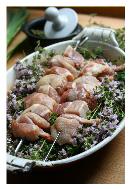
Three days after going into the bottles I just could not wait to see what was going to happen! We'd invited in-laws to a picnic in the mountains! They were going to partake in a sun drenched wood-fire roasted marinated quail fest under the shade of the apple tree. We had gone up early to build a roaring little hickory wood fire in our homemade fireplace in the garden, to let it burn down to glowing embers by lunchtime, and then laid out the delectable birds to roast. They had been marinating 3 days in an herb and mixed fruit vinegar marinade. In a moment of vain hostess glory, I decided that I just had to gild the lily by bringing out a bottle of my nettle beer to display and then pop open and pour around. Me and my pride.


The bottle didn't want to pop open, and I wrestled with it for some time. Everyone was looking on in curiosity, in fact they began to huddle around as if expecting something great, raising the expectation a notch. Then when it did - WHOOSH! A geyser of Beijing sunrise-orange foam shot straight up in the air and spattered down in a sticky mess over the entire table. So much for the nettle beer. There was some hesitation to laugh with me when this happened. After I mopped off my sister in law and turned my attention to what was left in the bottle, I saw that there was enough for everyone to have a taste. Not only was it not fizzy, but it had a funny tinge to it, something that recalled a distant memory of my grandmother's permanent wave solution. But you know what? I am going to give nettle beer another try.

I think the idea to use raw sugar or honey is an important element of this recipe, something I ignored. Another important step is to ensure I have the proper yeast. Third, I should pay heed to the "warm spot" fermentation technique. The brew must be quite far along in the fermentation process before it gets sealed into bottles. In fact, I think it might be worth my while to monitor it closely, if not scientifically. If bottled too early, it can build up enormous pressure - the yeast, which is capable of doing its work in anaerobic conditions, i.e. without air, converts sugar to alcohol and produces gas which will make it spray over everyone in a shower at its most benign and possibly explode a weak bottle at its most dangerous. Last but not least, and I think my horoscopist would agree, I will never, ever make nettle beer when Venus is in retrograde. Finger in the wind, eye on the stars, it will one day turn out marvelously alright. That is when you will get a recipe with good notes and instructions.

Labels: , ,


Share/Bookmark

Sunday, March 22, 2009

A Week Alone


It started with the nettles, with which I have developed a love-hate relationship. I love them, because they make delicious pies, soups, quiches, pestos, sautees and even nettle beer, which I will be trying out this spring. But I hate them because they hurt and sting and cover the little meadow that came with the country house, blocking passage and keeping anyone from even thinking about doing anything out there but carefully avoiding them.

Winter took the field of rough stalks and cut them down to size, though. the land became something we could walk across, a carpet of crunchy dry yellow twigs, last years old nettles, pushed flat to the ground by snow. It melted, the song birds came out just about the time the old dead nettles dried up. Tufts of new grass began to appear outside of nettle town. A patch of snow drops sprouted under the cherry tree. Sun warmed the earth. I began to imagine the possibilities, stand and take in the slope of the land, look back at the house.

With the sun's warmth, new nettles had also begun to emerge. Little hopeful green baby nettles peeking their cute little furry noses up through the old dead twigs from last year's enormous plants. They are cute, but they won't be for long, I know this. I have spent many evenings rubbing swollen spots where the nettles have gotten up my pant legs and pricked their needles into bare calves or pricked stray hands, hurting for hours like bee stings afterward. No summer walks along that country path in a skirt and espadrilles, that's for sure. But a thought of the baby clinched it. Do I want the child to be able to play outside at the country house? How will it be possible for a kid not have a rope swing on this ancient cherry tree? We don't know if this baby is going to be a boy or a girl. But one thing is clear: We have got to get the nettles under control.

They have formed a thick root network. A little hand spade, just a toy, really. I have taken to kneeling on the ground and loosening them, then standing up, wrapping my fingers about the roots, and heaving my weight into the labor of getting them out, artery and vein alike. They don't want to come. I begin stabbing, learning their ways, where to find the junctions, the twisted knots. If you get the nettle highways, the small roots follow more easily. A nettle city, a network, a planet. I am eradicating a whole nettle world complete with multiple levels of underground resistance networks. In 4 hours, I have just begun to chip away at a small square. At the end of my hard labor, a pitiful patch of turned rich earth, from which I had pulled only nettles from the ground. Their thick roots were piled in a heap in the sun. The soil is dark and fertile. Aside from one small tuft of wild chives, these nettles have choked everything else out.


At the end of the day, Bernadette's clicks and humming fire form a choir with an evening lark. The kitchen door is open. The feeder is illuminated and crowded with many species of birds. Loic is puttering around in the attic.

I ran my hands in icy cold mountain water from the tap for as long as I could stand it. I quickly pinched cold butter into flour with my numbed clean cold hands. We were to have a neighbor over for dinner, a man from the village who had come to cut the storm's fallen branches into neat logs that we stacked on the porch to use as firewood maybe next year.

My hands and forearms were near exhaustion just trying to make a crust. It's a good kind of fatigue, I thought to myself. From the pulling. Wouldn't it be nice to get these nettles taken care of this week. The weather is going to be nice. There is a clear circle of sunny meadow, between the apple and cherry trees that gets good all day sun. It is where the nettles thrive. I could probably turn it into a field of flowers if I had some time.

We've been waiting on this baby to arrive, and for that purpose, I have found myself easing big engagements off the calendar. Last week was the first week since January that I didn't have people coming in. 'This could be my only chance', I thought. The nettles seem compelling in the Sunday evening quiet before bed. We were lying there under the quilt, each with a book, and instead of readying my thoughts for a return to the rhythms of the city, I found myself veering in the opposite direction.

- And what if I stayed?
- You won't have a car.
- That's ok, I won't need it.
- Will you have enough to eat?
- I will.

A quick mental inventory. I had three eggs, a bit of bacon, 6 potatoes, some cabbage, a basket of good apples, some cheese, things in the larder like dried fruits and mushrooms, flour, rice, plus of course the Alpine butter, garlic in a braid from my trip to Sicily. The tuft of chives out there in the dirt patch. Then there were all those young nettles waiting for their fate. I even had some stock and frozen peas and beans in the freezer should the need really arise, and two big lumps of yeast for bread. We know the goat farm is within walking distance where I can get yogurt, cheeses, milk, everything I need in the end.

- You won't get bored?
- I might.

I smiled. It was settled. I made a few calls and sent a few messages. I shuffled chunks of time off the agenda. I was staying. We cuddled in the night, cherishing our sudden togetherness before a separation as my thoughts ventured in this new direction. Not an abyss, but a free fall kind of dive into a very different kind of week indeed.

Labels: , ,


Share/Bookmark

Wednesday, March 04, 2009

Fast Feuilletage, Cheese and Bacon Biscuits


About 8 years ago, the store bought kind was the only puff pastry I dared use, and it was new to me, not having been available in the States before we moved to France. It wasn't long before I started to yearn for something more. I learned quickly, to tell the difference between store bought and higher quality puff pastry. I found out from a friend that I could buy a better product at my local bakery, ready to use in my home creations, and soon left store bought feuiletée behind.

I was going to the trouble of calling ahead and making an order for puff pastry every time I was going to need it, and in general making things more complicated for myself than I had to in the end. I was so afraid of making a mess, ruining it and spoiling a hard-earned expensive lump of butter for a little puff that I refused to even try it.

At one family gathering years ago, someone asked about bakery-bought use of puff pastry apero treat I had brought to a party. I was proud of my creative use of the puff, and told her how to do it. Through some snafu, she misunderstood that I had actually prepared the pastry from scratch. I was so embarrassed that she was going around telling everyone as she passed the platter around. The guilt was horrible. I don't know why I didn't call everyone to the middle of the room and announce that I didn't fold the puff myself. It snowballed in my mind. It became an ethical crisis. The psychological trauma of the guilt set in motion a mission to get up to speed with puff pastry. That was when I realized it's not as hard as people think. And everybody's human.

As long as you keep everything cold, full style puff pastry does come together without magic, and tastes phenomenally better than any kind of feuilletée you can buy anywhere, even those being sold by artisan bakers. The reason is simple. You have chosen your own butter. The butter used in pastry is very important, possibly the most important aspect of anything at all. It makes all the difference in flavor. When someone is in a neighborhood bakery business, they are naturally going to try and maximize their profit margin. Many cheaper butters will taste significantly better than the mix of chemicals and agents used in store bought pastry. But you are in for a real treat if you pick and choose the best tasting butter you can find for your feuilletée. In fact, it will be a revelation.

This is all well and good. Who has time for pâte feuilletée? I rarely do these days, and neither do I have a need for the spectacle that a full style puff pastry can bring to a meal. I am actually more satisfied with home style kitchen table kinds of pastries, as you know already.

This is why today I want to come full circle and share one recipe with you that features a fast feuilletée, one that needs no chilling between layers. It can be thrown together lickety split, literally from start to finish in 10 minutes, and will do for any and all kitchen table tartes and turnovers, quiches for which you would like a little more puff and buttery taste, and apéro treats that will be popped quickly - in other words, those things we'd like to add a little flair and individuality to but don't need layer upon layer of even puffing, or sculptural finesse.

From my list of many variations, here is one recipe for a delicious spicy bacon cheese apéro biscuit. I developed it for baking in the wood fired oven, although any hot oven will do.

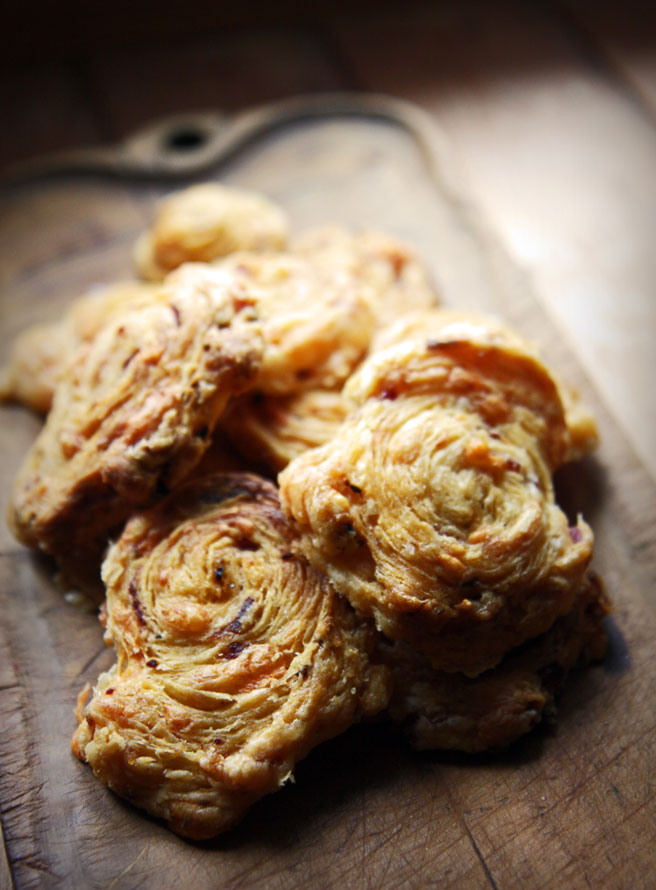
Peppery Fast Feuilletée Rolls
(pictured above.)
good for serving with Champagne or Beer.
Yield: 10 very fattening biscuits. This recipe can be doubled.

125 g. flour (type 55 or AP)
140g. butter
a generous pinch of sea salt
1 good sized chipotle pepper in adobo (the kind that comes moist in a can, just one pepper)
1/2 of a thick slice of bacon
30 g. hard sharp cheese like mimolette, pecorino or cheddar
30 g. Swiss style mountain cheese like Emmenthal
60 g. VERY COLD water (weigh it)

- Roughly work the butter into the flour, no need to get too fussy about it being evenly incorporated, it will seem crumbly but have some chunks of butter in it the size of peas.
- Chop/mince the chipotle, mince the bacon very fine, and mince the cheese into itty little bitty cubes (you might even grate the cheese if you have a grater on hand.)
- Throw all this finely minced and grated stuff into the butter & flour mixture and toss to coat everything with flour. Turn it over and toss repeatedly with a wooden spoon to see that the additions are distributed evenly throughout.
- Add 60 g. very cold water and work it as quickly as you can with your hands into a dough. Do not knead the dough more than you have to to get it to come together.
- Immediately pat this dough into a rough rectangle, and using flour generously to keep it from sticking to your board, roll it out to about a centimeter or 1/2" thick. If it sticks, use a knife to release it, and sprinkle the wet side with flour.
- Fold it over into thirds, one side and then the other, overlapping.
- Do not chill in between folding. Roll it out again, and then fold it again, turning the rougher edges into the center.
- You've done it twice, do it two more times. You do not have to chill this in between rolling.
- After your final folding, roll it out again, and roll that up into a log. Slice off 1cm or 1/2 inch slices, place them on the baking sheet with a couple of inches between them, and bake in a 400F/200C/hot oven until they turn brown.
- These will be quite soft. You have to let them cool thoroughly and turn nice and crisp. Keep them out of sight until guests arrive.

Labels: ,


Share/Bookmark

Tuesday, March 03, 2009

The Verollet Farm in Preslette


It may seem strange to you but the smells associated with a goat farm, to my mind, are pretty close to perfect. The odor of a cow doesn't resonate with me very much. But goats on the other hand... I love everything about them.


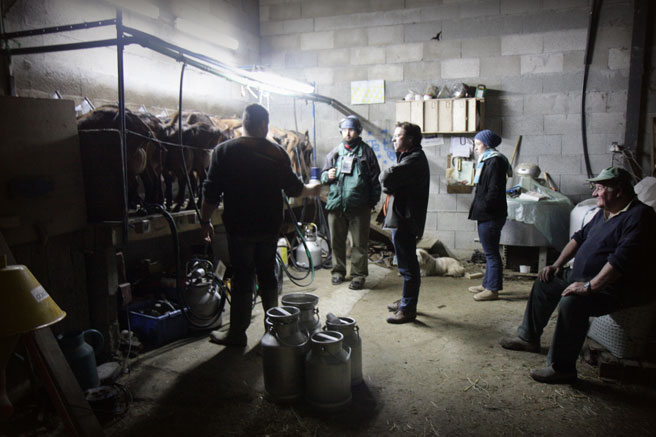
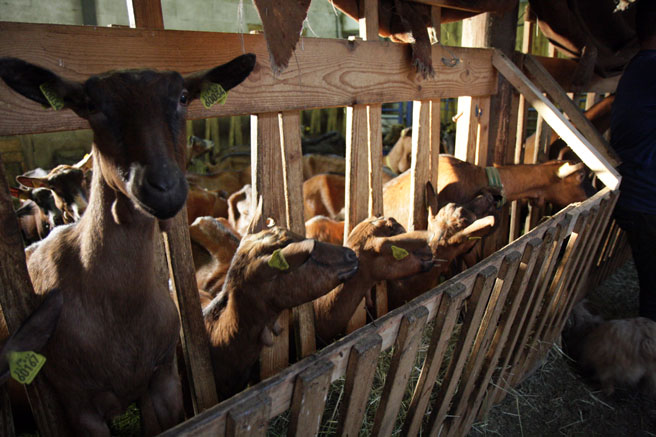
I also loved rattling the latch and entering a goat barn in the hamlet of Preslette in the Savoie region this weekend. It starts muddy and cold, the expanse of grey sky pulling at you through leafless trees. Dogs with varying jobs to protect or herd these goats alert their entire world to your presence, their calls echoing through the valley. Then the door to the barn is open, and you enter a late winter enclave that smells sweet with the perfume of dried alfalfa and cozy animal warmth. Sun beams pierce in through late afternoon shadows and warm up all of the wood, reflections illuminating the animals. The goats stare at this wave of strange smelling strangers that float in on a breath of cool air, observing us all with short phrased questions in their eyes, bells chiming.


The goats are still inside for the winter, with the pasture land at our altitude still layered in patches with a hard crust of snow. Out on the slopes that get the best sun, the shoots have only just begun to penetrate the muddy ground. The melted snow saturates the earth, adding a happy squishing sound everywhere we go, a sound that whispers Spring Soon. Still some sun to come before the heat and light airs the sod enough to turn everything a deeper green.


In the meantime, the little kids born in January are 6 and 8 weeks old, curious, adorable little creatures, eager to nibble your sleeves or anything else they can practice chewing on. They're jumping up eager for a little stroke of their velvety muzzles. They're still drinking milk and get fed together, tails flapping cutely in a delightful little chorus.

What I loved most, though, was the milking. You have to feel a little sorry for these goats all swollen up with milk, and almost feel their relief too when they trot up in line to their station where they can have a little treat of ground corn and be ministered to. They get milked twice a day. The dog, named Douce, meaning "soft" in French, has been trained for specific jobs, to see them from point to point during the milking process. She will not stay with the goats in the fields when they go out, she has been trained to lead them there. She returns home where she is in charge of keeping things in order in the barn. She is proud of her work. Douce waits patiently in her place for them to finish with the milking and then trots along nudging them here and there. She does a thorough sweep of the entire barn to check that none went astray on the way back to their pens.


There are periods of relative commotion filled with shuffles, whistles and movement, followed by moments of calm waiting, random tinkling of their bells and a soft bleating here and there. The animals are happy to participate in these predictable cycles and engage in various levels of chitchat - See? This is our home. This is what we do. They are affectionate animals, and it seems that many have life stories to tell from their summers on the hills.


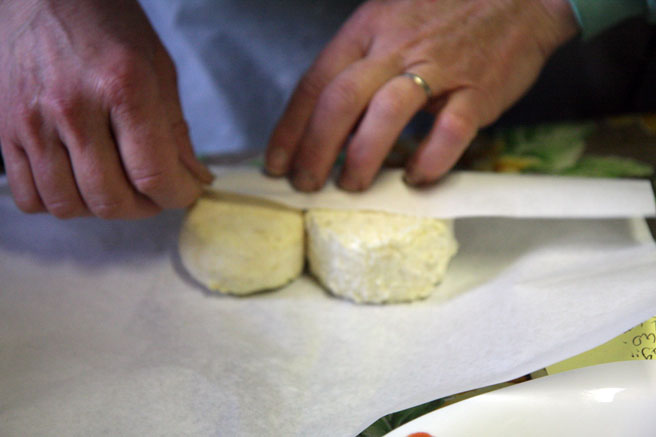
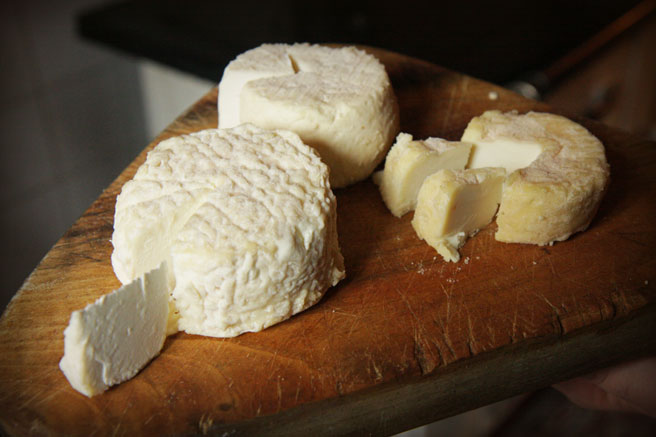
We all got a taste of the warm milk direct from the goats. It reminded me of something, of childhood, a very satisfying drink indeed. We purchased the cheese in three forms, some yogurt, and a bottle of the fresh raw milk to take home. The milk was excellent straight up by the large glass or in coffee. The cheeses were very good as well. In fact this visit just makes me want to get myself a weekly supply of everything they sell.


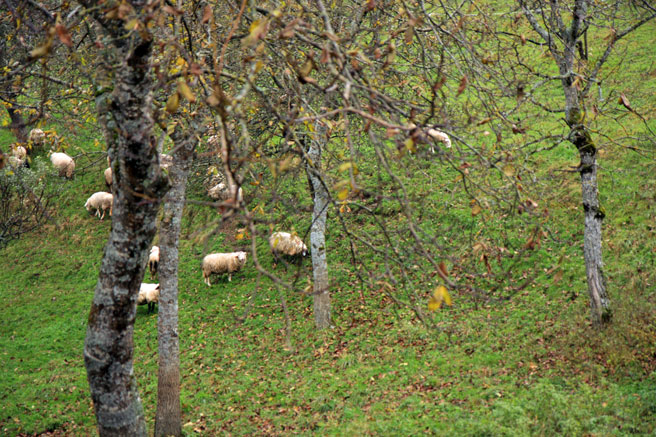
The Verrolet family farm sells four kinds of cheese, ranging from firm cream cheese to aged tomme. They sell yogurt and fresh raw milk on the farm as well. The cheeses and yogurts are sold at three weekly markets in the area. The tomme is only sold at certain times of the year, since the milk for that cheese comes from the animals that have been out in the pasture eating fresh greens. Their herd size ranges 80 to 100 animals, with a winter birthing in January. A number of the kids are sold off each year. They also have a handful of milking cows, but only make cheese from the goat milk.


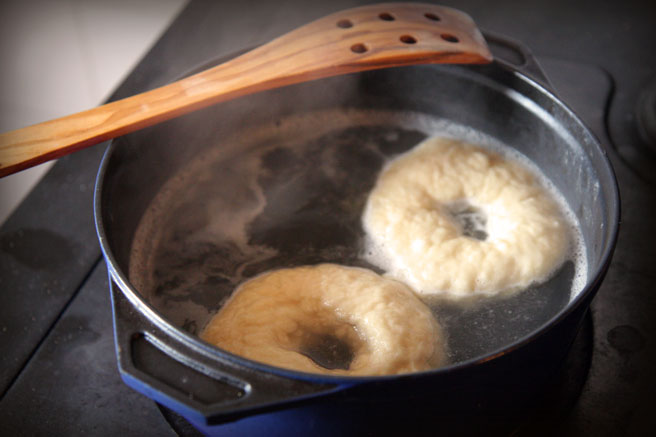
We had to make bagels to do these goat products justice on Sunday morning.

Podcast coming soon.

Verollet, Marcelle
PRESLETTE 73110
04 79 25 71 02

Labels: ,


Share/Bookmark

Sunday, January 18, 2009

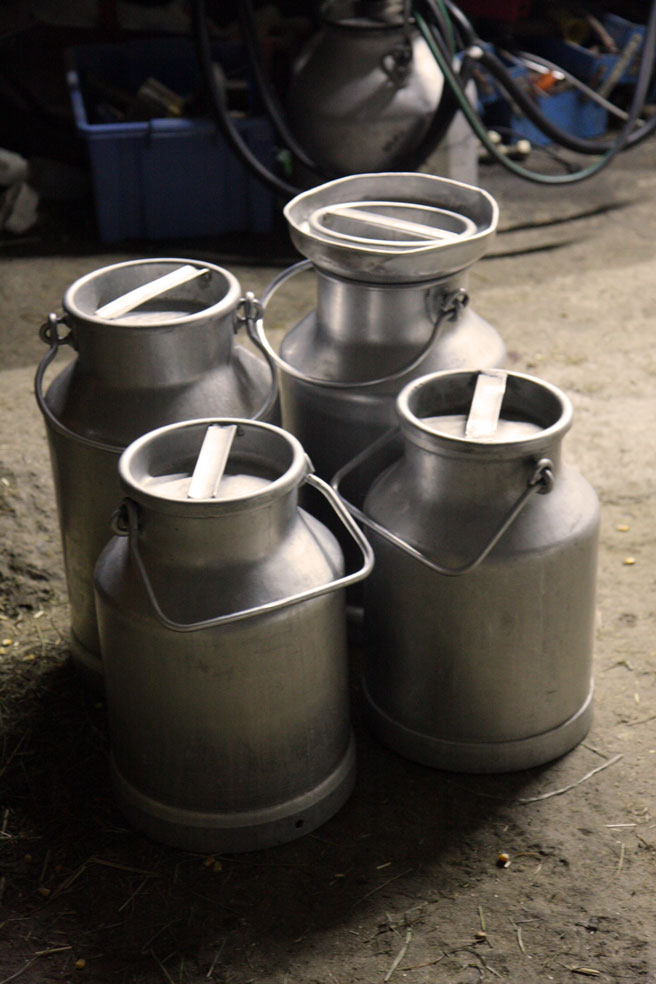
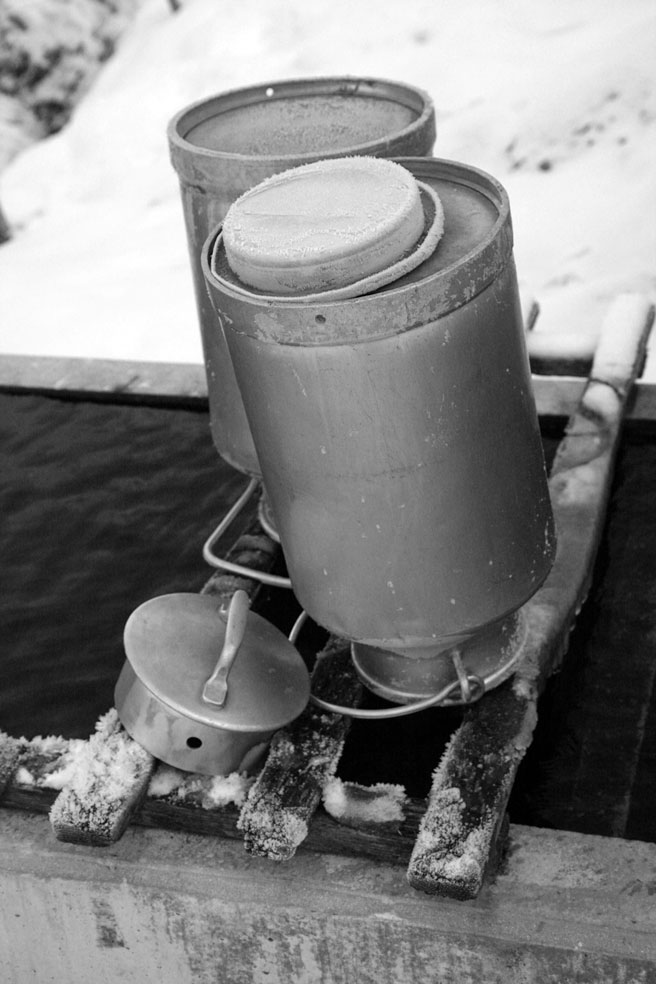
Milk Jugs, Savoie

Labels: ,


Share/Bookmark

Thursday, November 13, 2008

Evolution of a Landscape


You know, the other day was a national holiday, Armistice day, in which we celebrate the end of the First World War and honor those who died for France. This makes it a 4 day weekend, so of course we were up in the Savoie, and after the town's Armistice day ceremony at our village memorial, we had coffee or wine (depending on how old you were, it seemed, the oldest people in the village went straight for the wine although it was only about 9:30 am) in the hall outside the mayor's office.


It was a good opportunity to talk to our neighbors, and we met a few more people in addition to saying hello to the man who had sold us our firewood, the man who comes down to pick his apples, and the older couple who tend the bees up on the hill behind our house. The man who came forth with the most fruitful talk is in his 90s. We mentioned to him that we had been out walking up into the forest in the days before, and we'd seen a cluster of stone foundations, ruins about a half a mile up into the forest. They were rather mysterious, and we wondered if he might share a story about them. His faded eyes glowed a little bit, he looked just past Loic and he took a nice hit of wine, standing silent. I wondered only for a flash if he understood what we were asking him about. Then he began to talk. Some of the other villagers had their ears pricked as well, because I suppose he doesn't talk much. When he was a boy, these stone ruins we mentioned were beautiful chalets, back in the day when the forest that we walk in now was sloped pasture land.

He shared his boyhood memories of the forest we hike in today as broad open field only scattered here and there with a few trees, where they would take the goats to graze. Throughout the old man's lifetime it had filled in, and the forest matured. We know it now to be a wise place, aged now to the point where its floor is laid out with moss and low growing fern like the lush carpet of a fairy kingdom. The trees; pine, interspersed with chestnut, birch, and a few oak tower far above and the beams of light sparkle through the branches like stained glass, while you slowly step between the trees taking in the intricate details of the forest flora.


It is the Alps - steep enough at points to feel like you are climbing stairs. The solemn procession while you slowly put one foot ahead of the other, heart pounding in your chest, seems so ceremonial that it is hard to imagine that this forest could ever have been anything but just the way it is now. It was a very funny thought that as a rugged boy this man took a sun bath on that very slope, munching a hunk of cheese from his sack, while he tended to a herd of goats there. A funny thought indeed that in his lifetime, the mysterious stone ruins were once warmed with living hearths. Flagstones scrubbed, sparkling windows, the upper parts constructed of birch wood, now all long gone, the only thing left are moss coated empty stone piles, trees growing through them, mournful in their solitude. I suspect there is more to tell about the people that lived there. About why they left,what happened to them. I think I will make a point to talk a little bit more with this man.

Forest land in this little corner of the Savoie is public land attributed to each township, each consisting of a commune of several small clusters of houses interspersed along the main roads that wind into the mountains. The little village where our house is clusters up to the edge of the wild land, and the forest is open to residents for hunting, provided they register with the mayor and adhere to strict guidelines about where to hunt and when. When we hike in the forest this time of year, we check with the mayor to see where hunters might be, so we can give a nice wide latitude.


The old man's description of his memory over a lifetime of that land transforming from pasture land, to brush and young trees, to eventually majestic forest gave me a little bit of perspective on nature's bigger cycles as we compare them to our own lives. The thought grounded me for a bit, and also make me think of how a changing environment of any kind changes the offering of a place. I wondered what kind of hunting this village enjoyed when the deep dark forest was simply brush glistening in the autumn sun. I wonder if I should clear the brush on our little plot of land after all or just let it become what it is going to become.

When I had a quiet moment, I settled next to Bernadette humming with the joy of a fresh log, myself with a refreshing glass of the little vin du pays, and I explored a little the few books I had thought to bring about the game birds that are available this time of the year. We won't be hunting, but I will have a chance, as I roam the streets and canyons of Lyon, to do a bit of hunting of another kind.

Labels: ,


Share/Bookmark