Monday, November 17, 2008
Friday, November 14, 2008
The Best Little Game Birds - Grouse


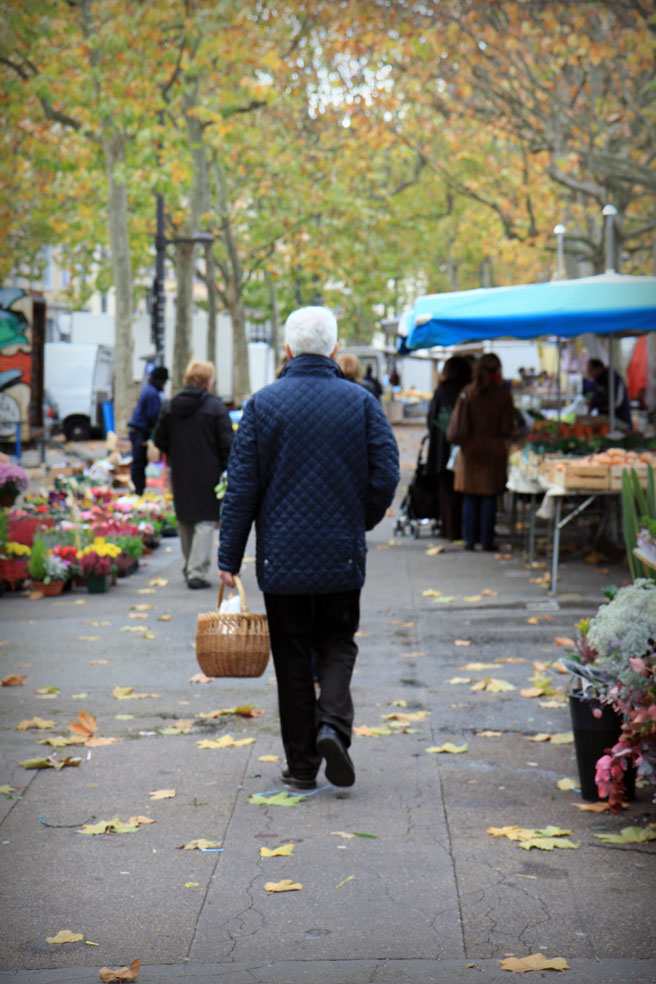
When you visit Lyon, you will make your list of markets to visit, depending on where you're staying or how much time you have. Anyone with any sense programs a jaunt one morning or afternoon to Les Halles on Cours Lafayette, and then there are the outdoor markets, which vary in character throughout the week. Visitors who like to cook, or would like to learn to cook can rent apartments with kitchens so that they can take advantage of the variety of pickings from the region, and have a chance to experience the greatness that Lyon has to offer at home-cooked prices.

For a food enthusiast, harvest time is the absolute best time to visit the city of Lyon. Among other bounty, once you reach deep into Autumn, you can sample the wild game coming to the markets.

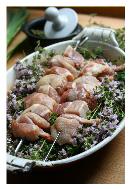
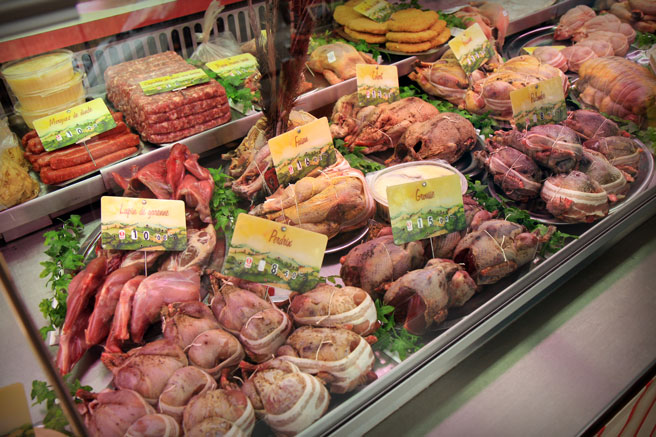
This morning, at my market on Quai St. Antoine, my poultry seller had 6 types of wild game birds to choose from. While I was at her stand, I saw that a client also came up with a sack of partidges from her husband's hunt asking that they process them, a service for which she pays a fee. If you go to Les Halles, you can get boar and venison, plus a host of good wild rabbit and duck.


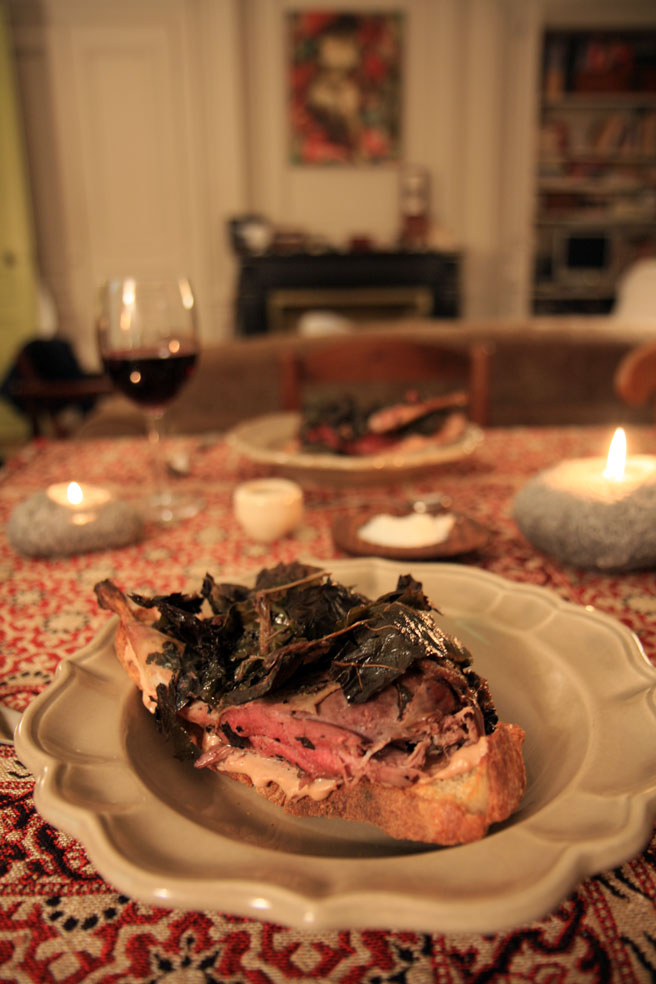
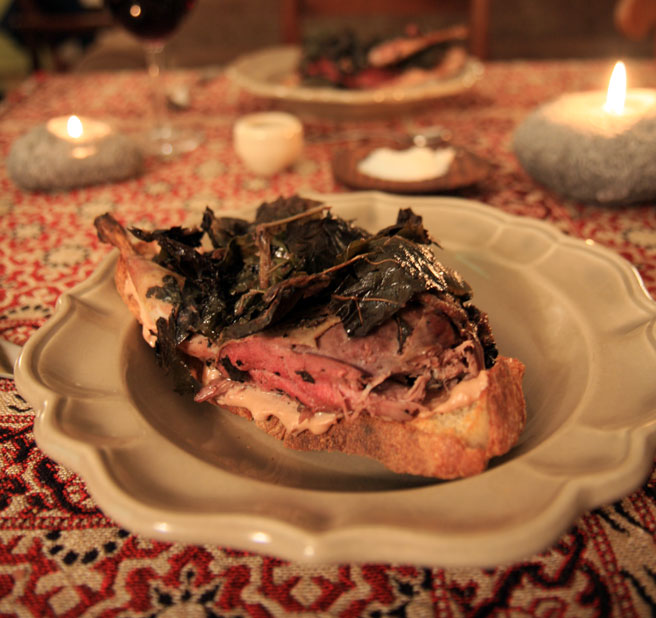
I decided to get just one plump little grouse this time, and will serve it to Loic tonight, rubbed with duck fat and wrapped in grape leaves, spatchcocked, roasted and served over toast which has been spread with butter seasoned with the bird's liver and a bit of cognac. (there is your recipe, but if you want ratios, I'll give you one below!) In 2002 I read how Louise Bertholle did her partridge, and it inspired me to create my own recipe for grouse, replacing the barding with a slather of duck fat, tweaking the liver butter seasonings to our tastes. It remains a pillar of my Kitchen Notebook's little game bird recipes. Today's grouse will be a nice way to begin a simple meal, filled out with an autumn soup and followed by the cheese plate, just enough to give us a taste of the season.
Our Favorite Grouse Supper

To prepare the bird:
1 grouse, head and neck cut off, cavity empty, reserving the liver
freshly ground pepper
2 Tablespoons duck fat
1 teaspoon fleur de sel or sea salt
4 grape leaves
2 slices toasted country bread, toasted
lemon quarters for serving
For the game liver spread:
1 teaspoon duck, goose fat or butter for cooking the livers
3 tablespoons total of veal liver
the grouse liver
1/2 tablespoon cognac
a grate of nutmeg (1/4 teaspoon)
2 tablespoons butter for incorporating into the ground livers
fleur de sel and ground pepper to season
- Cut the empty bird with poultry shears along the back, spreading the bird flat. Rinse the bird and dry thoroughly. Mix 1/2 teaspoon of fleur de sel into the duck fat and stir it gently to mix. Slather the salted duck fat all over the bird, top and bottom. Top with a grind of pepper, and wrap the entire flattened bird with grape leaves. If you don't have fresh leaves, never fear, you can use the ones that come brined for stuffing, but you have to rinse them well to remove the salt.
- Grease a shallow roasting dish that is big enough to hold the flattened grouse, and place it down on the bottom of the dish, breasts up. Roast in a 200C/400C oven for 2o-25 minutes, enough to cook the breasts through, but be careful not to overcook it.
- While the bird is roasting, saute the veal liver and the grouse liver in the fat, making sure not to overcook, which will make it dry. Season with salt, nutmeg and cognac, then remove from heat and quickly work it into the butter with blender or by hand with a fork. Chill the mixturein the freezer for 10 minutes.
- Toast the slices of country bread, and spread the liver butter on them. Place the liver toasts on the serving plates, adding half the roasted grouse on top, grape leaves and all. (put the plates in the oven with the door open to keep them warm while you make the sauce.) Deglaze the roasting pan with a quarter cup of water, and reduce it to a tablespoon. Whisk in a teaspoon of butter into the sauce, season with salt to taste and pour over the grouse. Serve hot with a wedge of lemon.
Labels: Fall 08, Wood Stove Recipes
Thursday, November 13, 2008
Evolution of a Landscape


You know, the other day was a national holiday, Armistice day, in which we celebrate the end of the First World War and honor those who died for France. This makes it a 4 day weekend, so of course we were up in the Savoie, and after the town's Armistice day ceremony at our village memorial, we had coffee or wine (depending on how old you were, it seemed, the oldest people in the village went straight for the wine although it was only about 9:30 am) in the hall outside the mayor's office.

It was a good opportunity to talk to our neighbors, and we met a few more people in addition to saying hello to the man who had sold us our firewood, the man who comes down to pick his apples, and the older couple who tend the bees up on the hill behind our house. The man who came forth with the most fruitful talk is in his 90s. We mentioned to him that we had been out walking up into the forest in the days before, and we'd seen a cluster of stone foundations, ruins about a half a mile up into the forest. They were rather mysterious, and we wondered if he might share a story about them. His faded eyes glowed a little bit, he looked just past Loic and he took a nice hit of wine, standing silent. I wondered only for a flash if he understood what we were asking him about. Then he began to talk. Some of the other villagers had their ears pricked as well, because I suppose he doesn't talk much. When he was a boy, these stone ruins we mentioned were beautiful chalets, back in the day when the forest that we walk in now was sloped pasture land.
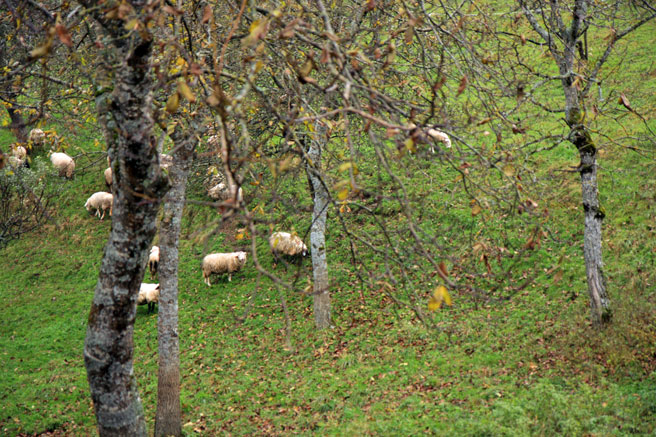
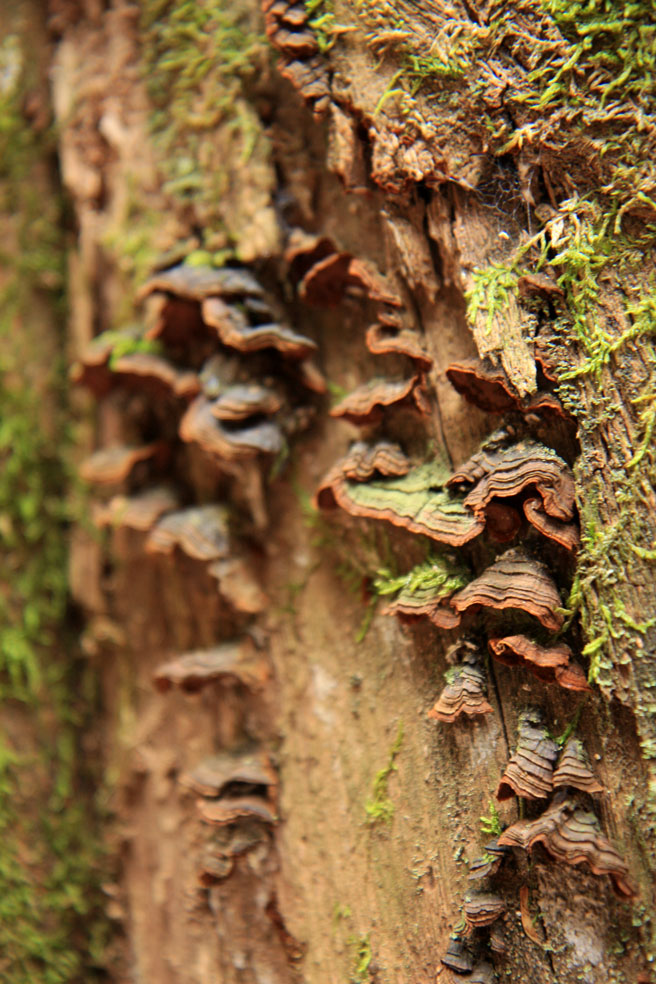
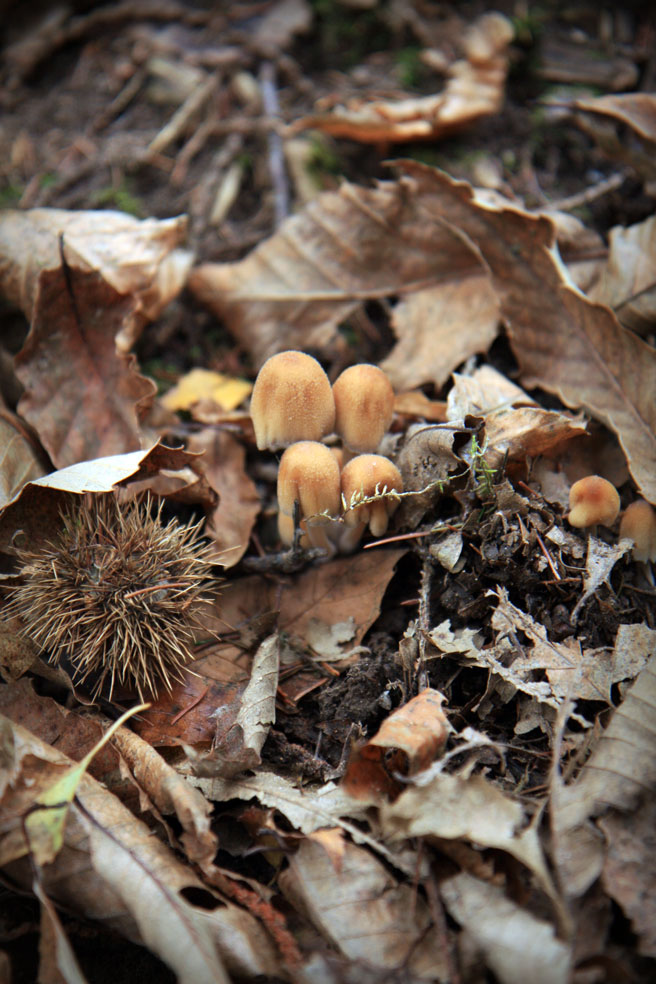
He shared his boyhood memories of the forest we hike in today as broad open field only scattered here and there with a few trees, where they would take the goats to graze. Throughout the old man's lifetime it had filled in, and the forest matured. We know it now to be a wise place, aged now to the point where its floor is laid out with moss and low growing fern like the lush carpet of a fairy kingdom. The trees; pine, interspersed with chestnut, birch, and a few oak tower far above and the beams of light sparkle through the branches like stained glass, while you slowly step between the trees taking in the intricate details of the forest flora.


It is the Alps - steep enough at points to feel like you are climbing stairs. The solemn procession while you slowly put one foot ahead of the other, heart pounding in your chest, seems so ceremonial that it is hard to imagine that this forest could ever have been anything but just the way it is now. It was a very funny thought that as a rugged boy this man took a sun bath on that very slope, munching a hunk of cheese from his sack, while he tended to a herd of goats there. A funny thought indeed that in his lifetime, the mysterious stone ruins were once warmed with living hearths. Flagstones scrubbed, sparkling windows, the upper parts constructed of birch wood, now all long gone, the only thing left are moss coated empty stone piles, trees growing through them, mournful in their solitude. I suspect there is more to tell about the people that lived there. About why they left,what happened to them. I think I will make a point to talk a little bit more with this man.
Forest land in this little corner of the Savoie is public land attributed to each township, each consisting of a commune of several small clusters of houses interspersed along the main roads that wind into the mountains. The little village where our house is clusters up to the edge of the wild land, and the forest is open to residents for hunting, provided they register with the mayor and adhere to strict guidelines about where to hunt and when. When we hike in the forest this time of year, we check with the mayor to see where hunters might be, so we can give a nice wide latitude.


The old man's description of his memory over a lifetime of that land transforming from pasture land, to brush and young trees, to eventually majestic forest gave me a little bit of perspective on nature's bigger cycles as we compare them to our own lives. The thought grounded me for a bit, and also make me think of how a changing environment of any kind changes the offering of a place. I wondered what kind of hunting this village enjoyed when the deep dark forest was simply brush glistening in the autumn sun. I wonder if I should clear the brush on our little plot of land after all or just let it become what it is going to become.
When I had a quiet moment, I settled next to Bernadette humming with the joy of a fresh log, myself with a refreshing glass of the little vin du pays, and I explored a little the few books I had thought to bring about the game birds that are available this time of the year. We won't be hunting, but I will have a chance, as I roam the streets and canyons of Lyon, to do a bit of hunting of another kind.

Labels: Fall 08, The Country House
Friday, October 17, 2008
Devotion at the Becchina Estate


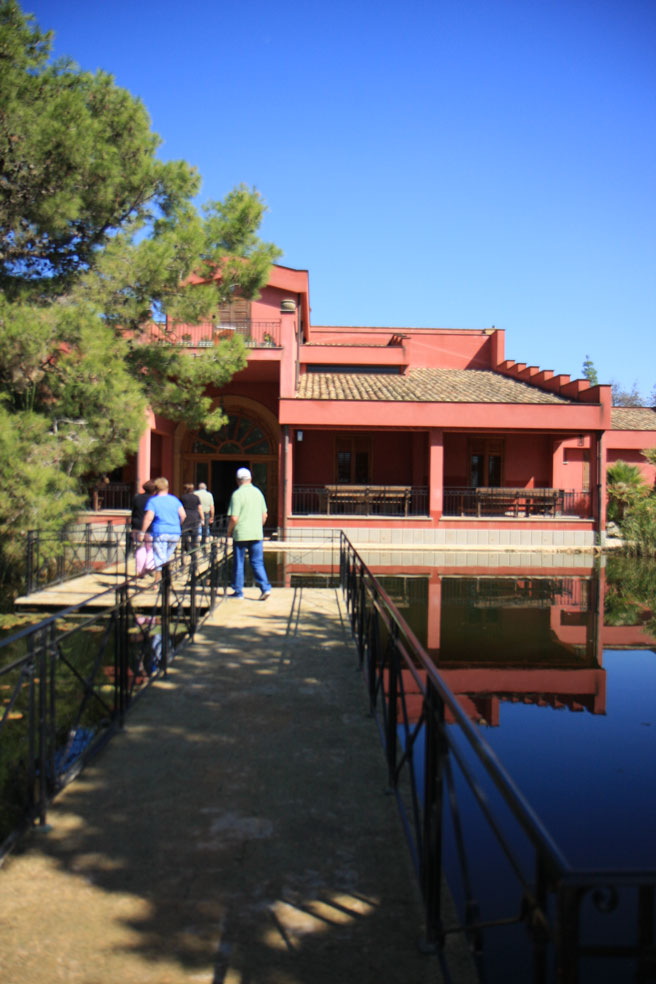
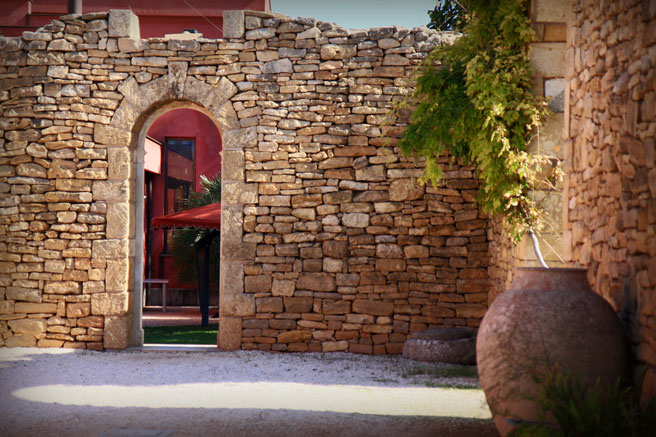
The sun made the stones and the earth glow in hot brilliant gold tones all the way though the olive groves. The sky's reflection in the spring fed pond at the house contrasted against the deep red structure in a way that made me understand a truth about color and light. I hung back, I wanted to remember that moment. This kept happening again and again here.


When I ran to catch up, Gabriella Becchina had met the group at the front door. She was extending her welcome. She urged us to make ourselves at home. We were ushered to the kitchen and to the terrace where we washed away that morning's grime from the ruins at Segesta in an enormous stone sink. Her assistant was prepared to guide us through three local dishes, the theme: Olive Oil. Not just any olive oil, but the oil produced right there, a fruity, light tasting flavorful oil they call Olio Verde. Funny little owl on the bottle. Isn't it? I bet it has a story.

There's nothing like discovering a beautiful artisanal product at its source, where you can see for yourself the devotion coming through everywhere, from the working kitchen to the garden to noting the care taken with each and every individual tree as you stroll through the groves. Other fruits are interspersed in between the olive trees, and when we visited, pomegranates swelled ripe, oranges hung like decorations, and prickly pears glowed red. Lemons hung like pendulums, from which Gabriella makes her own gorgeous sweet lemon spread that she sells in little jars for tartines or use in pastry. When I look around, I repeat the word. Devotion. And from this little olive oil production to the care taken in the cooking, I can easily follow its themes.

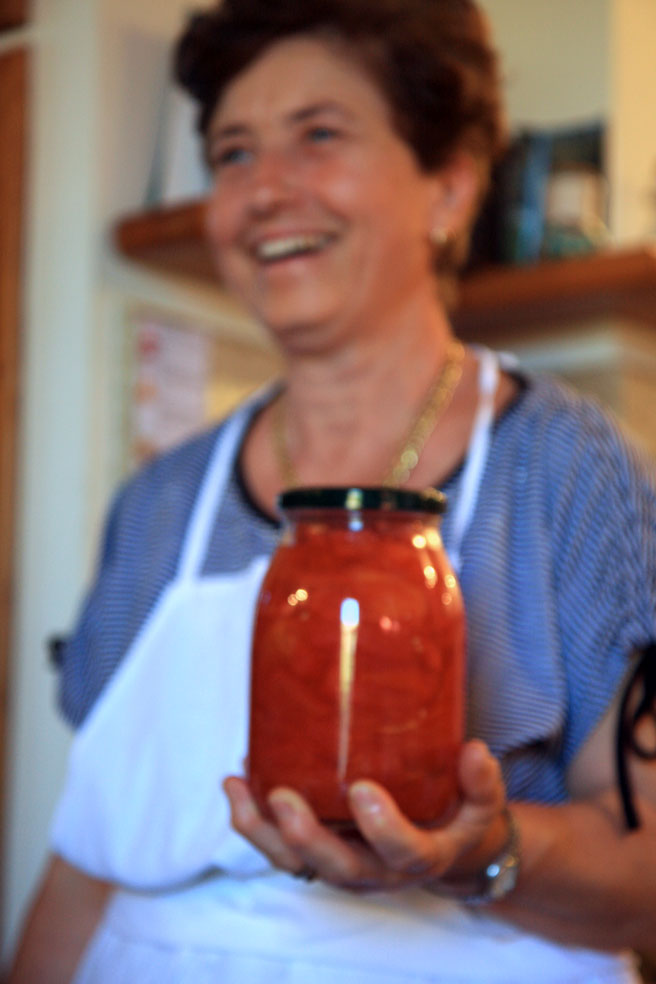
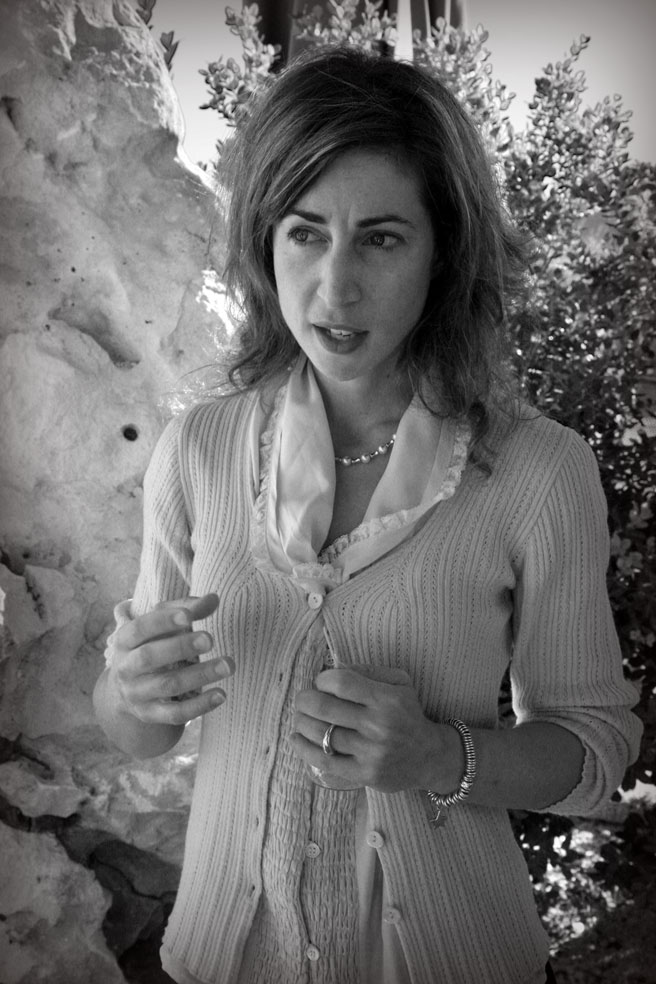
Gabriella speaks with an interesting lilt in her English, not quite an accent but something that indicates she perhaps speaks many languages, English not being her first. Schooled in Switzerland and then at Columbia University where she earned her PhD in Art History, she came to the family home in Sicily seven years ago with her mind set to archeological restoration on the estate. She was also drawn into the family's activity of oil production, which clearly is her calling.
Gabriella Becchina
Gabriella tells us one of her father's stories, a memory, of a cold November day when her grandfather is taking the family crop of olives to be pressed. Everyone harvested then late in the season, and there was only one press in the town. While all of the local olive producers waited in line for days with their rapidly fermenting olives, her father nestled himself between the sacks of fermenting olives to get warm. They steamed from the fermentation, and produced an unforgettable smell. A child could warm his body that way, and in doing so a lasting image is imprinted that he shares with his daughter. What kind of oil does a fermented olive yield? Heavy, bitter oil with a greasy taste. Ripe black olives will yield more oil, so most olive oil producers choose to harvest late, and this is the way of production that most of us know from our early memories of imported oil.
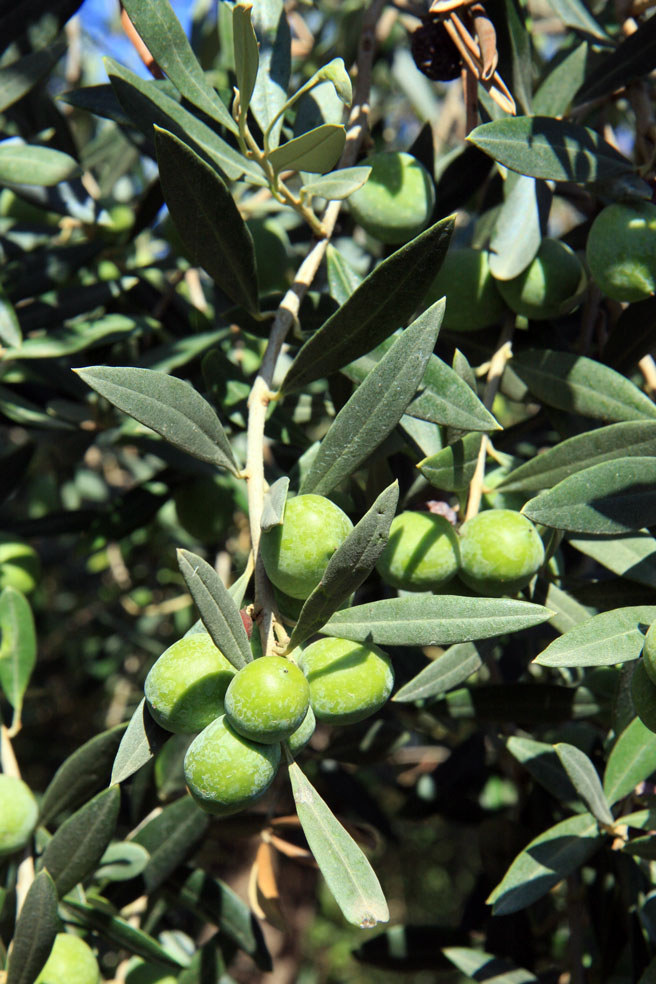
The white stage, which lasts only 2 weeks each year, and green gold from harvest at the right time.
Today, the Becchina's approach to production is different, with an impeccable eye for flavor and quality. They harvest carefully selected olives green for optimum taste in their olive oil, not maximum yield. They pick the olives still green only by hand during a two week window that Gabriella tells us is the "white stage" of maturity, a time when the olives develop a natural white film on them (reminding me of grapes, plums, and quince), when they are just about to ripen, and long before any kind of fermentation will take place. They press the oil immediately, so that heavy greasy bitter flavor never comes into the oil at all.
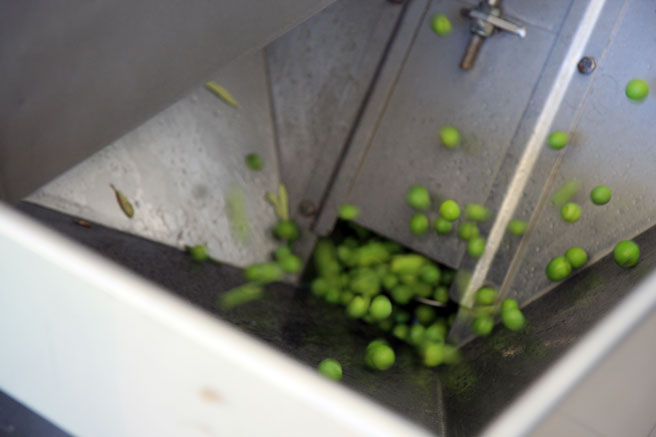
Early harvest and immediate pressing makes this the lightest, purest, most beautifully flavored oil. The Becchinas don't use raking tools or shaking to remove the olives from the trees, which would damage the fruit and cause it to ferment. All of their olives are hand picked, and the process of removing the leaves is labor intensive, something that not all olive oil producers do. While the leaves add a green color to fermented oil, they add an acrid tone to the flavor from the added chlorophyll. The Becchinas carefully pick them out for a better flavor. The green color of the Becchina family oil comes from the unfermented olives themselves. They do not filter the oil, simply letting it settle before bottling. Devotion, and attention to detail. This is what makes this oil, this process, unique. Ingredients for success, wouldn't you agree?
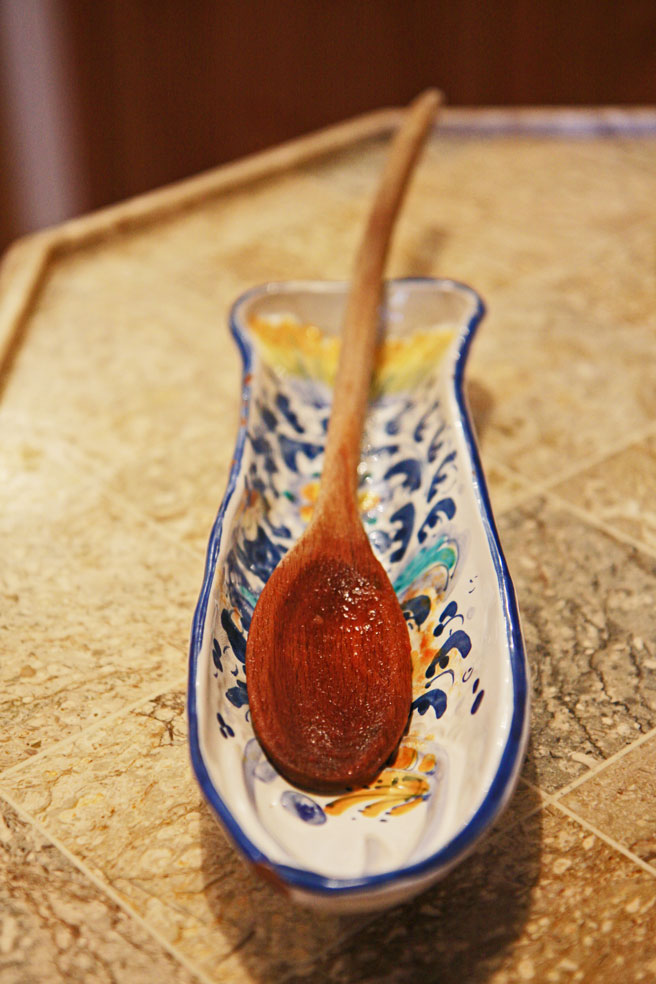
Take note of the backsplash tiles. They will be coming up again.
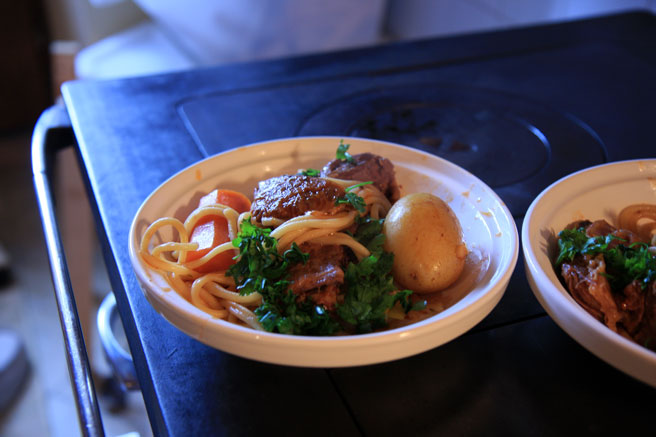
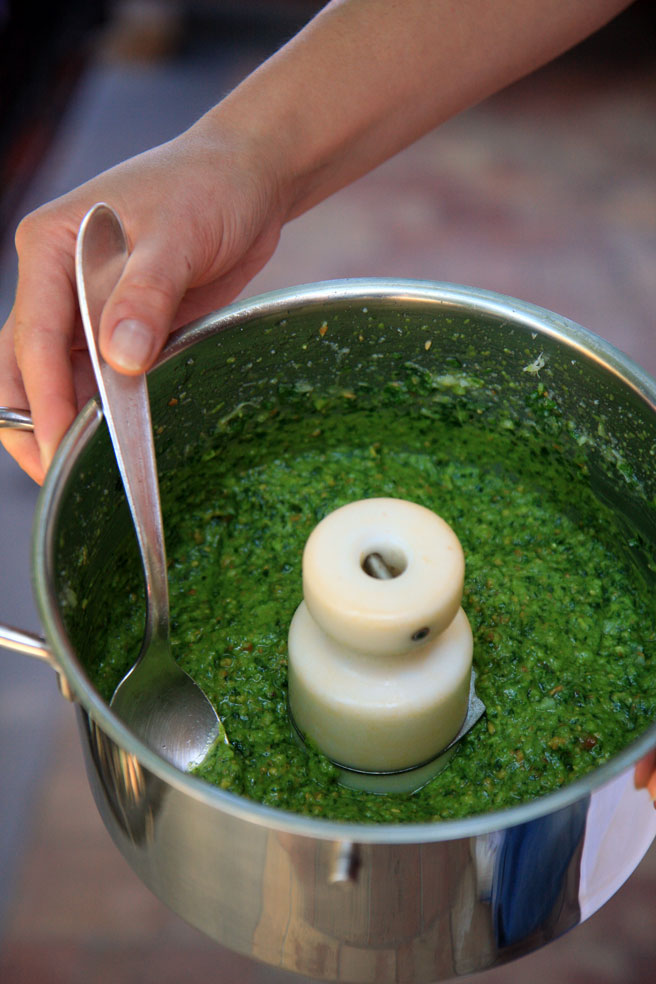
The cooking class entailed preparation of three dishes, all of which featured the house olive oil. We did stuffed beef rolls, or involtini di manzo, Becchina's family recipe for a pesto verde, a fresh basil pesto featuring almonds which had been previously peeled and fried in the house olive oil.

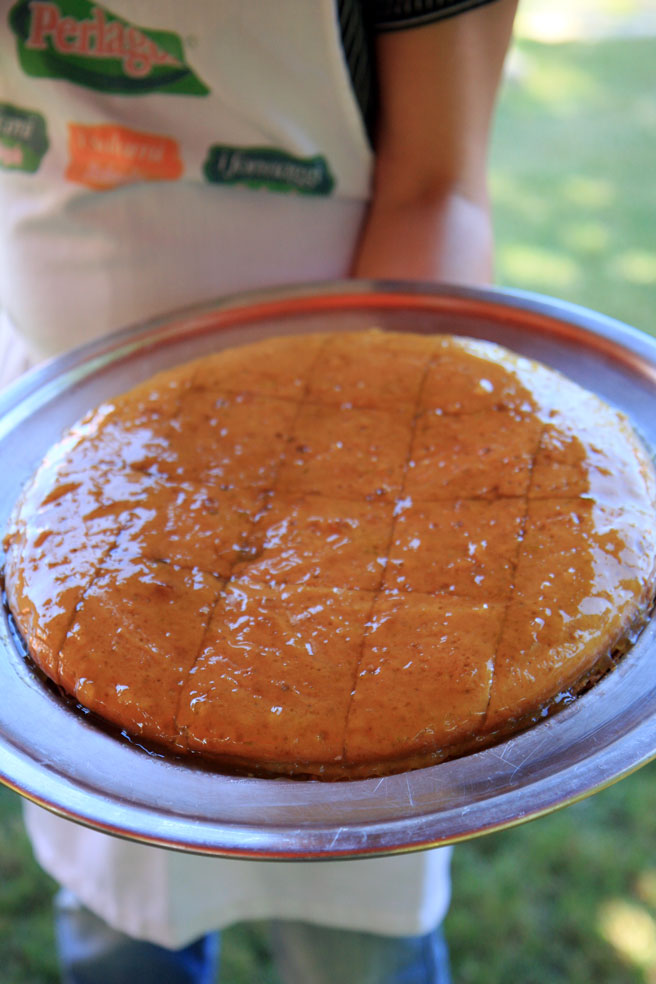

Finally we did a citrus flavored olive oil cake using the house olive oil. All were delicious and we enjoyed a wonderful meal.
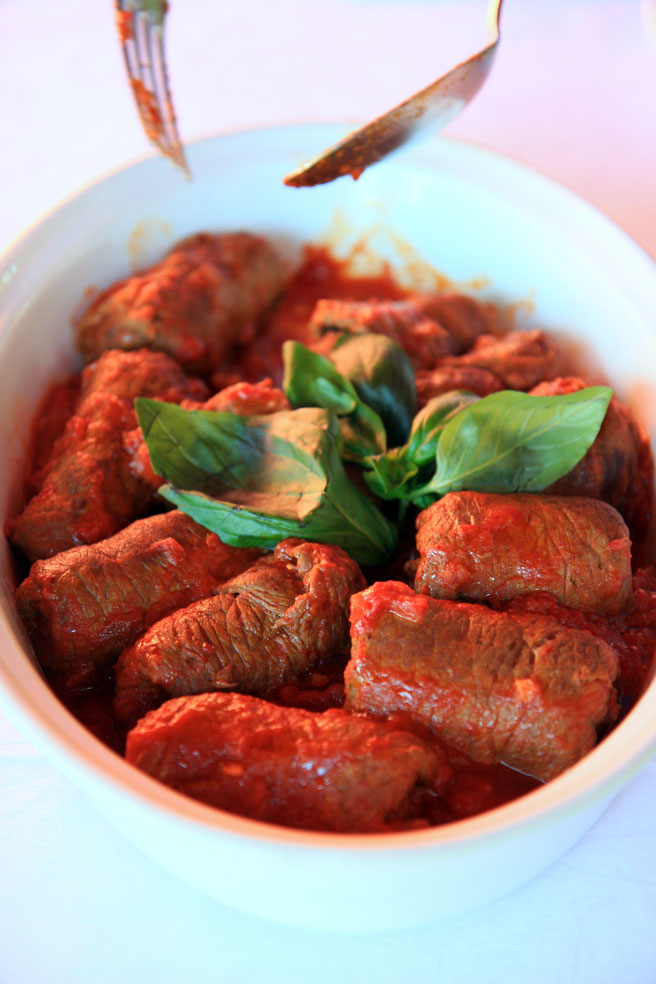

Next post you get the recipe for involtini di manzo using this oil with a step by step.
The Becchina family estate has rooms where people can stay at the olive plantation, with room and board, meals consisting of products from their farm and groves. They also have a place at the beach with rooms available. I don't know how much it costs, but you can contact them to find out. Their oil is shipped fresh off the press to a number of locations in North America, Europe, and Asia. Watch for it! Check their website to find out where you can buy Olio Verde. Thank you Judy, for taking us on this journey. I will remember it always. Coming up next, details on the beef rolls!Labels: Fall 08, Italy, Sicily
Wednesday, October 08, 2008
Shangai Trattoria, Palermo

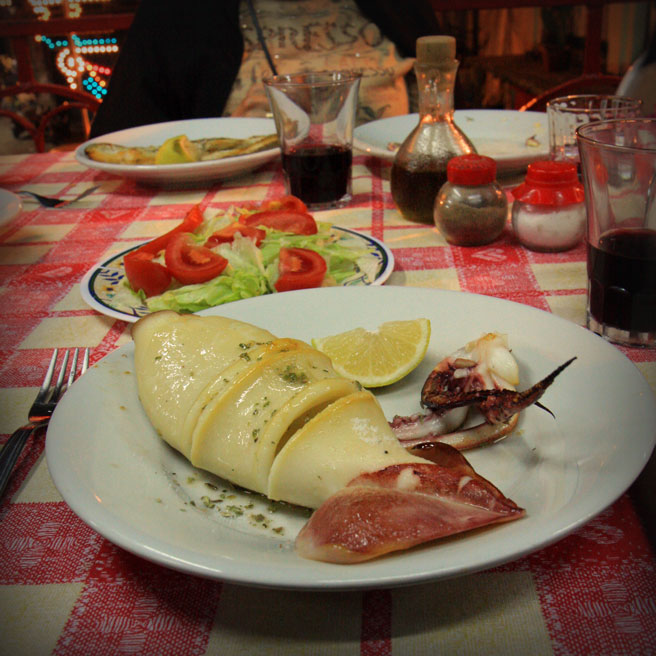
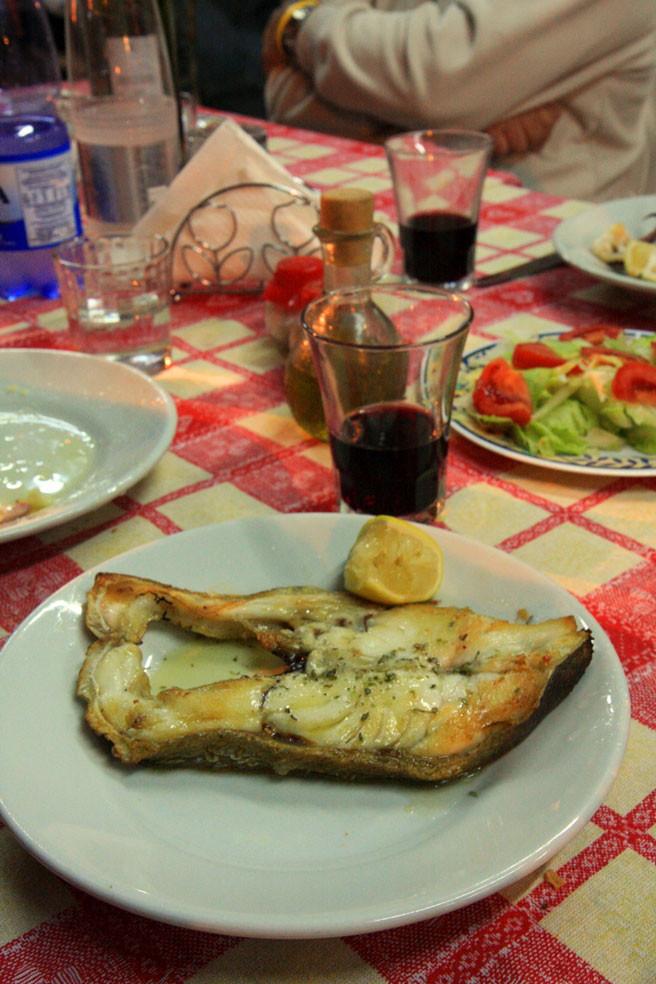
The Shanghai Trattoria got a very romantic write up in the New York Times, and the reality was not anything like what I was expecting from the writeup. After reading about this haven for artists and poets, I wanted to go there, and made a special request to try it. The "eclectic furnishings" mentioned in the article were actually white plastic lawn chairs and tables, and the place was lit by stark flourescent rods. It's a little hole in the wall, with sparsely adorned and simply cooked fresh fish at not so cheap prices. Not much ambiance whatsoever. I certainly didn't have any problems with the freshness of the fish. If my father were alive today, he would have gotten a kick out of eating there, because it was kind of an adventure. But there were problems with timing, long waits, lack of cutlery and the waitstaff was slow to respond on the night we went. The publicity that painted the place in broad rosy tones must be the reason why almost every table was filled with Anglophones. I certainly enjoyed the company at my table, and I was happy to have the chance to take a photo of the market at night from that vantage point. We all know location is everything. I would not go so far as to say avoid the place. Just adjust your expectations, and know that Palermo restaurant dining can have much better ambiance and service in so many little neighborhood trattorias.


Lunch might be better?
Labels: Fall 08, Italy, Palermo, Sicily
Sicily: Monreale

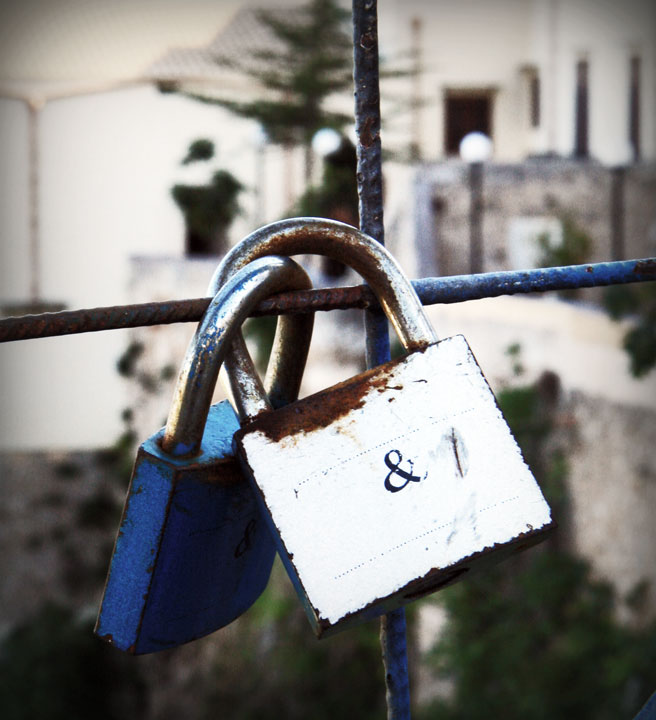
After our walking tour of the churches in Palermo, we took an afternoon trip to the town of Monreale, up in the hills about 8 miles outside the city. Our plan was to visit the vast Norman Romanesque cathedral there. We stopped to enjoy the view, overlooking the valley that was once orchards orange, almond, and olive groves, leading down to the sea. There is a custom there, at this particular vista point, for lovers to go there together and make a love pact, sealing it with padlocks. On the locks, they will write messages or maybe their names. The guide informed us that they have prohibited this activity due to the massive profusion of locks that ended up having to be removed. But people still do it. I looked out over the valley out to the sea and took in the thoughts that were swirling in my head about how these people find and use symbol as a beautiful compliment to the special moments in their lives.


The cathedral at Monreale was built also in the 12th century, and is like an unfolding and expansion of the Palatine Chapel, with elaborations of the themes we saw in the first church. There is a difference in the stylism of the figures in the vast collection of Byzantine mosaics there. In this cathedral dedicated to the Madonna, the church is oriented in such a way that on the day of Christ's birth a beam of light shines on an iconic mosaic of her every year at the same time. We observed the same celebration of light as in the Palatine Chapel, with reflective surfaces and glass mosaic work stacked everywhere.


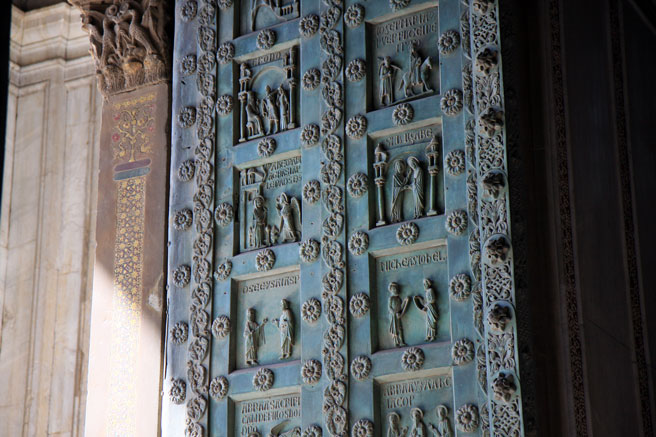
We were lucky to arrive to the church a day in which they opened the enormous set of bronze doors dating to 1179, an event that rarely ever happens. Our guide was very funny in her condemnation of the people who pay to use the church for their weddings, "for show", she said. I didn't mind at all! In fact I was so thankful to have a chance not only to have the doors open illuminating the church in all of its grandeur during our visit, but also to see the relief from the shadow of the open door. It was magical.


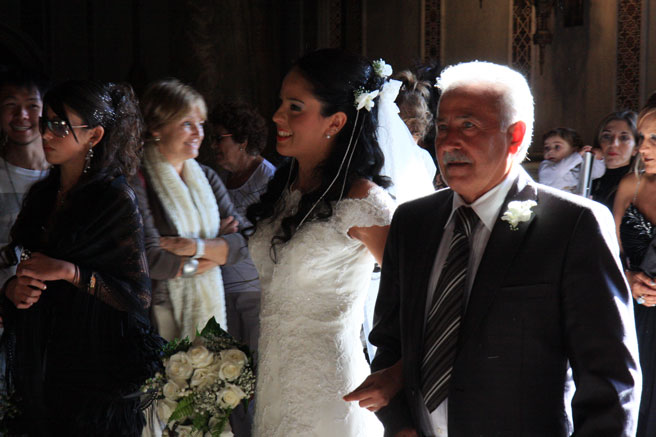
Then, as if in a dream, the organ began to play and we stepped back. A proud Sicilian father walked his daughter into the church to the cacophany of Mendelssohn's midsummer night's dream wedding march blaring from the cathedral's organ. The spaces are so enormous and round in this cathedral that the sound was almost surreal. The wedding party and guests were all dressed in black, as is the way in Sicily.


Since the church is a national monument, it must remain open to the public even during weddings, and the tourists milled around and through the the outer chapels admiring the mosaics as the wedding took place. I felt it would be better to go outside and let the wedding take place undisturbed. We accidentally happened upon the best part anyway. It could not have unfolded more perfectly. Outside, trading of saints cards took place outside and I found a simple ceramic cross with an idea of where I plan to put it in the country house, where it will remind me of that perfect day and all of the beauty of the churches in Sicily.


Next Stop: Dinner at Shanghai Trattoria.
Labels: Fall 08, Italy, Palermo, Sicily