


Saturday, January 17, 2009

An Even Easier Tarte au Citron


This past weekend, I was juggling thoughts of what I need to start hauling
back and forth between the two kitchens, the one in Lyon and the one in the Alps. We got in the habit of loading up the car with lots of stuff when we were first going up there, and it stuck. I dream of one day just saying: lets go! and getting in the car and going, without worrying about packing anything. A day when we don't have to make lists and carefully ensure that everything is there before we leave. So far, the hauling things back and forth has worked alright, although we did forget to pack the keys to the house once!

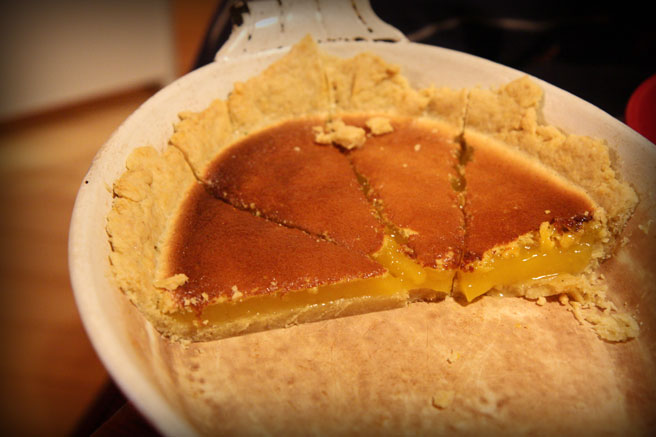
There are so many essential things that we can't get doubles of right now. The kitchen scale, real knives, certain cookbooks I look to for inspiration, the pressure cooker (which comes in very handy on the wood stove), and the blender. I had this bunch of lemons and wanted to bake a lemon tarte, but I didn't have the blender for the one I like to normally do. So I just made up a new recipe loosely based on the one I had done a million times already, a mechanically simpler one that makes use of no implement more sophisticated than a hand whisk. The pay off was incredible when compared to the effort that went into it. Oh man. This one is dangerous.

An Even Easier Tarte au Citron, la recette.

Begin with your favorite short crust. I used this base recipe, substituting cold water for the creme fraiche for no other reason than I didn't have any, and adding a tablespoon of sugar that I'd kept in a jar with a vanilla bean to the mix, because, you know, it was going to be a lemon tarte.

Roll out the crust, cradle it into a small tarte pan (I would say no bigger than 8 inches), or any receptacle that you can imagine holding a tarte, pierce it in regular intervals with a fork to keep it from puffing up as it cooks, and pre-bake it in a moderate oven (350F/180C) until it is firm to the touch and lightly brown around the edges.


In the meantime, take

2 untreated lemons,
4 egg yolks
3/4 cup granulated sugar.

- Wash the lemons, and cut the zest off of one fruit, just the very thin outer yellow part, and sliver it into a very fine mince. Set the zest aside.
- Squeeze both lemons and set the juice aside.
- With a wire whisk, beat the egg yolks and sugar until it lightens in color. This is easily done by hand in about 4 minutes.
- Add the lemon juice, whisk again until it is fully incorporated, and add the minced zest.
- Pour the egg, sugar, lemon and zest mixture into your pie crust, and bake in a moderate oven (350F/180C) for 25 minutes, rotating it in the oven about halfway through to make sure the top browns evenly. (pay special attention to that if you are cooking it in a wood oven!)
- When you pull it out of the oven it will still be a little jiggly, but it will take its lovely firmish curd like texture as it cools. Let it cool completely before serving.

Note: I probably could have topped this one with meringue but it was raining slush out and I didn't want to push my luck.

Labels: , ,


Share/Bookmark

Thursday, January 08, 2009

Choucroute


Basically what you want to do is get a whole lot of sauerkraut, and whatever meat you can find. The meats you choose will depend on your budget, and your local offerings. I adore pork trotters and always include them. You don't need any special equipment to serve a spectacular choucroute for pennies a serving, if you've got the belt cinched tight.

Sauerkraut: a necessity. This is sold everywhere in France at charcuterie counters, either raw or cooked. It sells here for about €1 a kilo. You can do it at home if that floats your boat, recipes abound. If you can find a good source for your sauerkraut, the battle is won. Even if you can only find canned sauerkraut, you can still serve a nice choucroute. Just make sure you give it a good rinse before you start. No matter what form it is in, make it good at home by adding seasonings. Even if you are working with the pre-cooked, you should still throw in your own additions. To each pound, add:

1 California bay leaf or 2 French bay leaves
2-3 sprigs of dried thyme
10 peppercorns
3 cloves
2 cloves garlic, whole, peeled
1 onion, cut into wedges
12 juniper berries (this is very important, because it gives a special flavor that I associate with a nice hot Choucroute on a winter's evening.)
a couple of glasses of Riesling (a dry white Alsacian wine) or if you are in a pinch, a couple of beers.
(These are guidelines. Work with what you have.)

Throw this into a cast iron pot that has a lid, give it a turn here and there to mix things in, bring the liquid to a simmer, and then throw your meats on top. All kinds of pork products will do. Count a half pound per person. Thick cut bacon, whatever local sausages you can get your hands on, smoked meats, pork trotters, the works. Cover up your heavy cast iron pot and put it in a hot oven, and braise for as long as it takes to cook the meats. Me, I usually let it cook for an hour or so, building up the heat at the end to give it a good browning. The steam from the saurkraut will cook the meats. take off the lid for the last 10-15 minutes and brown them at the end. This is completely feasible in a wood fired oven, which adds a nice smoky taste as well.

Serve with Alsacian wine or beer.

Labels: ,


Share/Bookmark

Friday, November 14, 2008

The Best Little Game Birds - Grouse


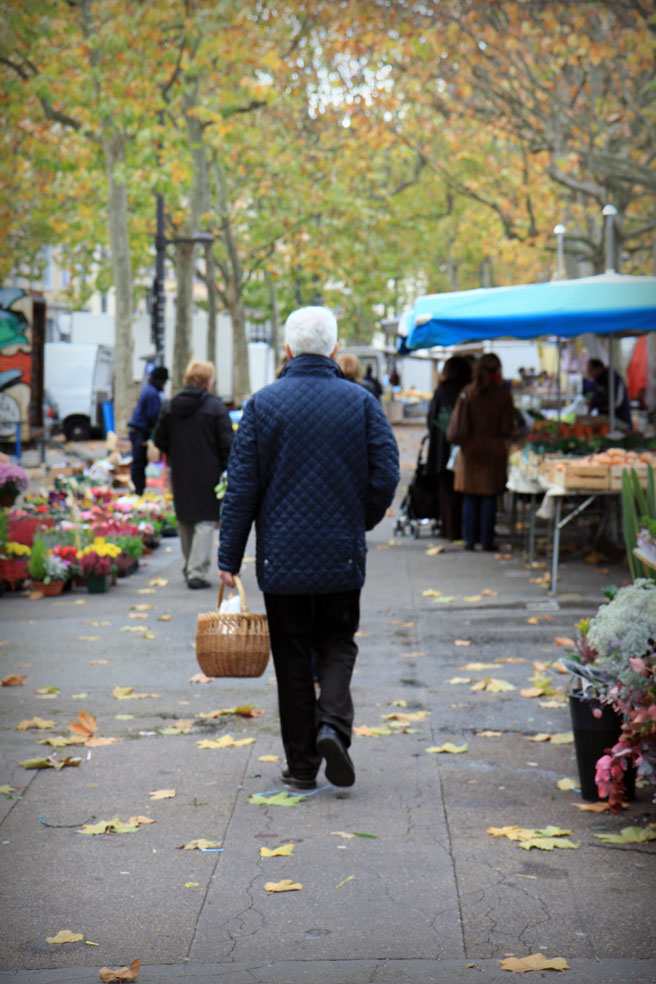
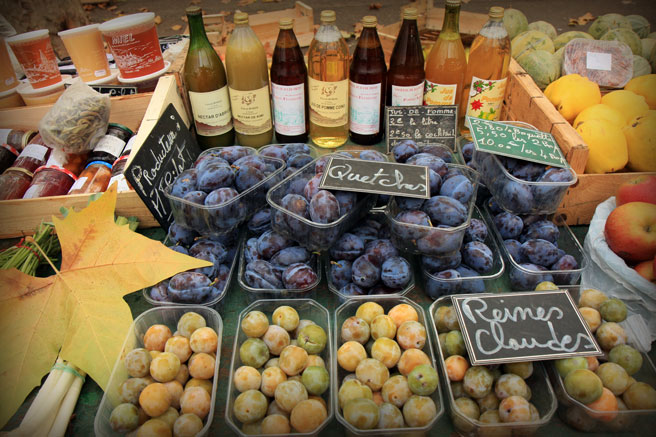
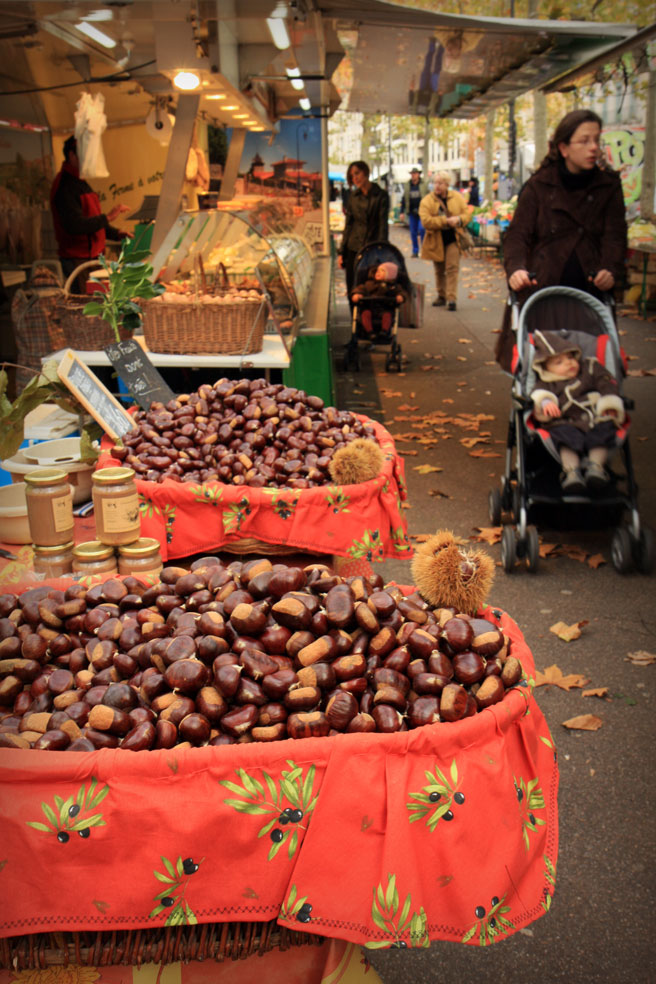
When you visit Lyon, you will make your list of markets to visit, depending on where you're staying or how much time you have. Anyone with any sense programs a jaunt one morning or afternoon to Les Halles on Cours Lafayette, and then there are the outdoor markets, which vary in character throughout the week. Visitors who like to cook, or would like to learn to cook can rent apartments with kitchens so that they can take advantage of the variety of pickings from the region, and have a chance to experience the greatness that Lyon has to offer at home-cooked prices.


For a food enthusiast, harvest time is the absolute best time to visit the city of Lyon. Among other bounty, once you reach deep into Autumn, you can sample the wild game coming to the markets.


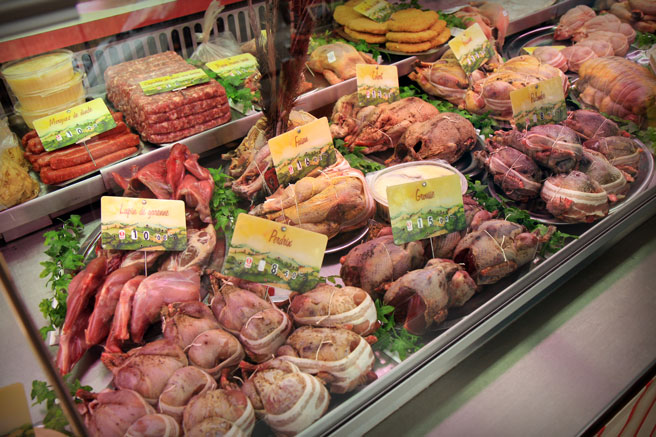
This morning, at my market on Quai St. Antoine, my poultry seller had 6 types of wild game birds to choose from. While I was at her stand, I saw that a client also came up with a sack of partidges from her husband's hunt asking that they process them, a service for which she pays a fee. If you go to Les Halles, you can get boar and venison, plus a host of good wild rabbit and duck.


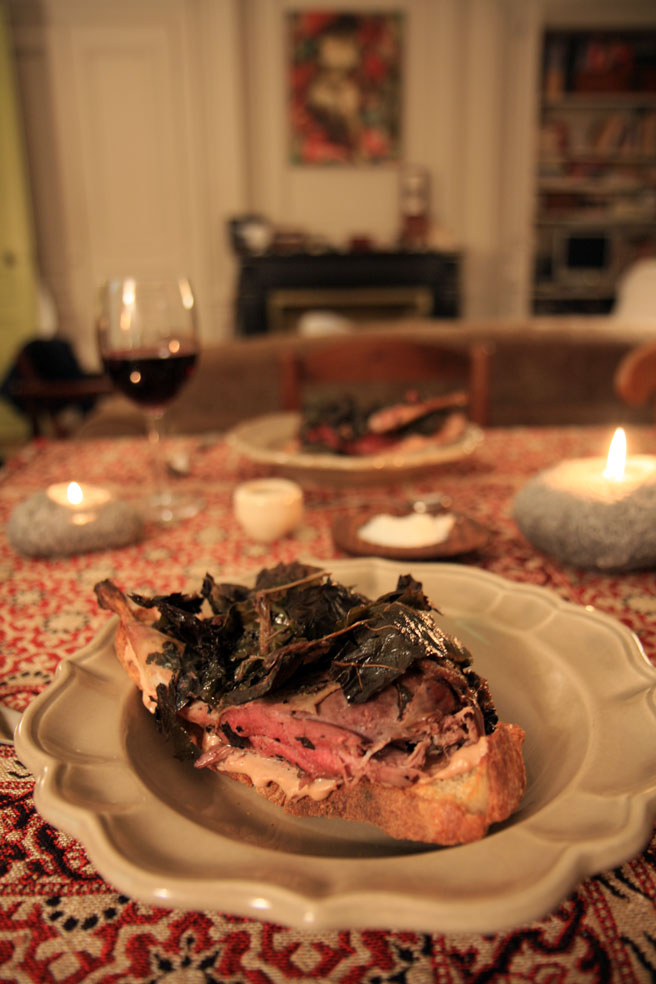
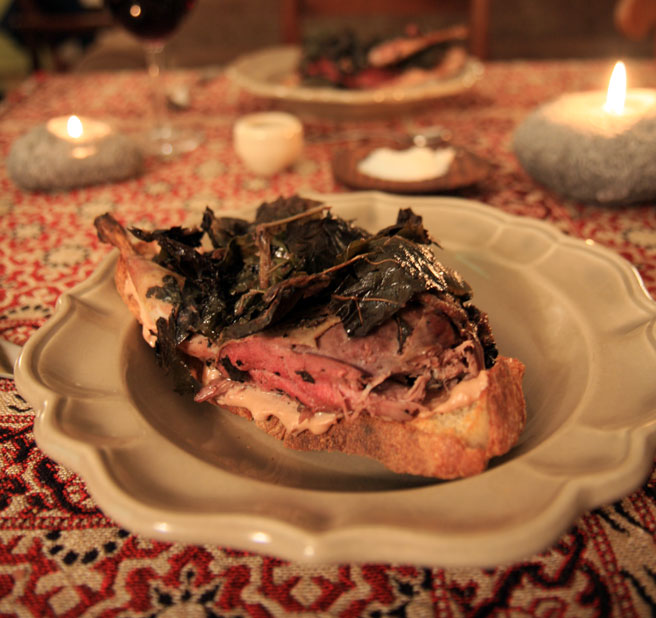
I decided to get just one plump little grouse this time, and will serve it to Loic tonight, rubbed with duck fat and wrapped in grape leaves, spatchcocked, roasted and served over toast which has been spread with butter seasoned with the bird's liver and a bit of cognac. (there is your recipe, but if you want ratios, I'll give you one below!) In 2002 I read how Louise Bertholle did her partridge, and it inspired me to create my own recipe for grouse, replacing the barding with a slather of duck fat, tweaking the liver butter seasonings to our tastes. It remains a pillar of my Kitchen Notebook's little game bird recipes. Today's grouse will be a nice way to begin a simple meal, filled out with an autumn soup and followed by the cheese plate, just enough to give us a taste of the season.

Our Favorite Grouse Supper


To prepare the bird:
1 grouse, head and neck cut off, cavity empty, reserving the liver
freshly ground pepper
2 Tablespoons duck fat
1 teaspoon fleur de sel or sea salt
4 grape leaves
2 slices toasted country bread, toasted
lemon quarters for serving

For the game liver spread:
1 teaspoon duck, goose fat or butter for cooking the livers
3 tablespoons total of veal liver
the grouse liver
1/2 tablespoon cognac
a grate of nutmeg (1/4 teaspoon)
2 tablespoons butter for incorporating into the ground livers
fleur de sel and ground pepper to season

- Cut the empty bird with poultry shears along the back, spreading the bird flat. Rinse the bird and dry thoroughly. Mix 1/2 teaspoon of fleur de sel into the duck fat and stir it gently to mix. Slather the salted duck fat all over the bird, top and bottom. Top with a grind of pepper, and wrap the entire flattened bird with grape leaves. If you don't have fresh leaves, never fear, you can use the ones that come brined for stuffing, but you have to rinse them well to remove the salt.

- Grease a shallow roasting dish that is big enough to hold the flattened grouse, and place it down on the bottom of the dish, breasts up. Roast in a 200C/400C oven for 2o-25 minutes, enough to cook the breasts through, but be careful not to overcook it.

- While the bird is roasting, saute the veal liver and the grouse liver in the fat, making sure not to overcook, which will make it dry. Season with salt, nutmeg and cognac, then remove from heat and quickly work it into the butter with blender or by hand with a fork. Chill the mixturein the freezer for 10 minutes.

- Toast the slices of country bread, and spread the liver butter on them. Place the liver toasts on the serving plates, adding half the roasted grouse on top, grape leaves and all. (put the plates in the oven with the door open to keep them warm while you make the sauce.) Deglaze the roasting pan with a quarter cup of water, and reduce it to a tablespoon. Whisk in a teaspoon of butter into the sauce, season with salt to taste and pour over the grouse. Serve hot with a wedge of lemon.

Labels: ,


Share/Bookmark

Thursday, November 06, 2008

Bernadette's Baby


We named her Bernadette.
There was a small christening ceremony. And we did our first pizza a couple of weekends ago in her hot little belly. There is something about a yeast dough that you've punched down yourself. You've lit the fire and gotten it going with aged birch logs they dumped near the house and that he stacked neatly under the stairs by the garden in a kind of Alpine monument to home and hearth.

You've adjusted the air flow in the stove, got it burning nice and hot. The smoke tickles your nostrils and it also tickles the dough you've rolled out and slid into the hot oven. The heat seems to melt the mushrooms, crispen the paper thin sliced chorizo, and brown the dough even as it stays moist and warm inside with that come hither smoke flavor. This will not be the last.

I am going to the paper shop to pick out a blank book this evening before they close. I am going to cover it with the fabric cuttings leftover from the kitchen door curtains, and fill it with the recipes and stories. Tips and tidbits of information, observations from the garden, and stories I may want to remember in the coming years as we continue this most interesting journey.

Sarah and Erica both, come claim your prize!

Labels: ,


Share/Bookmark

Monday, September 29, 2008

The Happy Stove


Yes, we will be needing a new roof! We have filed the papers!

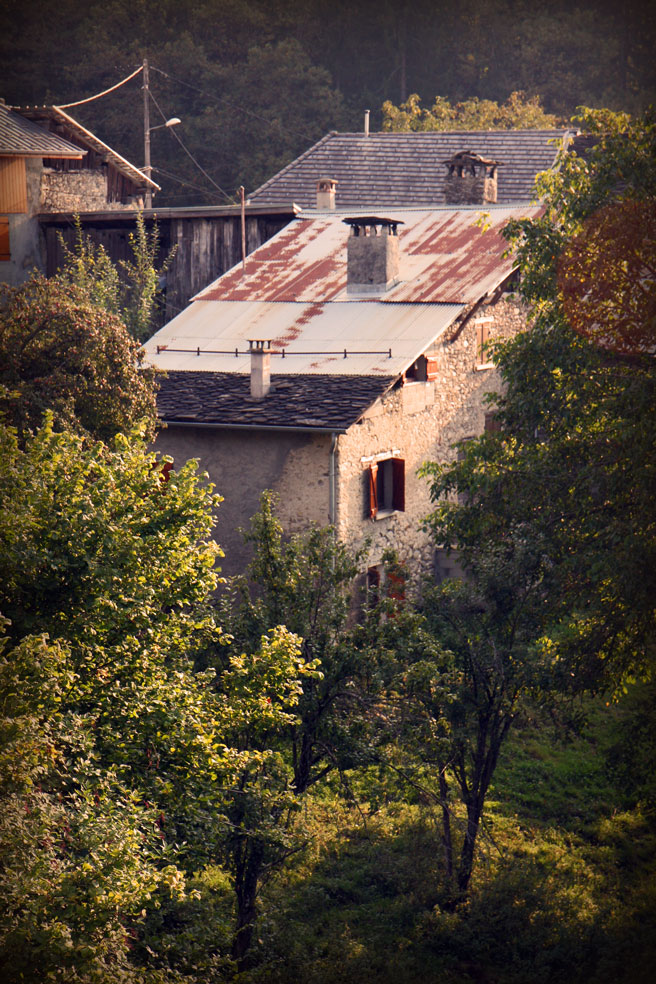
Yes sir. We signed on the house in the Alps on Friday morning.
The signing was long and protracted, with every detail of everyone's life getting dragged through the proceeding, and our hands ached from initialing about 300 pages of documents. We learned a lot of history, mostly involving the fascinating tapestry of a family in a small Savoyard town, but never the exact date of construction of the house, which is thought to be between 250 and 300 years old. We discovered that there are 3 fruit trees on the property: an apple, a pear, and a cherry tree, in addition to a fig tree, chestnuts, and a plum tree in the open grove next to the house.

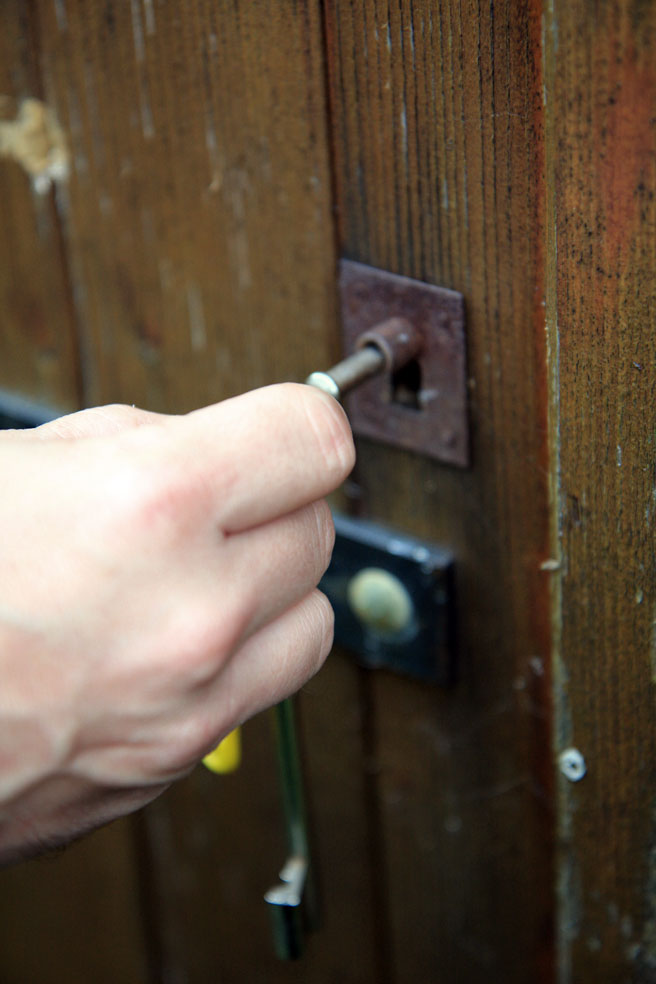
The previous owner also told us there were black trumpets, chanterelles, and cepes hidden in the hills nearby, and I rubbed my hands together in anticipation while he also gave Loic all of the documents pertaining to maintenance on the house since they owned it. We were encouraged to go and contact the old lady who was the owner of the property before them and ask for more stories. They told us what they knew, and that was that. Three big clunky sets of keys were placed in my hand and I tucked them into my bag. Loic and I shook hands with everyone, and headed up into the hills.

When we got there, we made our way to the door through nettles and brambles. No chance of vitamin deficiency here with all of the nettles, I thought to myself! All of the delays meant that the house had been closed up for three months. The grass was very tall and everything overgrown. We decided to take a peek in the garden before we went in. I was almost afraid to look but a feeling of joy swept me up when I looked up into the branches at the towering tree next to the house - laden with fruit. We rushed to the tree, each picked one, bit into it, and shared a nice long hug. They are nice tart cooking apples.


My first mission was to get the fire started. I removed the covering that the previous owners had left on the stove. A very rusty stove, but sound. The rust didn't come as a surprise to me, I'd been doing some research about how to restore it. Mother Earth News had a great article that I studied with interest before the date to sign came. We were to do as the chimney sweep had instructed, to light it up, see how things went. This was a bit scary to me, with all of the warnings out there to have your chimney carefully swept before lighting any fire. It didn't take long to figure out which chamber to light the fire in, what the knobs and thingies did. There was a note written on the wall that said we had to fill up the reservoir with water before using the stove, which I am thankful for.


Our first meal

Loic went to get things from the car. I filled the reservoir with a couple of buckets of water and got some wood, kindling, and paper. I remembered the day a baby owl flopped into our neighbors' house when they lit the first fire of the season one day when I was a kid. In Alsace, it looked like the storks made their nests over peoples' chimneys! Although our chimney had a little roof built over it, you might not know it if there was something living in there.


Heating the potatoes for the raclette

It was quite important to me to get the chimney swept, but not so urgent for the chimney sweep. He didn't seem concerned about our chimney exploding or our house burning down whatsoever. He said "light a fire, and see what kind of draw you get". This means what kind of passage of air up into the chimney when the fire is lit. If the house fills with smoke, put it out, and call the chimney sweep. If not, maybe he'll get around to sweeping it in December. I lit a fire with some paper and kindling, and watched as the smoke didn't come up into the house, but was mysteriously drawn in an efficient stream into the center of the stove. I sent Loic out to look. Do we have smoke? Yes, we have smoke! I threw on a log and soon we had a nice fire burning very well. The stove warmed up the room in an instant. I had thought the wok might fit nicely on the hole left when you remove the burner, and I was right. It was the perfect way to cook. There are two temperatures, one for each sized hole, and then a million different possibilities, depending on how you get the fire going.


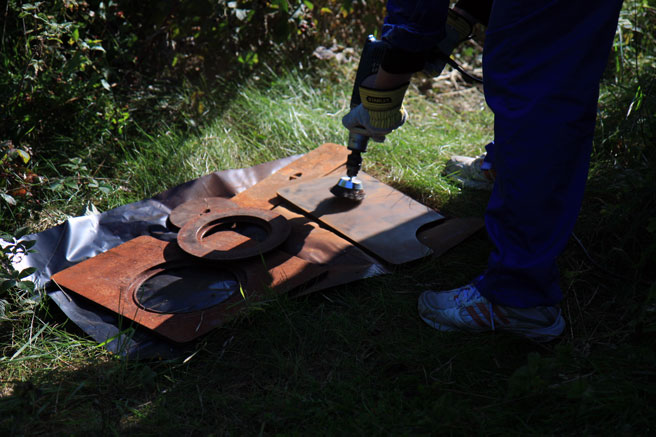
That's me with the power tool. Mother Earth News gave me courage. I will not be starting a business.

We warmed ourselves with the rusty old stove until Sunday morning. I set up my hammock near the stove Saturday night and listened to her breathe like a sleeping baby. We decided to let the fire die completely once the sun was up and then I put in some elbow grease to get her gleaming and proud again. My love for power tools is something that Loic will never understand, just as I do not understand his aversion to them. We divy the tasks accordingly. I got to have the fun of finding the right brush for the drill beforehand, and all the fun of finding the right stove polish. I don't want to bore you will all the stuff we were doing around the house. But I do want to show you how the stove turned out. That's one happy stove, isn't it? Now in addition to finding a name for the house, we have to find a name for the stove.


Before and after refurbishing the stove myself.

The happy stove.

Labels: ,


Share/Bookmark